Electricity here runs 15 cents a kilowatt-hour
Nevada homes paid 15.00 cents per kilowatthour in 2024. A mini split that loses efficiency through a bad install or an undersized line set turns that rate into a bigger bill every month it runs.

Takes about a minute. No obligation.
Nevada homes paid 15.00 cents per kilowatthour in 2024. A mini split that loses efficiency through a bad install or an undersized line set turns that rate into a bigger bill every month it runs.
At this rate, the difference between a mini split sized and installed right and one that isn't shows up on every bill, not just the first one. That's what to weigh when you compare bids.
NOAA nClimDiv, 1991–2020 normals
Homes in Caliente run cooling June through September.
Get the mini split installed by the end of May, so it's ready to go when June gets here.



Most homes in Lincoln County heat with electricity, 58.4% of them. A mini split fits right into that. It runs on electricity already, so it's not competing with a gas furnace or propane tank for the job, it's doing the whole job itself. That's part of why mini splits make sense here beyond just the climate. If your home already heats with electric baseboard or an electric furnace, a mini split replaces that load instead of adding a second fuel to account for.
Cooling runs four months a year, June through September, with afternoon highs averaging 90°F. That's a normal cooling load, not a heavy one. A standard size and efficiency fit it fine, so there's no reason to pay for more capacity than this climate asks for.
Find a contractor
A mini split that's sized right cycles on, brings the room to temperature, and shuts off. One that's oversized blasts cold air fast, shuts off before it pulls moisture out of the room, then starts again a few minutes later. Over a full season that short-cycling wears on the compressor more than a long steady run would. A unit that's too small never gets ahead of the load at all. It runs constantly on the hottest afternoons and the coldest nights, and the parts that run constantly are the parts that wear out first. Sizing a mini split right means working out the heat gain and heat loss for the specific room or space it's serving, not just matching the number on the old system. That calculation accounts for window area, insulation, ceiling height and what's on the other side of each wall. Get it right and the system run long steady cycles for years. Get it wrong in either direction and the compressor is the part that pays for it.
A mini split's efficiency rating measures how much heat it moves for the electricity it uses, nothing more. It doesn't tell you whether the unit is right for the room. A high rating on an oversized unit still wastes money, because the unit short cycles and never settles into the steady run where that rating actually holds true.
The efficiency number on the label is measured under set conditions in a lab. A line set that's too long, a bad refrigerant charge, or an indoor unit mounted where it fights the room's airflow all pull the real performance below what's printed. The label is the ceiling. The install is what gets you close to it or leaves you well under it.
When you're comparing bids, ask each contractor what they're basing the size on, not just what size they're quoting. A proper load calculation looks at the room's square footage, how many windows it has, which way they face, and what's on the other side of the walls. If someone quotes a size off the top of their head or just matches your old system, that's worth asking about. Ask what they plan to do with the line set, since a longer run than necessary or extra bends can cost you efficiency no matter how good the unit is. Ask who handles the refrigerant charge and how they verify it, because a charge that's off even a little keeps the system from ever reaching the performance printed on the label. And ask where the indoor unit will be mounted and why, since a unit placed where it fights the room's natural airflow works harder for the same result.
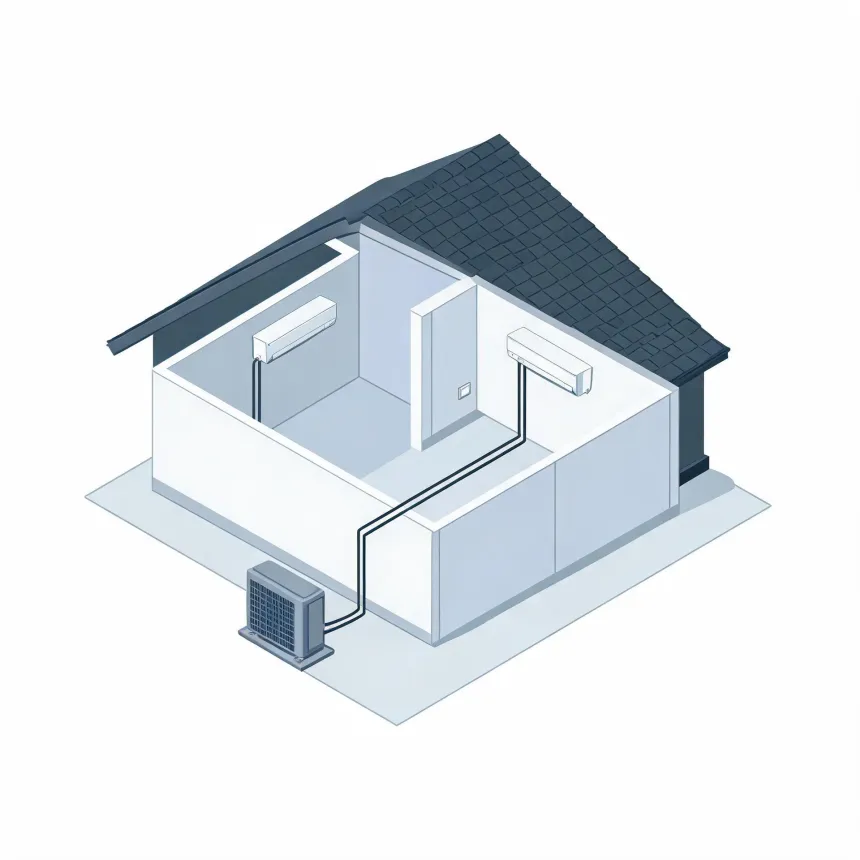
Installation starts with the outdoor unit and the indoor head going up, but most of the day goes into the line set between them. That line runs refrigerant line, a condensate drain and electrical through a wall, so the hole gets cut and sealed before anything else gets mounted. Once both units are in place and connected, the line set gets pulled down to a vacuum to clear out air and moisture, because either one left inside the lines keeps the system from running right. Only after that vacuum holds does the refrigerant get released into the line set and the charge get checked against what the unit calls for. The last step is running the system through a full cycle, heating and cooling, to confirm the head is reading the room correctly and the outdoor unit is responding the way it should.