





Two illuminated adobe-style desert homes at night, surrounded by saguaro cacti and low desert shrubs along a curved driveway.

Mini Split Installation in Carson City, NV

Tell us about the job

Takes about a minute. No obligation.

New system or replacementMini-splitCarson City, NV
Step 1 of 2

What ZIP code is the job in?

Gas heats 76.1% of homes in Carson City. A mini split works differently. It runs on electricity, and it heats and cools from the same unit, so it's not a direct swap for a gas furnace in most houses here. That makes it a good fit for a room a furnace doesn't reach well, or for a home that wants cooling without ducts. Some homeowners use one to cover the whole house, but that's a bigger conversation about what the space needs. Either way, the electrical work is part of the install, not an add-on.

8 months
October through May, your system heats
2 months
July through August, it cools
25°F
the average winter night it heats against
83°F
the average summer afternoon it cools against
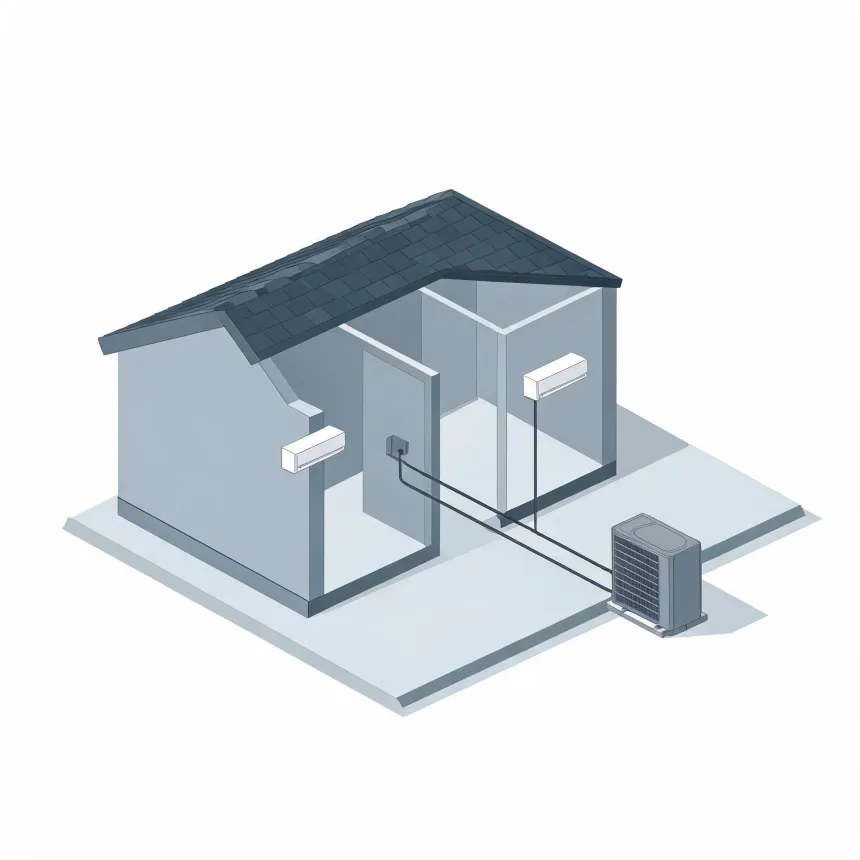
Isometric illustration of a cutaway gray house with a dark shingled roof, showing two wall-mounted indoor air handlers connected by line sets to an outdoor condenser unit on a pad outside.
Your system heats October through May and cools July through August.

NOAA nClimDiv, 1991–2020 normals

Electricity in Nevada runs about 15 cents a kilowatt-hour, below the national average.

A mini split here still costs less to run than most alternatives, but the payback on the highest-efficiency model takes longer, so pick one for comfort and fit first.

Two months of real cooling load a year. A mini split here doesn't need the top-tier compressor to keep up.

Cooling runs July through August
Summer afternoons average 83°F
287 damaging wind events from 2015 to 2024
Built for Carson City homesCheap power here means fit matters more than the efficiency number on the box.

Carson City sees its share of rough weather. 287 damaging wind events and 221 winter storms hit the area over the past decade. That matters more for whether the power stays on than for the mini split itself. The outdoor compressor and indoor head are built to handle wind and cold without any special upgrade. A standard size made for this climate covers what the weather here brings. There's no case for oversizing the unit or paying more for a feature set this county doesn't ask for.

Have it installed before July

Cooling in Carson City runs July through August. June is the month to get a mini split in, while you can still pick the unit and schedule the work instead of waiting on a system that's already struggling.

Find a contractor
A beige split-system air conditioner outdoor condenser unit mounted on metal wall brackets atop a stucco wall.

Two months of work a year

July and August carry the cooling load here, and the afternoon high across those months averages 83 degrees. That's not a number that calls for a bigger compressor or a high-stage model. When you're comparing units, let the contractor spec one sized and staged for that load instead of steering you toward the top of the lineup. The rest of the year, that extra capacity just sits there unused.

The number of zones sets the price

A single indoor head paired with one outdoor compressor is the simplest job there is. Add a second or third room and the outdoor unit has to be sized for all of them, with its own line set and its own mounting spot. Each additional head means another hole through the wall, another run of refrigerant line, and another drain path. The job scales with the number of rooms, not just the square footage.
What the walls are hiding decides the labor

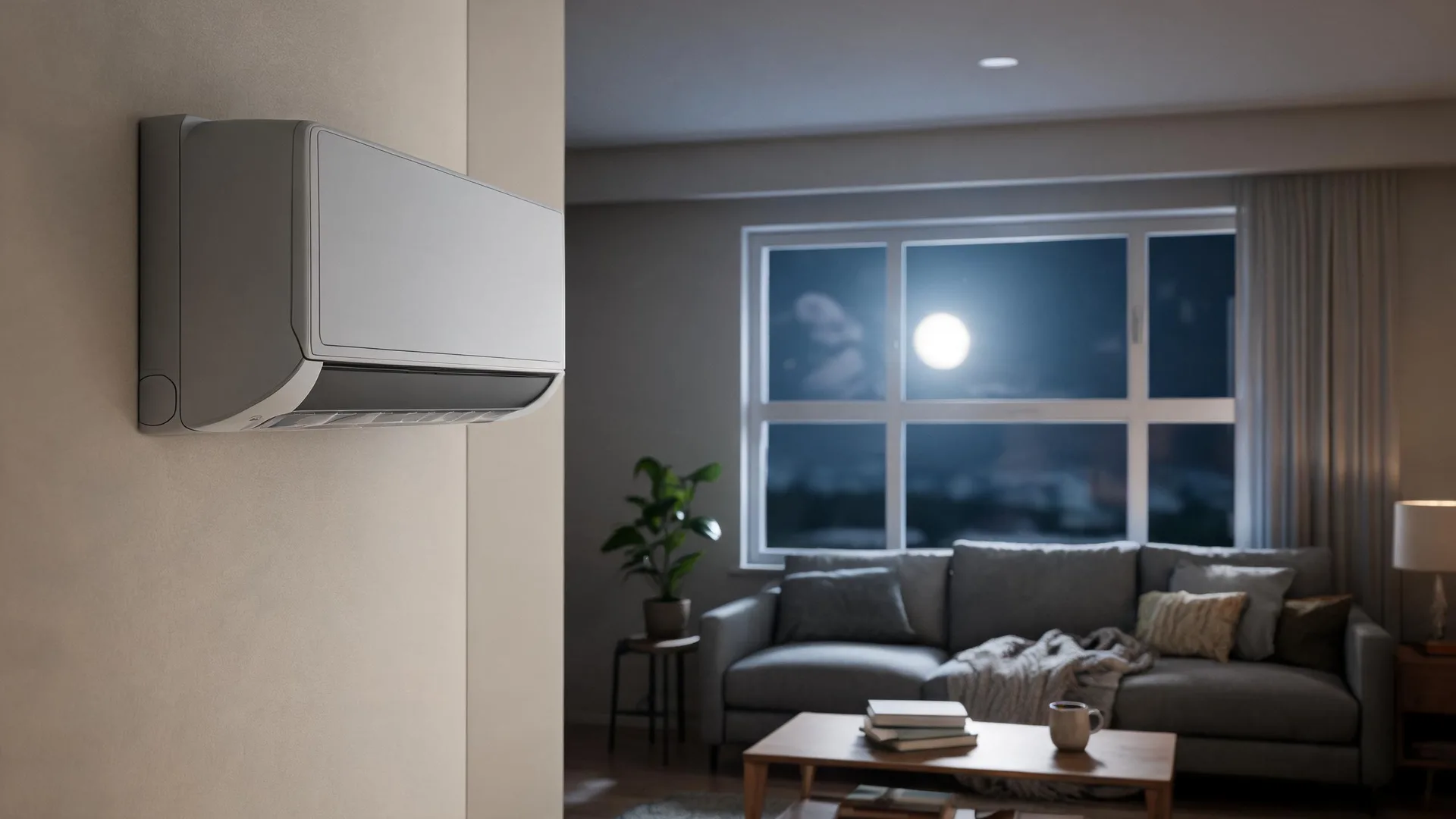
The line set between the outdoor compressor and the indoor head has to travel somehow, and a straight shot through one exterior wall is a different job than routing through an attic, down an interior wall, or around framing to reach the room that needs it. The electrical work matters too. A dedicated circuit means running wire back to the panel, and if the panel is already full, that's its own job before the mini split goes in at all.

When you're comparing systems, ask what the manufacturer rates the unit for at low outdoor temperatures, not just its top-line efficiency number. A mini split's capacity drops as it gets colder outside, and units with the same efficiency label can perform differently on a cold morning. Ask how many indoor heads the outdoor compressor can support, and whether it's rated to run them all at once or only some at a time. Ask what line set length the warranty covers, since running it too far can affect performance and isn't always disclosed up front. And ask who services the brand locally. A system is only as good as the parts and technicians available when something needs attention down the road.

Installation starts with a survey. The installer checks the wall where the indoor head will go and the spot outside for the compressor, looking for a clear path between them. That path carries the refrigerant line, the drain line, and the power wire, and it has to get there without cutting into framing that matters. Mounting the indoor head and the outdoor pad is the fast part of the day. Running the line set and connecting it at both ends takes longer, and before any refrigerant goes in, the installer pulls a vacuum on the lines to clear out air and moisture. A system charged without that step is the most common reason a mini split underperforms or fails early. Once the vacuum holds, the line gets charged, the power goes on, and the installer runs the head through heating and cooling before calling the job finished.