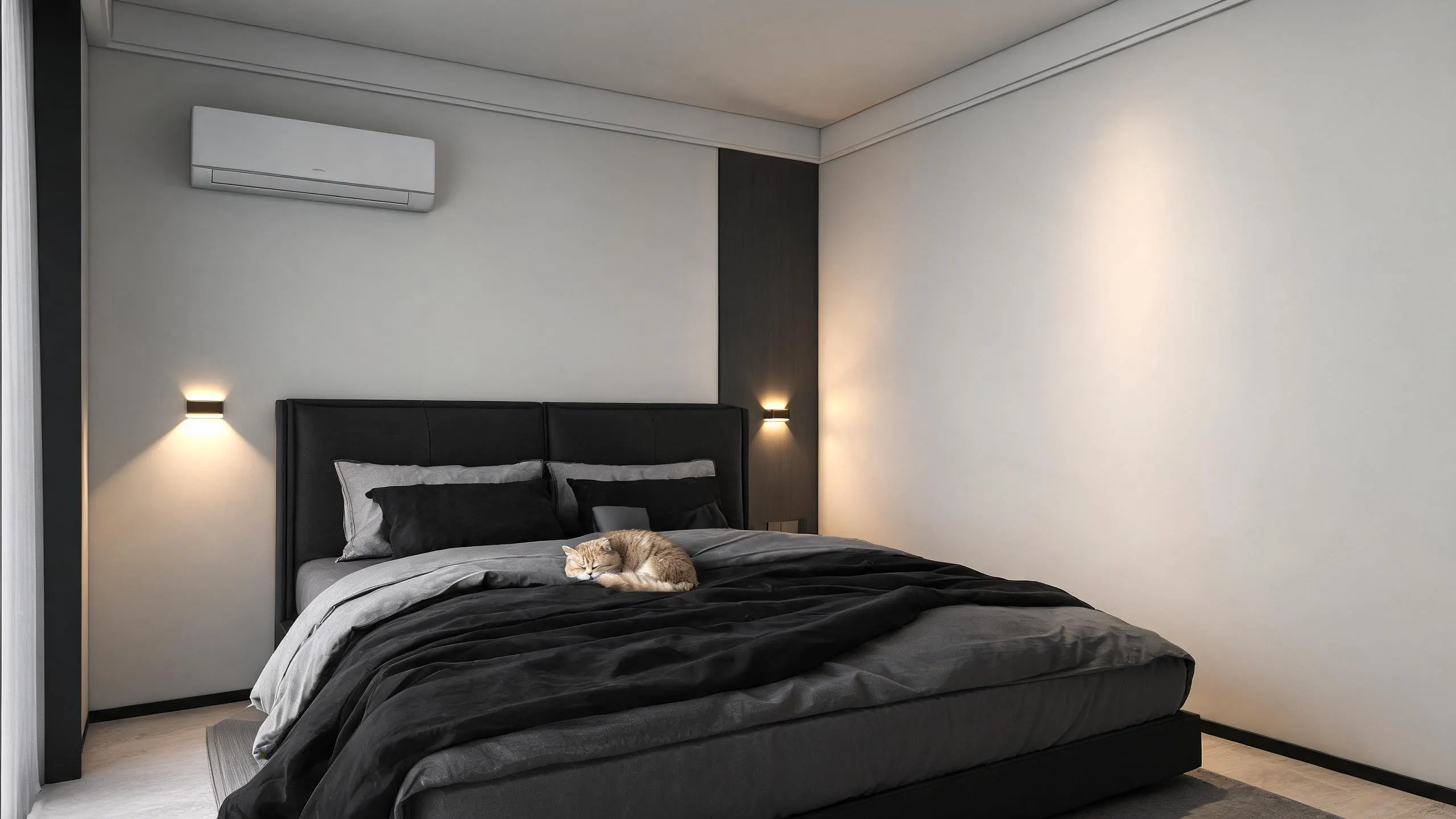





An orange cat sleeps on a neatly made bed with dark grey bedding in a minimalist bedroom with wall sconces and a mounted air conditioner.

Mini Split Installation in Elko, NV

Tell us about the job

Takes about a minute. No obligation.

New system or replacementMini-splitElko County, NV
Step 1 of 2

What ZIP code is the job in?

Cooling in Elko County runs about two months a year, July and August. That short window is exactly why June matters. A mini split installed before July means it's charged, tested, and running right when the heat shows up, instead of getting diagnosed and fixed while your house is already warm. Wait until the first hot week and you're on every other homeowner's schedule too, not just your own. Get it in during June and the only thing July has to do is turn on.

10 months
September through June, your system heats
2 months
July through August, it cools
17°F
the average winter night it heats against
82°F
the average summer afternoon it cools against
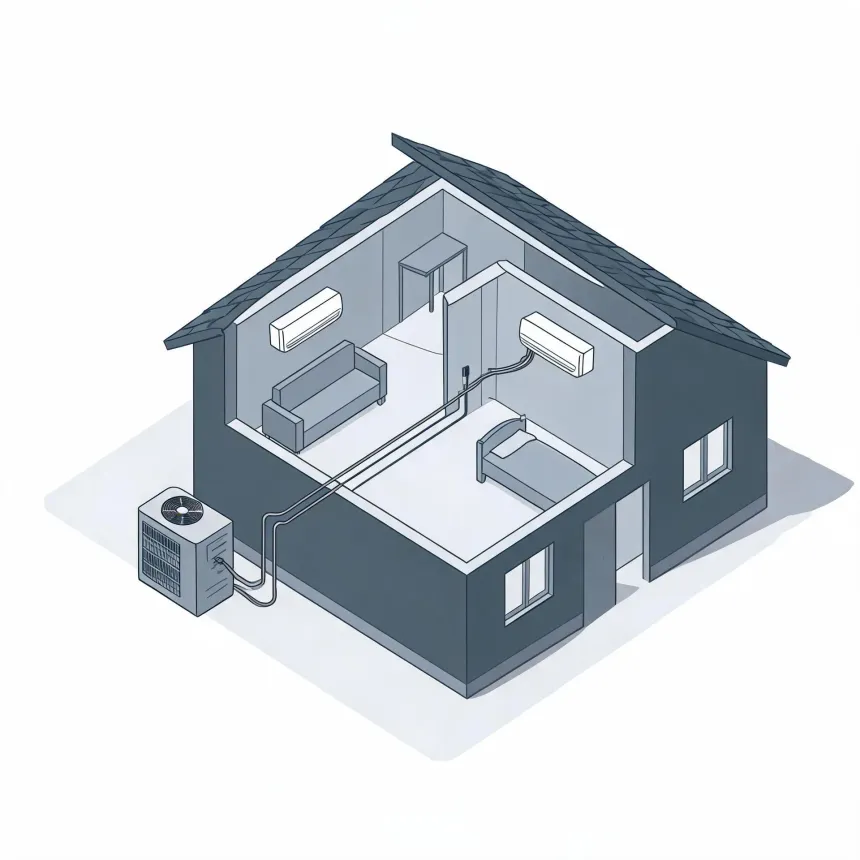
Isometric cutaway illustration of a small house showing two wall-mounted indoor air conditioning units connected by line sets to an outdoor condenser unit beside the exterior wall, with a sofa in one room and a bed in another.
Your system heats September through June and cools July through August.

NOAA nClimDiv, 1991–2020 normals

Winter storms have hit Elko County 341 times between 2015 and 2024.

A mini split here needs a cold-climate compressor or backup heat strip, not just a cooling mode for summer.

Electricity here runs 15 cents a kilowatt-hour, well under the national average, so the priciest mini split on the lot earns its keep slower than the sales pitch suggests

Power costs 15 cents a kWh statewide
Cooling runs July through August
Summer afternoons average 82°F
A mini split that won't work hard hereTwo months of cooling a year, afternoons averaging 82.

Elko County falls under zone 5B, a cool, dry climate where heating carries the bigger load. Any mini split sold here still has to clear the same federal minimums as every other split system. That means 14.3 SEER2 for cooling and 7.5 HSPF2 for heating, if it was built from 2023 on. There's no separate rule for ductless units, lower or higher. That floor narrows the lineup before you even start comparing brands. A system that clears it qualifies for the federal efficiency tax credit.

Reliability first

Power is cheaper here, so the most efficient model takes longer to pay off. Reliability and fit matter more.

Find a contractor
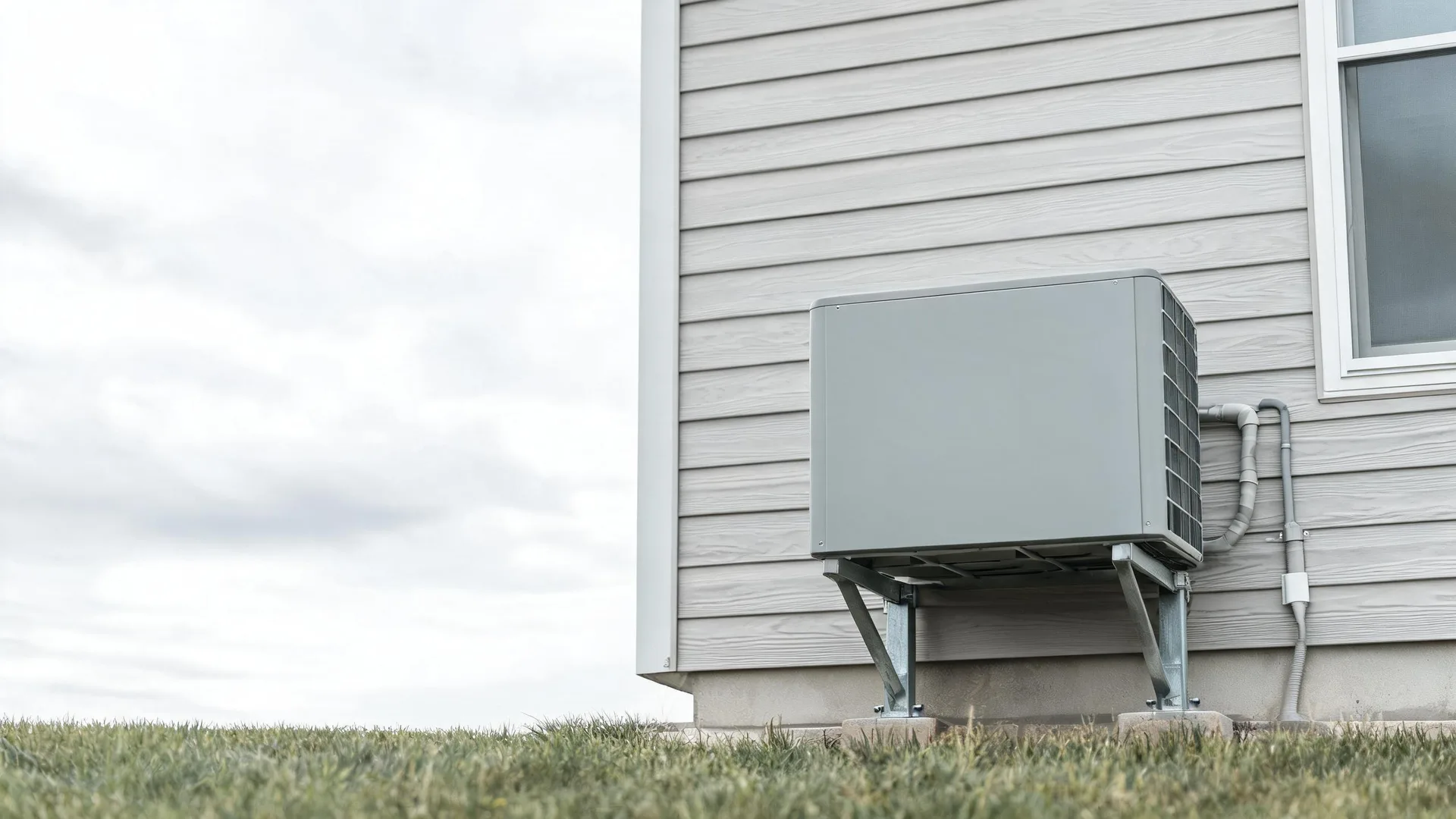
A white outdoor air conditioner condenser unit mounted on metal wall brackets against gray horizontal siding, with a blue sky and white clouds behind it.

What happens to the system you're replacing

Whatever is on the wall now gets disconnected and comes out, indoor head and outdoor unit both. If the old system used ducts, those stay in place and the mini split just ignores them. The refrigerant lines running to the old unit don't get reused. They're sized and charged for that specific system, so new line sets go in with the new one. An old compressor near the end of its life usually gives some warning first. It might short cycle, or ice up on the coil, or hum without starting. None of that has to turn into an emergency if the system gets swapped out on your schedule instead of its own.

Every room with its own head adds to the job

A single zone with one indoor head and one outdoor unit is the simplest install there is. Add more zones and the outdoor unit has to be sized for all of them together, the line sets multiply, and so does the labor to run them. A house that needs several zones to cover it costs more to do right than one that only needs a couple, no matter which brand ends up on the wall.
Where the line set has to travel changes the labor

The refrigerant line runs from the outdoor unit to each indoor head through a hole in the wall, and the shorter and more direct that path, the less time it takes to run it. An install where the outdoor unit sits right outside the room being conditioned goes faster than one where the line has to snake through an attic or down an exterior wall to reach the other side of the house. Mounting location gets decided before the price does, not after.

Sizing a mini split isn't about matching the biggest number to the biggest room. A contractor works out the heat loss and heat gain for each space, how much warmth leaks out in winter and how much heat builds up in summer, based on the room's square footage, its windows, its insulation, and which way it faces. Oversize the unit and it cools or heats the room fast, then shuts off before it pulls the moisture out of the air, so the room feels clammy even at the right temperature. It also means more stopping and starting, which wears on the compressor over time. Undersize it and it runs constantly, straining to keep up on the coldest or hottest days without ever catching up. The right size runs long, steady cycles that hold the room at an even temperature, which is both more comfortable and easier on the equipment.

Install day starts outside, mounting the outdoor unit on a pad or bracket and running the line set in before anything gets connected. Each indoor head goes up next, mounted to a bracket on the wall with a small hole behind it for the refrigerant line, the condensate drain, and the wiring to pass through. Once the lines are run and connected at both ends, the system gets evacuated with a vacuum pump to pull out air and moisture before any refrigerant goes in. That step matters more than it looks like it should. Any moisture left in the lines turns to acid once the system runs, and it will eat at the compressor over time. After the vacuum holds steady, the system gets charged, powered on, and checked across every zone, heads blowing cold or hot and draining the way they should before anyone calls it done.