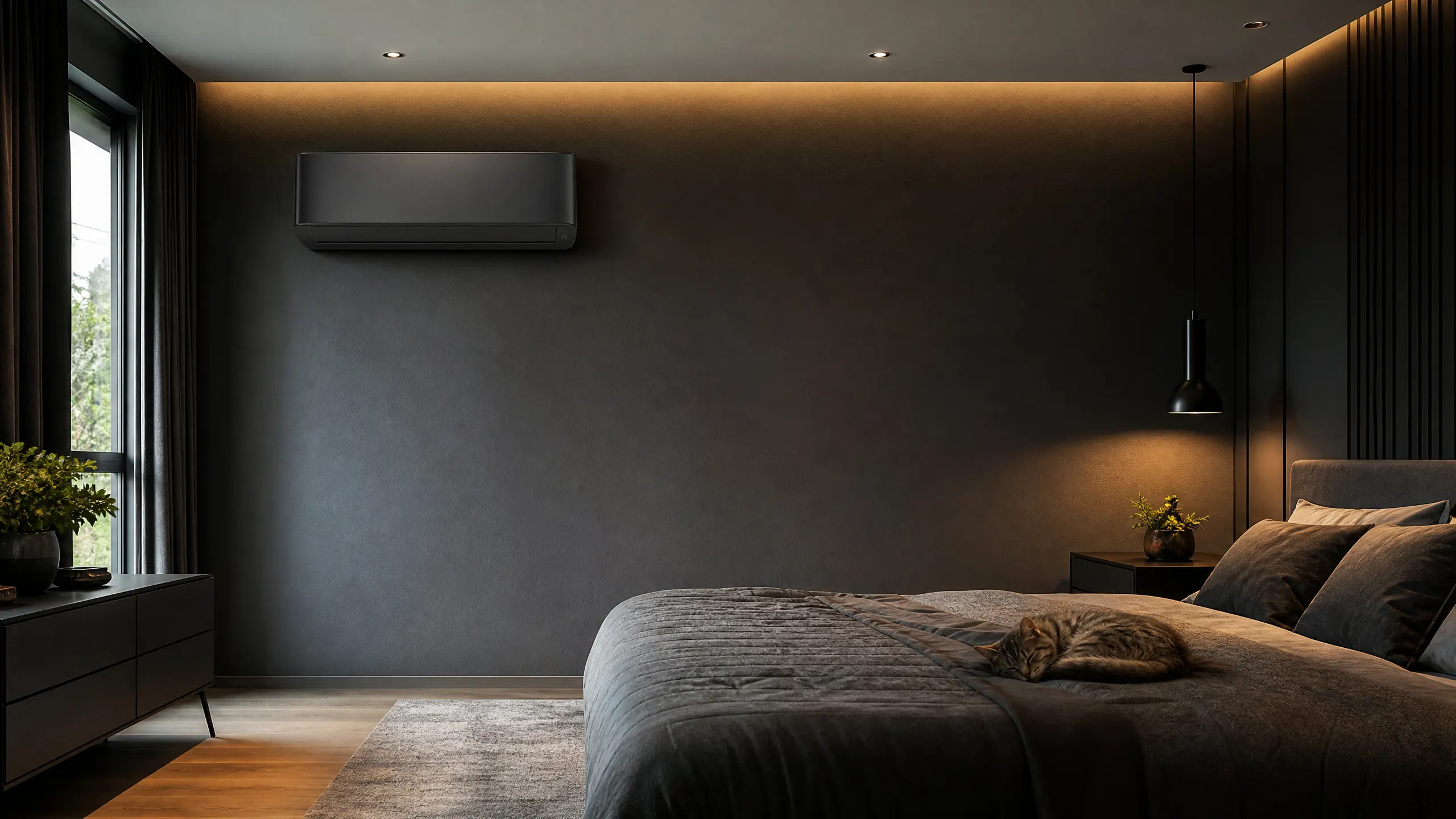






A dark, minimalist bedroom featuring a sleeping cat on a grey-quilted bed, a wall-mounted air-conditioning unit, warm cove ceiling lighting, and a pendant lamp illuminating the bedside table.

Mini Split Installation in Fernley, NV

Tell us about the job

Takes about a minute. No obligation.

New system or replacementMini-splitLyon County, NV
Step 1 of 2

What ZIP code is the job in?

Most homes in Lyon County heat with utility gas, at 67.5 percent. Electricity comes in second at 15.8 percent, with bottled or LP gas close behind at 10.3 percent. A mini split works differently from any of those. It runs on electricity, and it heats and cools from the same unit instead of pairing a furnace with separate air conditioning. If your home runs on gas now, a mini split can work alongside it, taking over a room or a zone the furnace doesn't reach well. If your home already heats with electricity, a mini split is often a more efficient way to do what you're already doing.

8 months
October through May, your system heats
2 months
July through August, it cools
23°F
the average winter night it heats against
87°F
the average summer afternoon it cools against
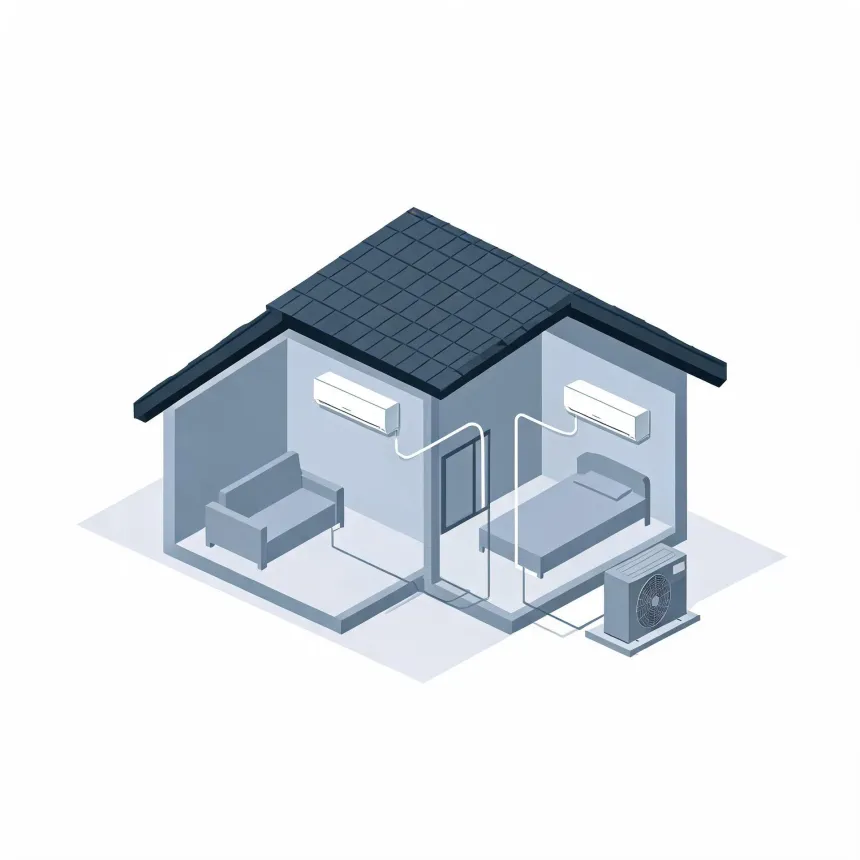
Isometric illustration of a cutaway house with two rooms, showing two wall-mounted indoor air conditioning units connected by lines to a single outdoor condenser unit outside the building.
Your system heats October through May and cools July through August.

NOAA nClimDiv, 1991–2020 normals

A mini split sized by square footage alone almost always comes out wrong.

The right size comes from a load calculation that weighs your windows, insulation and layout, room by room.

June puts a mini split in place before Fernley asks it to work

Cooling runs July through August
Summer afternoons average 87°F
305 damaging wind events from 2015 to 2024
Two months of real heat, nothing moreAfternoon highs average 87°F in June, July and August, the only months Lyon County homes run cooling.

A mini split runs on electricity, and in Nevada that cost 15 cents per kilowatt-hour in 2024. Sizing it right matters more than the brand or the model you pick. A unit that's too big will cool a room fast, then shut off and on all day, which is hard on the compressor and wastes power. A unit that's too small will run constantly and still not keep up when Fernley hits its hottest afternoons. There's nothing about this area that calls for an oversized or high-end system. A correctly sized mini split, standard efficiency, will do the job here and run on the same electric rate every other home pays.

A mini split here has to meet zone 4B's minimum, and that minimum earns a federal credit

Lyon County falls under zone 4B, and any split-system heat pump made since January 2023 has to hit at least 14.3 SEER2 and 7.5 HSPF2 to be sold here. That's the floor a mini split has to clear before it's installed, not an upgrade you choose. A system meeting that minimum also qualifies for a federal tax credit, worth looking into with a contractor who can walk you through it.

Find a contractor
A man in a dark shirt and tan work pants, seen from behind, climbs porch steps toward a red front door while carrying a waxed canvas tote bag.
A white outdoor air conditioner condenser unit mounted on metal wall brackets against gray horizontal siding, with a blue sky and white clouds behind it.

One wall, one hole, and a pressure test before anything turns on

Installation day starts outside, not in. The crew picks the spot for the outdoor unit first, since that decides how the line set runs and how well the system breathes once it's working. Inside, the indoor head gets mounted high on a wall, and a small hole is drilled through to the outside for the line set, the power wire and the condensate drain to pass through together. The refrigerant lines get connected at both ends, then the whole system is pressure tested before anything is powered on. That test matters more than almost any other step, because a leak that isn't caught then is a service call later. Once the pressure holds, a vacuum pump pulls moisture and air out of the lines, since either one left behind damages the compressor over time. Only after that does the system get charged with refrigerant and switched on. A tech will run it in both cooling and heating, check the temperature split at the vent, and confirm the drain is actually draining before calling the job done.

The old system doesn't have to go anywhere

A mini split can be installed alongside an existing furnace or window units instead of replacing them outright. The old system keeps serving the rooms it already covers while the mini split takes on a zone or addition. Nothing about putting one in forces the other out.
If it is coming out, the refrigerant has to come out first

Any system being removed has refrigerant lines that need to be recovered properly, not vented. A licensed contractor handles that as part of the removal, along with disconnecting the electrical and capping or clearing out any old line set or ductwork that won't be reused.

SEER2 and HSPF2 are ratios, not a count of anything in your house. SEER2 measures cooling output against the electricity put in over the months you run cooling, and HSPF2 does the same for heating. A higher number means the unit gets more cooling or heating out of the power it uses, nothing more. It doesn't tell you how big a space it can handle or how fast it'll bring a room to temperature. Mini splits can carry the same SEER2 number and still perform differently once installed, because line set length, airflow around the outdoor unit and how well the indoor head is placed all affect what the system actually delivers. The rating is a floor to check the equipment against, not a promise about what you'll feel in the room.

What a mini split installation costs comes down mostly to what the crew has to do to get refrigerant lines and power from the outdoor unit to the indoor head. A short, straight run through one exterior wall is the simplest case. Every added indoor head, every extra wall or floor the line set has to cross, and any run longer than the basic distance adds labor and material. The electrical matters too. A mini split needs its own dedicated circuit, and whether the panel already has room for that circuit or needs work to make room changes the job. Where the outdoor unit sits counts for something as well, since it needs a clear, level pad and enough clearance around it to pull in and shed air. None of this shows up on a spec sheet. It shows up when someone looks at the actual walls, the actual panel and the actual path the lines have to take.