


Two illuminated adobe-style desert homes at night, surrounded by saguaro cacti and low desert shrubs along a curved driveway.

Mini Split Installation in Pahrump, NV

Tell us about the job

Takes about a minute. No obligation.

New system or replacementMini-splitNye County, NV
Step 1 of 2

What ZIP code is the job in?

Most homes in Nye County run on electric heat, at 75.8 percent. A mini split fits right into that picture, since it runs on electricity for both heating and cooling instead of asking for a gas line. For a home already wired for electric heat, that means no new fuel hookup to plan around. Only 4.7 percent of homes here use utility gas, so for most homeowners a mini split works with the setup already in place, not against it.

8 months
October through May, your system heats
3 months
June through August, it cools
23°F
the average winter night it heats against
88°F
the average summer afternoon it cools against
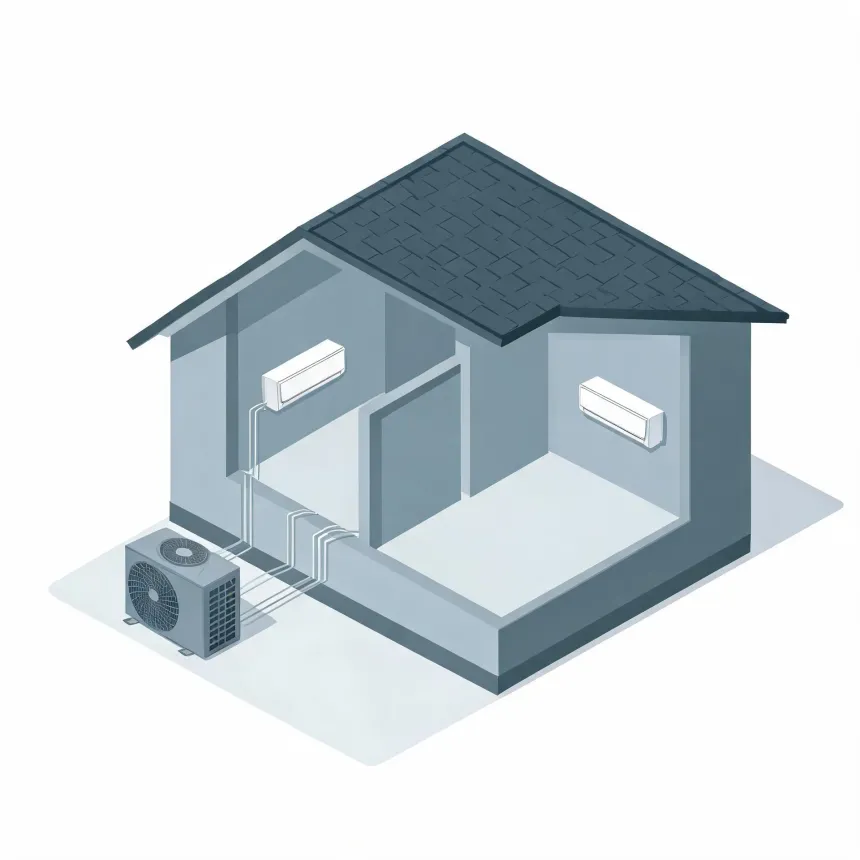
Isometric cutaway illustration of a small house showing two wall-mounted indoor air conditioning units connected by refrigerant lines to an outdoor condenser unit on the ground outside.
Your system heats October through May and cools June through August.

NOAA nClimDiv, 1991–2020 normals

Electricity in Nevada runs 15 cents a kilowatt-hour.

A mini split that's sized right for your home keeps that rate from turning into a high bill.

Pahrump sits in climate zone 4B, a mixed zone that asks real work of both your furnace and your AC over the year, with dry air for most of it. Any mini split sold new here has to clear a federal floor to match that work. For units built from January 2023 on, that means 14.3 SEER2 for cooling and 7.5 HSPF2 for heating. That floor applies to the whole ductless system, since the standard treats it the same as any other split system. It narrows what a contractor can offer you, in a good way. Whatever gets installed already has to meet this climate rather than fall short of it. A system that clears that bar may also qualify for a federal tax credit, worth checking into before you settle on a unit.

A right-sized mini split is all Pahrump asks for

Nye County has seen its share of wind and the occasional winter storm over the years, but none of it changes what a mini split needs to be here. A standard size at the efficiency floor already set for this climate zone covers Pahrump's heating and cooling load without paying for capacity this home won't use. Get the unit sized to the house and let the installer take it from there.

Find a contractor
A person in a dark long-sleeve shirt, tan work pants and brown boots carries a worn leather tool bag up wooden porch steps toward a red front door, beside a potted shrub.
A white mini-split air conditioner outdoor condenser unit mounted on metal brackets against a beige stucco exterior wall, with a blue sky and scattered clouds in the background.

Three months of real heat, then it switches jobs

Cooling runs three months a year here, June through August, with afternoon highs averaging 88°F. That's a short, hot stretch, not a year-round grind. The rest of the year the same unit is covering the heating load, so it's working in both directions, just not against this kind of heat for long. A standard unit at the efficiency floor already set for this zone is built for exactly that kind of stretch.

How many zones, and what each one covers

A mini split can run one indoor head off one outdoor unit, or several heads off a single outdoor unit, each with its own thermostat. Ask what's being quoted. A single zone is simple and cheaper to install, but it only conditions the room it's in. A multi-zone setup costs more up front and gives each room its own setting, which matters if parts of the house get used differently than others. Get clear on how many heads you're buying and which rooms each one is meant to carry.
What happens if one part fails later

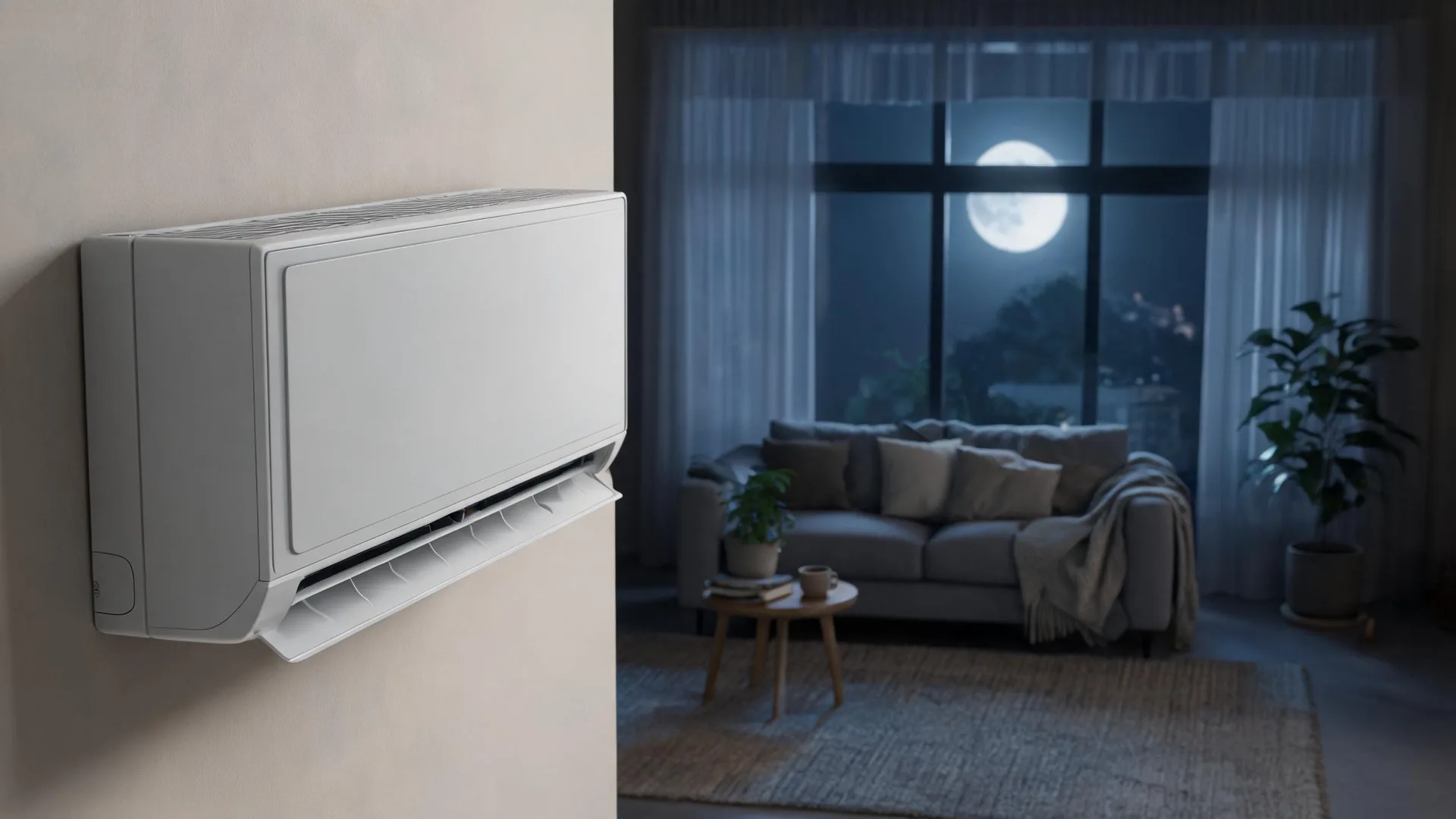
On a multi-zone system, the outdoor unit serves every indoor head, so a problem with the outdoor unit can take all the zones down at once. On separate single-zone systems, a failure stays isolated to that one room. Ask the installer how the system is laid out and what a repair looks like for each layout, so a bad compressor or a bad board doesn't turn into a surprise about what else stops working with it.

If there's a working system coming out, whoever installs the mini split should be the one to deal with it, not a separate haul-away call. A central furnace or AC gets disconnected from its ductwork and power or gas line, then taken out whole or in pieces depending on where it sits. A window unit or older ductless system comes out from its own wall sleeve or line set. Refrigerant in the old outdoor unit has to be recovered properly rather than vented, so ask how that part is handled before the work starts. If the old system shared ductwork that the mini split won't use, say so up front, since that duct may need to be capped or sealed rather than left open to a space that no longer heats or cools through it.

Install day starts outside, mounting the outdoor unit on a pad or wall brackets, then runs a line set through a small hole drilled in the wall to connect it to each indoor head. That line set carries refrigerant lines, a drain line, and electrical wiring together, usually wrapped and sealed where they pass through. Once the indoor heads are mounted and connected, the system gets evacuated with a vacuum pump to pull out air and moisture before refrigerant is ever released into the lines. Skipping that step is what causes a system to run poorly or fail early, so it's worth asking how long the installer plans to hold vacuum before charging it. After that comes the charge, the power-up, and a test run in both heating and cooling so you can check airflow and temperature at each head before the crew leaves. A multi-zone job takes longer than a single head, simply because there's more line set and more wall penetrations to seal properly.