View from under a covered patio toward a single-story stucco house with a tiled roof, a gravel yard, a bare-branched tree, and a gray concrete block wall.

Mini Split Installation in Virginia City, NV

Tell us about the job

Takes about a minute. No obligation.

New system or replacementMini-splitStorey County, NV
Step 1 of 2

What ZIP code is the job in?

Propane is the fuel most homes here already use

In Storey County, 43 percent of homes heat with bottled, tank or LP gas, more than any other fuel. Utility gas reaches less than a quarter of homes, and only 12.9 percent heat with electricity. A mini split doesn't touch any of that. It runs on electricity alone, so it sits alongside a propane furnace rather than replacing its ductwork or its tank.

That makes it an addition, not a conversion

For a home running on propane, a mini split is usually brought in to handle a room the furnace doesn't reach well, or to cover cooling that the heating system was never built for. It gets installed as its own zone, with its own thermostat, working next to the existing system instead of taking its place.

8 months
October through May, your system heats
2 months
July through August, it cools
25°F
the average winter night it heats against
84°F
the average summer afternoon it cools against
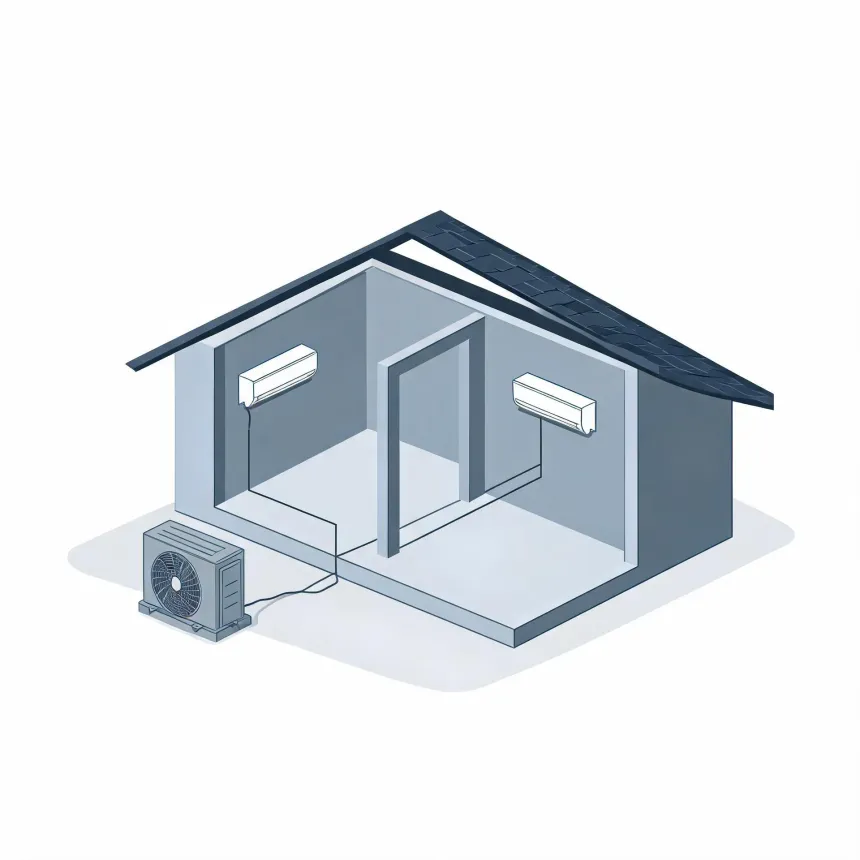
Isometric illustration of a cutaway house showing two wall-mounted indoor air conditioning units connected by lines to a single outdoor condenser unit on the ground outside.
Your system heats October through May and cools July through August.

NOAA nClimDiv, 1991–2020 normals

Every mini split job needs a place for the outdoor unit and a clean line set run to the indoor head.

A longer line set crossing more wall or roofline drives the installation cost up.

Two months of real heat is not much to ask a compressor to handle

Cooling runs July through August
Summer afternoons average 84°F
200 damaging wind events from 2015 to 2024
June is the month to get it inCooling starts in July. Homes here run it through August, about two months a year.

The number on a mini split's label is a ratio, not a guarantee. It tells you how much heat moves for the electricity spent, and a higher number means less power to reach the same room temperature. But that number is measured in a lab, running the unit at a steady, ideal load. A mini split that's oversized for the room it's cooling will cycle on and off fast, and it never settles into the steady state that earned it that rating. One sized to actually match the room runs longer, steadier stretches, and gets much closer to what the label promised. So the rating matters, but only after the size is right. A contractor who asks about the room before quoting a unit is thinking about this. One who quotes a number off the bat usually isn't.

A standard mini split, sized right, is all this job calls for

At 15 cents a kilowatt-hour, Nevada's electric rates don't push you toward a bigger or more efficient unit than this room needs. A standard size, sized to the space, is the cheaper system to run and the one that'll actually hold a steady temperature. Get the room measured and the line set planned before you commit to a number.

Find a contractor
A man in a cap, dark jacket and tan work pants carries a worn duffel bag as he steps up onto a porch toward a red front door, with a potted shrub beside the entry.
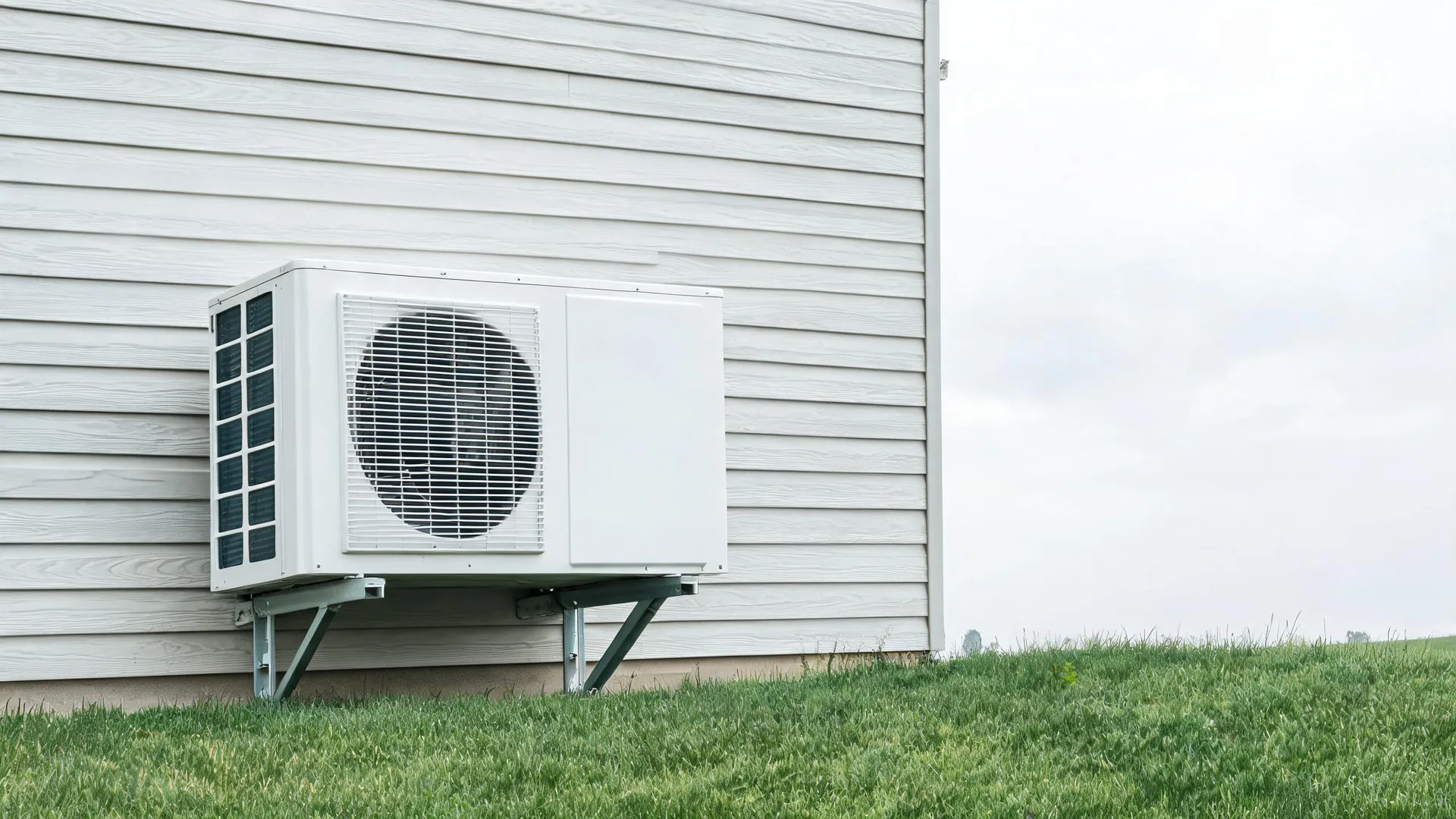
A white mini-split air conditioner outdoor condenser unit mounted on metal brackets against a beige stucco exterior wall, with a blue sky and scattered clouds in the background.

A standard unit will outlast the two months it has to work

Two months of load a year doesn't ask much of a compressor, so there's no case for paying up for a heavy duty unit here. A standard mini split built for normal residential use will handle a June through August stretch without strain. Put the money saved there into getting the line set and the room size right instead.

Sizing comes from a room calculation, not the square footage on a listing

The load depends on what the room is actually like. How many windows it has. Which way they face. How much wall backs onto unconditioned space. What's above the ceiling. Rooms that look the same size on paper can call for different sized units. A contractor who measures the room and walks through it before quoting is doing the sizing work. One who sizes off square footage alone is guessing.

Too big is a worse mistake than too small

An undersized unit just runs long stretches on hot days. An oversized one cools the room fast and shuts off before it pulls the moisture out of the air, then kicks back on soon after. The room ends up cold and damp instead of just comfortable. The compressor spends its life starting and stopping instead of running steady, and that short cycling wears on it faster than steady runtime would.

When you're comparing bids, ask each contractor what they're proposing for the indoor head location and why. A head mounted where it can throw air across the whole room cools evenly. One tucked in a corner to make the install easier leaves pockets of warm air the thermostat never sees, so it reads the room wrong and runs longer than it should. Ask about the condensate drain too, where it runs and where it drains out, since a line that doesn't pitch right backs up over time. Ask how many indoor heads the outdoor unit is rated to support, even if you're only installing one now, because that tells you whether the system has room to grow. And ask what happens to the wall once the line set is in. A clean install hides the line set in a cover or a chase. A rushed one leaves it exposed and loose.

Installation day starts outside, since everything else follows from where that unit sits. The crew sets the outdoor unit on a pad or wall bracket with clear airflow on at least a few sides, not boxed against a fence or buried in a corner. From there the line set gets drilled through the wall on the shortest straight path to the indoor head. Every bend in that line is a place a joint can fail later, so a clean run matters more than it looks like it should. Both ends get connected and pressure tested before any refrigerant goes in, because a slow leak at a bad joint is the most common way these systems fail early, and it shows up on a pressure test long before it shows up in the room. Once that test holds, the line set gets evacuated to pull out moisture and air, then charged to the weight the equipment calls for. Last thing before the crew leaves, the system runs a full cycle, heating and cooling both, so any problem shows up on install day instead of the first real week of use.