




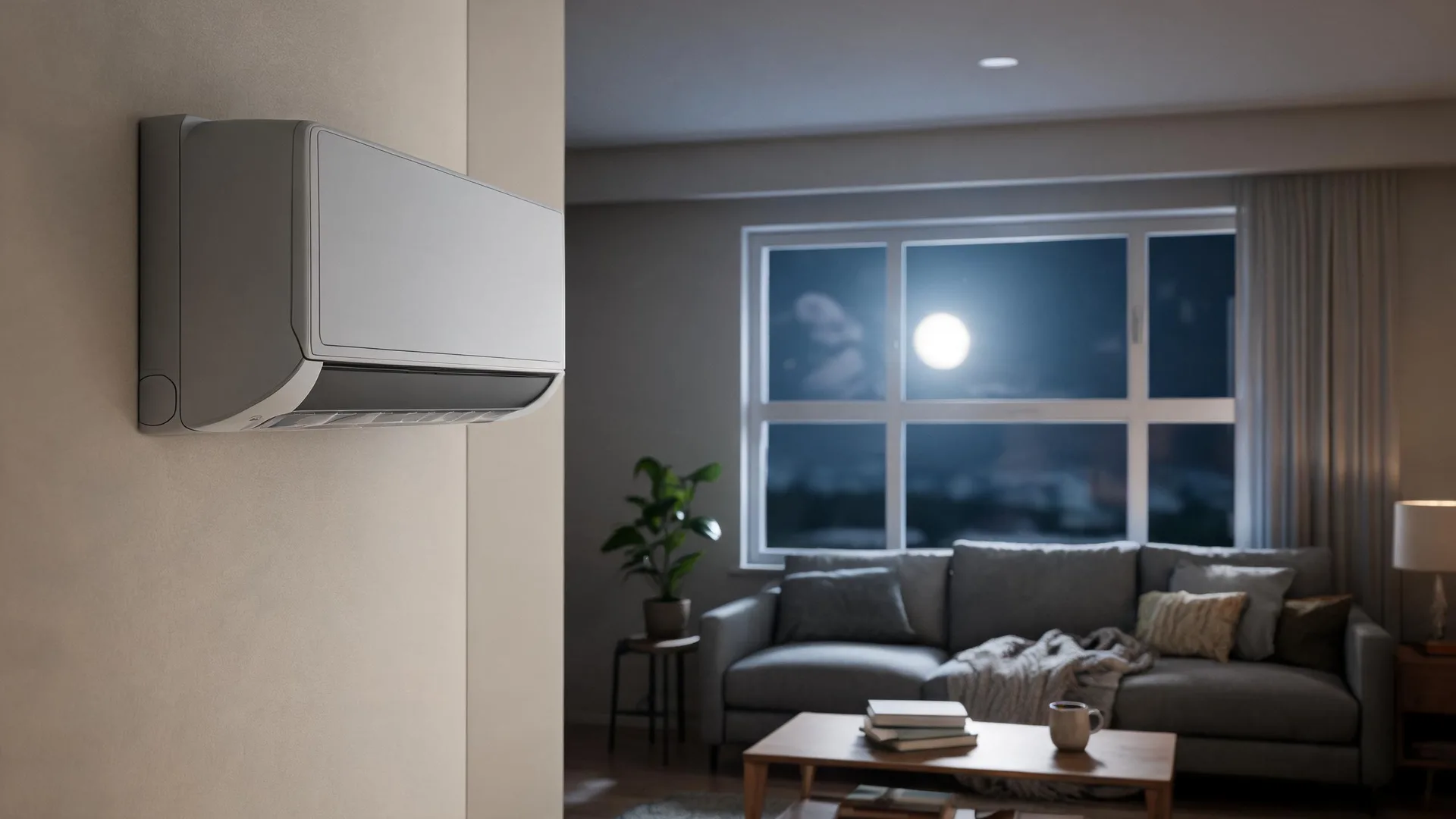
A tabby cat sleeps on a large bed in a dark, modern bedroom equipped with a wall-mounted air-conditioning unit.

Mini Split Installation in Winnemucca, NV

Tell us about the job

Takes about a minute. No obligation.

New system or replacementMini-splitHumboldt County, NV
Step 1 of 2

What ZIP code is the job in?

Gas heats about half the homes in Humboldt County, with electricity a distant second at 27.3%. A mini split works differently from both. It's an electric heat pump, so in a gas-heated house it usually goes in alongside the furnace rather than replacing it, often to cover a room the ducts don't reach well or to add cooling where there isn't any. In a home that already heats with electricity, a mini split can do more of the job itself, since there's no gas line or combustion air to work around. Either way, the installer will want to know what's heating the house now before sizing the unit.

8 months
October through May, your system heats
2 months
July through August, it cools
23°F
the average winter night it heats against
85°F
the average summer afternoon it cools against
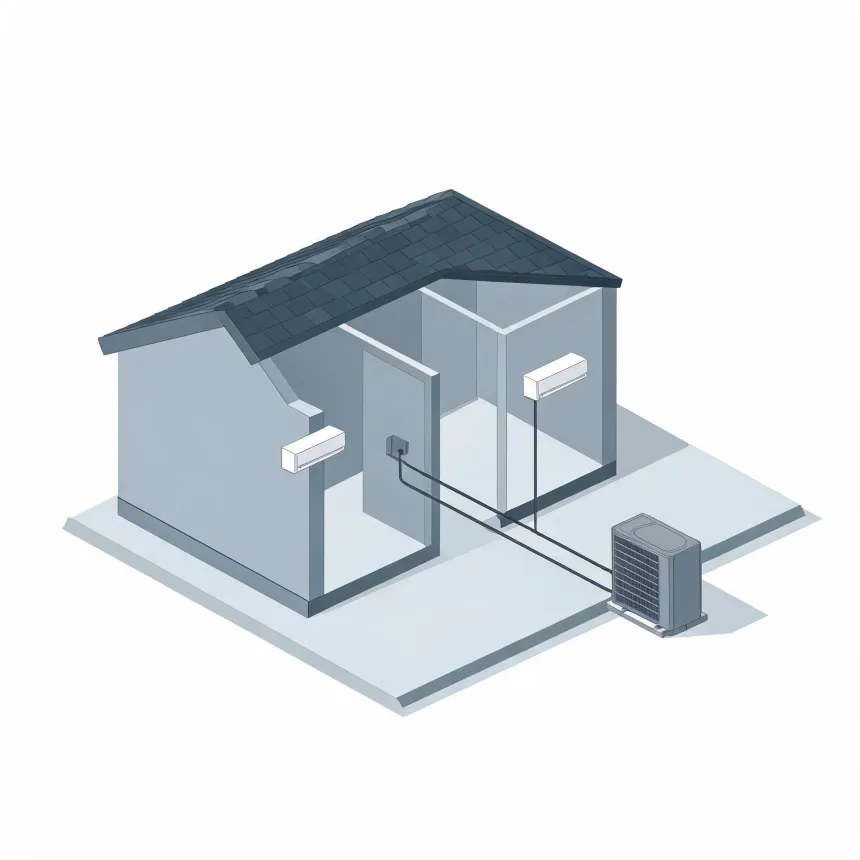
Isometric illustration of a cutaway gray house with a dark shingled roof, showing two wall-mounted indoor air handlers connected by line sets to an outdoor condenser unit on a pad outside.
Your system heats October through May and cools July through August.

NOAA nClimDiv, 1991–2020 normals

Cooling runs about two months a year in Winnemucca, July and August, with afternoon highs near 85.

A mini split sized for a mild two-month load doesn't need to be the top-efficiency model.

A standard mini split handles Winnemucca's cooling load without trouble

Power costs 15 cents a kWh statewide
Climate zone 5B
Cooling runs July through August

July is when cooling starts here, which makes June the month to get a mini split installed. Wait until the first hot week and you're one of many homeowners calling around, booking what's open rather than what works best for your house. Installed in June, the unit is tested and running before you need it, so if something's off with the charge or the airflow there's time to have it looked at before August's heat is the thing you're counting on it for.

A mini split here has to clear a set efficiency minimum, and that opens up a tax credit

Any mini split installed here, ductless or not, has to meet the federal minimum for this climate. That's 14.3 SEER2 for cooling and 7.5 HSPF2 for heating. A unit built to that standard also qualifies for the federal tax credit, which is worth checking against when you're comparing quotes.

Find a contractor
A beige split-system air conditioner outdoor condenser unit mounted on metal wall brackets atop a stucco wall.

What to ask has more to do with sizing than the spec sheet

A mini split's compressor is built to run long steady cycles, not short bursts, and the questions worth asking a contractor come out of that. Ask what brand and model of compressor is behind the warranty, since the indoor head is the same across tiers but the compressor is where the difference shows up. Ask whether it's a single-zone or multi-zone system, because a multi-zone compressor has to modulate across whatever heads are calling for heat or cooling at once, and that changes how it should be sized. Ask how the installer arrived at the size, since a load calculation for the room is the only real basis for it. Ask what happens to the line set if the outdoor unit ever needs replacing, since a line set that's been cut too short or routed with sharp bends can limit the options later. None of these questions have a right answer that fits every room. They're worth asking because the answer tells you whether the person sizing and installing the system is working from the room in front of them or from a guess.

Sizing comes from a room's heat gain and loss, not its square footage

A mini split is sized by working out how much heat a room gains in summer and loses in winter, counting the windows, the exterior walls, the insulation, and what's on the other side of each wall. Rooms of the same size can need different units if one has more glass or faces a different way. Square footage alone leaves out too much to get this right.
Oversizing causes its own problems

A compressor too big for the room cools it fast, shuts off, and starts again soon after instead of running one long steady cycle. That short-cycling leaves the room feeling damp, since the coil never runs long enough to pull the moisture out of the air. The right size for the room runs longer and holds the temperature steadier than an oversized unit would.

If the mini split is going in alongside a furnace, the old setup in that room doesn't need to change at all. The furnace keeps heating the rest of the house the same way it always has, and the mini split just takes over the one room it was sized for. If a mini split is replacing an older electric system, whoever installs it will disconnect and remove the equipment it's replacing, whether that's baseboard heaters, an old window unit, or a wall furnace. That old equipment doesn't get left behind to sit unused. The line set and wiring for a mini split are specific to that unit, so there's no reusing an old system's lines or putting the new one on an old circuit sized for something else.

Installation day starts with the mounting plate for the indoor head, level and anchored to the wall or ceiling where it'll sit. The installer drills a hole through the exterior wall for the line set, the refrigerant lines that run between the indoor head and the outdoor compressor, along with the wiring and the condensate drain. Those lines get bent and routed with care, since kinks or sharp angles restrict refrigerant flow for the life of the unit. Once the outdoor unit is set on its pad or bracket and everything is connected, the system gets evacuated with a vacuum pump to pull out moisture and air before the refrigerant is released into the lines. That vacuum step matters more than almost anything else that day, since any moisture left behind can damage the compressor over time. Last comes the test run, checking airflow at the head and confirming the system holds the charge it was given.