Why your heat pump is leaking water in Nevada

RepairHeat PumpNevada
Step 1 of 2

What ZIP code is the job in?

Why is my heat pump leaking water?

A heat pump works for cooling most of the year out here, and a puddle or a drip under the indoor unit is usually the first sign anything's off. You caught it early, which matters, because what starts as a small leak can mean a clogged line or a bigger problem with the coil if it sits too long.

Usually a clogged or disconnected condensate drain

A heat pump pulls moisture out of the air when it cools, and that water has to go somewhere. It runs into a drain pan, down a line, and out of the house. When that line gets clogged with algae or dirt, or the pan cracks, the water backs up and finds its way onto your floor instead. A dirty air filter can cause the same thing by freezing up the coil, which then drips as it thaws. Nevada's dry air means dust builds up fast in that filter, and a clogged filter is one of the more common reasons the drain line ends up backed up or the coil ices over in the first place.

A woman in a gray turtleneck sweater stands by a window looking outside at snowy ground, with a dimly lit living room containing a sofa, shelves, lamp and a lit candle behind her.
A woman in a cream cable-knit turtleneck sweater stands in a warmly lit living room with a fireplace and shelves behind her, looking out a window toward snow-covered trees and a railed deck.
A woman in a cream knit turtleneck sweater stands by a window looking out at snow, with a lit fireplace, sofa and lamp in the room behind her.
A woman in a gray knit sweater sits by a window looking out at falling snow, with a dimly lit living room containing a sectional sofa, pillows, a lamp and houseplants behind her.
A gray outdoor condenser unit on a concrete pad beside a light-colored horizontal-siding house, with a disconnect box and refrigerant line on the wall, ornamental grasses and a shrub in mulch nearby, and a concrete patio in the foreground.
Condensate draining the way it should, with no buildup around the pad or the disconnect box.
An outdoor condenser unit sits on a concrete pad beside a house with horizontal vinyl siding, with a gray electrical disconnect box and conduit on the wall and a shrub at left.
A puddle or drip line at the base, usually from a clogged condensate line or a drain pan that's rusted through.

How the Water Gets There

  • Indoor coil pulls moisture out of the air during cooling, and that water has to go somewhere.
  • A drain pan under the coil catches the water, then a condensate line carries it outside.
  • That line runs downhill to a drain or outside the house, and algae or dust can clog it over time.
  • A clogged line backs water up into the pan until it overflows onto the floor below.
  • A rusted-through pan leaks straight away, even if the line itself is clear.
  • A cracked or disconnected PVC fitting on the line lets water drip out before it ever reaches outside.

Running a heat pump in cooling mode pulls humidity out of the air that passes over the indoor coil. That moisture collects on the coil and drips down into a drain pan sitting underneath it. From there it should flow into a condensate line, a small pipe that slopes downhill and carries the water out of the house or into a drain. With dry Nevada summers, you might not expect much water at all, but the coil still pulls moisture out of the air every time the system runs, and that water still needs somewhere to go. Over time, algae, dust or debris can build up inside that line and narrow it until water backs up instead of draining. Once the line is blocked, the pan fills faster than it empties, and water rises over the edge and onto the floor or closet below. Sometimes the pan itself is the problem, not the line. Pans rust through after years of sitting wet, and a hole in the metal will leak no matter how clear the drain is. The fittings matter too. Where the condensate line connects, usually with PVC, that joint can crack or come loose, letting water escape before it ever reaches outside. Any one of these, a clogged line, a rusted pan or a bad fitting, produces the same puddle, but the fix is different for each.

An outdoor air conditioner condenser unit on a concrete pad beside a house with horizontal lap siding, with refrigerant lines entering the wall and a shrub on bare soil to the left.
Before you get your heat pump repair
A gray outdoor condenser unit on a concrete pad beside a light green lap-sided house, with a wall-mounted electrical disconnect box, mulch bed with shrubs, river rock, and a paved walkway in the foreground.
After you get your heat pump repair

The drip itself is rarely the real problem. It's what it touches on the way down. Drywall stains, subfloors warp, and once water sits near the air handler, you've got pests coming in looking for a drink. A clogged condensate line doesn't always announce itself either. You wipe up a damp spot, it dries, and a week later it's back, because the clog is still there backing water up a little at a time. If that water reaches the electrical connections at the unit, that's not a wait and see situation. A rusted pan is its own category of trouble, since clearing the line won't fix it. The pan has to be replaced, or the leak keeps coming back no matter what else gets done. With the system running most of the year in Nevada, a leak that shows up small in spring has months to get worse before anyone deals with it, and by fall it can be a different problem than the one you started with.

What That Drip Can Cost You

  • A slow drip under the indoor unit can stain drywall or warp the subfloor before you notice anything else.
  • Standing water near the air handler draws ants and other pests looking for a water source inside the house.
  • A clogged line backs up slowly, so the first sign is often a damp spot that keeps coming back after you wipe it up.
  • Water sitting near electrical connections at the unit is a hazard a contractor should check, not something to leave alone.
  • A pan that's rusted through will keep leaking no matter how many times you clear the line, since the pan itself needs replacing.
  • Because the system runs most of the year here, a leak that starts small in spring can turn into real water damage by fall.
A bearded man in a blue and brown plaid flannel shirt stands indoors looking out a window at snow-covered trees, with a ceramic mug on the windowsill.
A man in a blue T-shirt sits on a light gray sofa, laughing while looking at an open laptop in the foreground, with a framed picture, lamp and potted plant behind him.

A local pro for your heat pump repair

Describe what your heat pump is doing once, in one form.

Sending the form costs nothing.

That drip under your indoor unit is going to run for months, since your heat pump is cooling the house from spring through fall here. Left alone, the pan or line keeps backing up and the water finds the nearest low spot, which is usually your subfloor or the drywall behind the air handler. By the time you see a stain or a soft spot, the wood underneath has been wet for a while. If the unit sits in a closet or attic space, that water has nowhere to go but down into the ceiling below or across the floor toward the nearest wall. Mold follows standing water fast in a house that's sealed up and running cooling for most of the year. You're also looking at ants or other bugs showing up near the unit, because a steady water source indoors in a dry climate like this draws them in. None of this needs a new system or a major repair bill to fix. It needs someone to clear the line or replace the pan before the next few months of cooling turn a small puddle into warped flooring.

Power costs 13.26 cents per kilowatt-hour statewide

At 13.26 cents a kilowatt-hour, running your heat pump through a long Nevada summer already adds up. A clogged drain line doesn't raise that cost, but letting the leak sit while you wait on repairs does nothing to protect what you're already paying for.

EIA-861 2025 statewide residential average

A gray outdoor condenser unit on a concrete pad beside a house with horizontal lap siding, connected by conduit and lines to a wall-mounted disconnect box, with a shrub and gravel bed to the left.

Working the way it should

The condenser sits clean on its pad, lines running up to the disconnect without any staining or corrosion around them. No puddle at the base, no green streaks down the concrete. This is what a heat pump draining properly looks like from outside.

An outdoor air conditioner condenser unit on a concrete pad beside a house with horizontal lap siding, with refrigerant lines and a gray electrical disconnect box on the wall, surrounded by bare dirt.

Signs of neglect

Dirt and debris cake the coil guard and fan grille here, thick enough to show this unit hasn't been cleaned in a long while. A dirty coil doesn't cause a condensate leak by itself, but a unit left like this is one nobody's been checking on, drain line included.

What is that water doing under my indoor unit?

Look at where the water's showing up. A damp spot on the carpet or a stain spreading across the ceiling below the air handler, if it's in a closet upstairs or in the attic. A musty smell in the room where the indoor unit sits, even when nothing looks wet yet. The pad under the drain line going green or black. If you check the drain pan itself and see rust or a crack, that's not going to seal itself back up. None of this means you need to replace anything. It usually means the line or the pan needs attention before the drip turns into a repair bill for the floor or ceiling underneath it, not just the heat pump.

A two-story house with gray and light gray siding, white-trimmed windows and a white front door, flanked by deciduous trees, with a partly browned lawn in front under a clear blue sky.

A dew point near 37°F across June, July and August means the air pulling through your return is dry, even on the hottest days. Dry air sounds like it should mean less condensate, and most days it does. But the coil still runs long hours to keep the house cool, and dry heat often means dust rides along with that air instead of settling. That dust works into the drain pan and the line faster than you'd expect, narrowing the path the water's supposed to take. So the leak you're watching isn't about humidity piling up. It's about a line that's slowly losing room to drain.

NASA POWER T2MDEW county cells weighted by homes

Clear It Yourself or Call It In

Clear the line yourself

  • A shop vac on the outside end of the condensate line can pull out a short algae clog without opening anything up.
  • Pouring a cup of distilled vinegar into the drain access every few months keeps algae from building up in the first place.
  • If the line is PVC and easy to reach, this costs you nothing but the time it takes.
  • You won't know if the drain pan itself has rusted through until the vacuum trick fails to stop the drip.
  • A clog deeper in the line, or one past a bend you can't reach, won't clear with a shop vac from one end.

Get it looked at

  • A contractor can tell you in one visit whether it's the line, the pan, or the coil, instead of you guessing and retrying fixes.
  • Matching you with someone who handles heat pumps means you skip calling around and re-explaining the drip to three different companies.
  • If the pan is rusted through, that's a part swap you can't do with a vacuum or vinegar.
  • A full inspection catches a line that's draining slow but not yet clogged, before it backs up again next month.
  • Once you're matched, the contractor reaches out to you, so you're not the one chasing quotes or waiting on hold.
A dark bedroom with an unmade bed and pillows beside a curtained window showing rain-streaked glass and palm foliage outside.

It's past eleven and the house is still warm. You're lying on top of the sheets because they're too damp to get under, and the window at the far end of the bedroom has fogged along the edges where the AC's been fighting the heat all night. You get up for water and your foot lands in something wet by the closet door, right under the air handler. You flip on the light. The carpet's dark in a ring maybe a foot across, and when you press it with your heel, water comes up around your foot. Outside, it's still close to ninety. The heat pump cycles on again, that same low hum, and the spot under your foot stays cold and soaked.


A woman in a cream sweater and jeans stands in the open doorway of a white stucco house, holding the dark door, while a man in a dark quilted jacket seen from behind walks toward the entry past potted plants.

A puddle under the indoor unit has a reason behind it

A clogged condensate line or a rusted drain pan is almost always the cause, and both are things a contractor can find in one visit. You noticed the water before it reached your subfloor or your ceiling, which is the point where this stays a small job instead of a bigger one.

From here, the part that takes the time isn't fixing the line or swapping the pan. It's finding someone licensed who can look at your specific unit, your specific line run, and tell you what's actually wrong instead of guessing over the phone. That's the step you're handed next: a contractor who works on heat pumps like yours gets matched to your situation and reaches out to you directly. No calling around, no repeating the same description of the drip to three different companies, no sorting through quotes on your own.

Interior corner with a beige sofa holding a dark green and a light cushion and a textured throw, a potted small-leaved tree beside a white-framed window, and a dark shallow bowl on a wooden coffee table in the foreground.
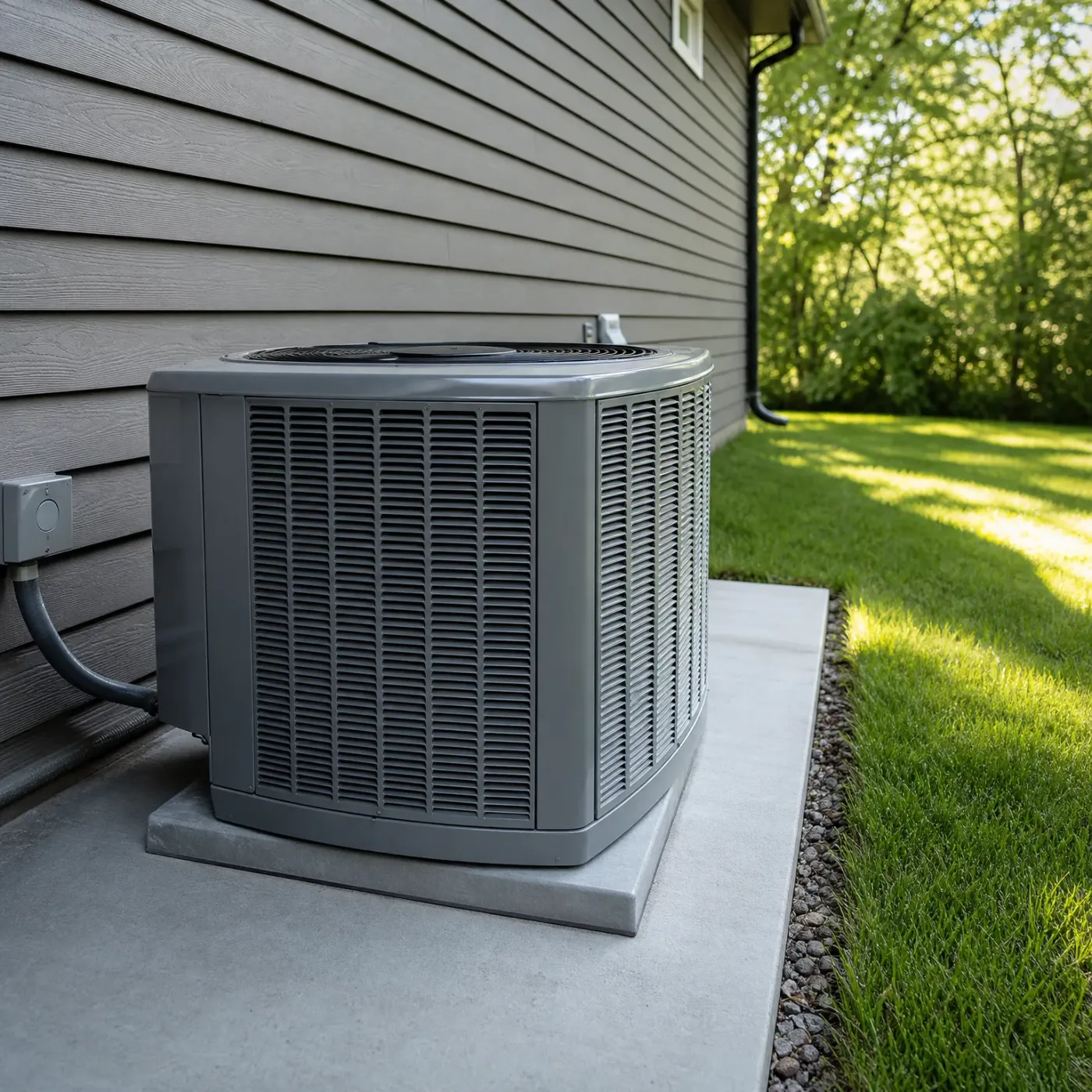
A gray outdoor air conditioner condenser unit on a concrete pad beside a house with horizontal lap siding, with an electrical disconnect box and conduit on the wall, a downspout, gravel edging and a green lawn with trees to the right.

Get the right pro for your heat pump

Request a pro

Answer a few questions instead of calling shop after shop.

You're not committing to anything by asking.