Profile view of a bearded man wearing a black baseball cap and a dark gray T-shirt against a plain light background.

Why your heat pump runs on emergency heat in Nevada

RepairHeat PumpNevada
Step 1 of 2

What ZIP code is the job in?

Your thermostat switches to emergency heat on its own when the heat pump can't pull enough warmth from the outside air, or when the system senses a fault and shuts the compressor down for safety. Winter nights in Nevada can drop well below freezing, and once the outdoor coil gets cold enough, the heat pump loses its ability to heat efficiently and the backup strip heat takes over. That's normal on the coldest nights. What's not normal is emergency heat staying on for days, or kicking in when it's only mild outside. That usually points to low refrigerant, a failed defrost sensor, or a compressor that isn't running at all. Since most homes here heat with gas and power is cheap, the backup heat itself won't wreck your bill the way it might elsewhere, but it's still a sign the heat pump side of your system needs a look before the next cold snap.

An outdoor air conditioning condenser unit on a concrete pad beside a house with light horizontal siding and a concrete block foundation, with bare soil and small green plants around it.
Before you get your heat pump repair
A dark gray outdoor condenser unit on a concrete pad beside a house with beige horizontal siding, with a gray electrical disconnect box and conduit on the wall, mulch beds, a hosta plant, a shrub, and mowed lawn in front.
After you get your heat pump repair

Why the System Switches Over

  • The outdoor unit has a defrost cycle, and if the reversing valve sticks, the system reads frost that isn't melting and locks into emergency heat.
  • A heat pump moves heat from outside air, and below roughly 25 to 35 degrees it loses the ability to pull enough warmth to keep up.
  • The orange or red light on the thermostat means the control board switched over, not that you pressed a button.
  • Auxiliary heat and emergency heat use the same electric strips, but emergency heat means the compressor is fully offline.
  • A low refrigerant charge drops the pressure the system needs to run the compressor, so the board shuts it down and falls back to strips.
  • Since most homes in Nevada heat with gas, emergency heat here usually means a gas furnace is doing the compressor's job until someone fixes the heat pump.

The heat pump and the backup heat are not the same equipment, and the thermostat knows the difference. Inside the outdoor unit, a reversing valve switches the system between heating and defrost. Every so often in cold weather it runs a defrost cycle to clear frost off the coil, and it expects that frost to melt within a few minutes. If the valve sticks or the sensor reading it fails, the control board sees frost that never clears and treats it as a fault. Rather than keep running a unit that might be damaged, the board cuts power to the compressor and brings on the backup heat instead. That backup heat runs on electric strips, the same strips that kick in briefly as auxiliary heat during normal operation. The difference is what else is running. Auxiliary heat supplements the compressor on a hard day. Emergency heat replaces it, because the board decided the compressor shouldn't run at all. A low refrigerant charge triggers the same shutdown, since the compressor needs a certain pressure to run safely and the board won't push it below that. In a home with a gas furnace paired to the heat pump, the furnace is what actually carries the load once emergency heat kicks in. None of this fixes itself. The system stays on backup heat until a technician clears the fault and lets the compressor run again.

A gray outdoor condenser unit on a raised pad beside a house with horizontal lap siding, with refrigerant lines, conduit and an electrical disconnect box on the wall, and shrubs on a mulch bed to the left.
The outdoor unit runs clear, with air moving through a clean grille and no frost built up where it shouldn't be.
A weathered gray outdoor condenser unit on a concrete pad beside a house with horizontal vinyl siding, with conduit, refrigerant lines, and an electrical disconnect box on the wall behind it.
A grille packed with dust and dead leaves blocks airflow, and a heat pump that can't breathe will fall back to emergency heat.
A dimly lit bedroom at dusk with a made bed, a table lamp on a nightstand, and a condensation-covered sash window with a dark curtain.

The thermostat reads 68 but the air coming out of the vent feels barely warm. It's a January night and the heat pump outside has been running on emergency heat for an hour, the backup coil pulling hard on the power bill while you've been too busy to notice. You get up, pad down the hallway in socks, and hold your hand to the vent in the living room. Warm, but not enough to shake the chill out of the room. Outside, the unit sits quiet, a thin crust of frost along the bottom of the grille that never melted off. You pull a blanket off the couch and wait for morning.


A pro who works on heat pumps

Once you send the form, finding a pro is off your list.

It costs nothing to send, and you don't have to hire anyone.

Most Nevada homes heat with gas, so a heat pump stuck on emergency heat is running an electric backup coil instead of a furnace, and that coil draws far more power to produce the same warmth.

Power here is cheap, but an electric coil running for hours still costs more than a heat pump moving warm air the way it's built to, so a stuck system is worth a call even on a low rate.

Power costs 13.26 cents per kilowatt-hour statewide

At 13.26 cents a kilowatt-hour, power here is cheap compared to most of the country. That's fine when your heat pump is running normally. It stops being fine when it's stuck on emergency heat, because the backup coil draws far more power than the compressor ever does, and cheap power run that hard still shows up on the bill.

EIA-861 2025 statewide residential average

A gray outdoor air conditioning condenser unit on a concrete pad beside a house with horizontal siding, next to a green lawn and a plain light-colored wall.

Left on emergency heat

The switch stays flipped to emergency heat night after night because nobody noticed it happen. The backup coil keeps the house warm enough that the problem hides in the power bill instead of the thermostat. A stuck reversing valve or a dirty outdoor coil doesn't fix itself, and the system has no way to switch back on its own once it's locked into backup.

A white outdoor heat pump unit on a concrete pad beside a plain light wall, with gravel and mowed grass in front.

Heat pump running normally

The heat pump pulls warmth from the outside air the way it's built to, and the compressor does the work instead of the backup coil. You can hear it run without the harder draw that comes with emergency heat, and the air at the vent stays warm instead of lukewarm. A repair that clears the fault lets the thermostat switch back on its own and stay there.

Why is the emergency heat light staying on at your house

Check the thermostat and you'll probably see it: the little "emergency heat" or "aux heat" light on, even though you never touched that setting. The air from the vents feels hotter than usual, almost like a space heater, because the backup coil is doing the work instead of the compressor. The outdoor unit might be quiet or barely running. You may notice frost sitting on it that isn't clearing between cycles. If this has been going on for more than a night or two, the next power bill will show it, and the heat pump isn't getting any closer to fixing itself while it sits in backup mode.

A gray outdoor heat pump unit with a large fan grille sits on a concrete pad beside a house with horizontal lap siding, next to a green shrub, mulch bed, and lawn.

The unit running as it should

Air moves freely through the grille and over the fins. The compressor cycles on and off on its own, pulling heat from outside air without any help from the backup coil. This is what should be sitting beside your house most nights.

An outdoor air conditioning condenser unit with a top fan grille sits on a concrete pad beside a house with horizontal siding and a concrete step.

The unit that can't breathe

Dust and dead leaves have packed into the coil fins and grille. With airflow blocked like this, the heat pump can't pull enough warmth from outside air, and the system falls back to emergency heat to keep the house warm.

A woman with dark hair in a bun reclines on a sofa with her eyes closed, wrapped in a cream fleece blanket, a closed blue hardcover book resting in front of her, with a lit lamp and a vase of dried flowers in the background.
A smiling bearded man in a navy sweater sits at a candlelit dinner table with a glass of red wine, a bowl of salad, and plates of food in the foreground.
Single-story house with tan horizontal siding and a dark shingled hip roof, fronted by a patchy green and brown lawn and a concrete walkway leading to the covered entry.

Summer air here averages a dew point of 37°F across June, July and August, according to NOAA climate data for Nevada. That's dry air, the kind that gives your heat pump an easy time moving heat in the summer months. But dry summer air has nothing to do with what happens on a cold winter night, when that same unit has to pull warmth out of air that's got little heat left to give. The strain that pushes a heat pump into emergency heat shows up in January, not July, no matter how comfortable the dew point reads on your porch in August.

NASA POWER T2MDEW county cells weighted by homes

A smiling man in a dark navy sweater sits on a light sofa in a living room, with a glass bowl of popcorn on a wooden coffee table and bookshelves behind him.
A smiling man in a dark green sweater sits on a tan leather sofa in a dimly lit living room, with a bowl of popcorn in the foreground and a kitchen area blurred behind him.
A smiling middle-aged man in a dark shirt sits on a gray sofa in a living room, with a bowl of popcorn on a side table and shelves, a window and kitchen area behind him.
A smiling bearded man in a dark gray t-shirt sits on a gray couch in a living room, with a large glass bowl of popcorn on a wooden table in the foreground.
A gray outdoor condenser unit on a concrete pad beside a white horizontal-siding house, with refrigerant lines and conduit running to a wall-mounted disconnect box, bare soil in front and a green shrub at left.

Clear grille, normal cycling

The disconnect box is mounted clean on the wall, lines running straight into it. Nothing blocking the unit, nothing frosted over that shouldn't be. The compressor kicks on, pulls heat from the outside air, and shuts off on its own. No backup coil needed, no light on the thermostat.

An outdoor air conditioner condenser unit on a concrete pad beside a house with horizontal lap siding, with a shrub to the left, bare dirt in front, and conduit and a metal disconnect box on the wall.

Stuck on backup heat

Same kind of unit, same wall-mounted disconnect, but the compressor isn't doing the work anymore. A frozen reversing valve or a fault the system sensed has handed the job to the electric coil inside. It'll keep the house warm, but it's the expensive way to do it, and nothing outside looks any different until you know what you're looking at.

A woman in a cream cardigan and jeans stands with one hand raised facing an open front door of a gray horizontal-siding house, with a black lantern wall light, a potted shrub with yellow flowers, and a stone-faced porch column.

Emergency heat means the heat pump needs a look, not the thermostat

A heat pump stuck on emergency heat is telling you something specific: the compressor stopped pulling heat from outside air, and the backup coil picked up the whole job. That might be a stuck reversing valve, frost that isn't clearing, or a safety switch shutting the compressor down. None of those fix themselves. Until someone checks the unit, the coil keeps carrying the load and the switch stays flipped.

You don't have to track down who handles heat pumps in your part of Nevada or wait on hold to find out. Send the request and a contractor who works on these systems gets matched to your situation and reaches out to you. From there, figuring out which part failed is off your plate.

A living room corner with a beige upholstered armchair holding navy and striped cushions, a small round wooden side table with a carved bowl and a potted green plant, a framed landscape picture on a pale wall, built-in shelving, and a curtained window.
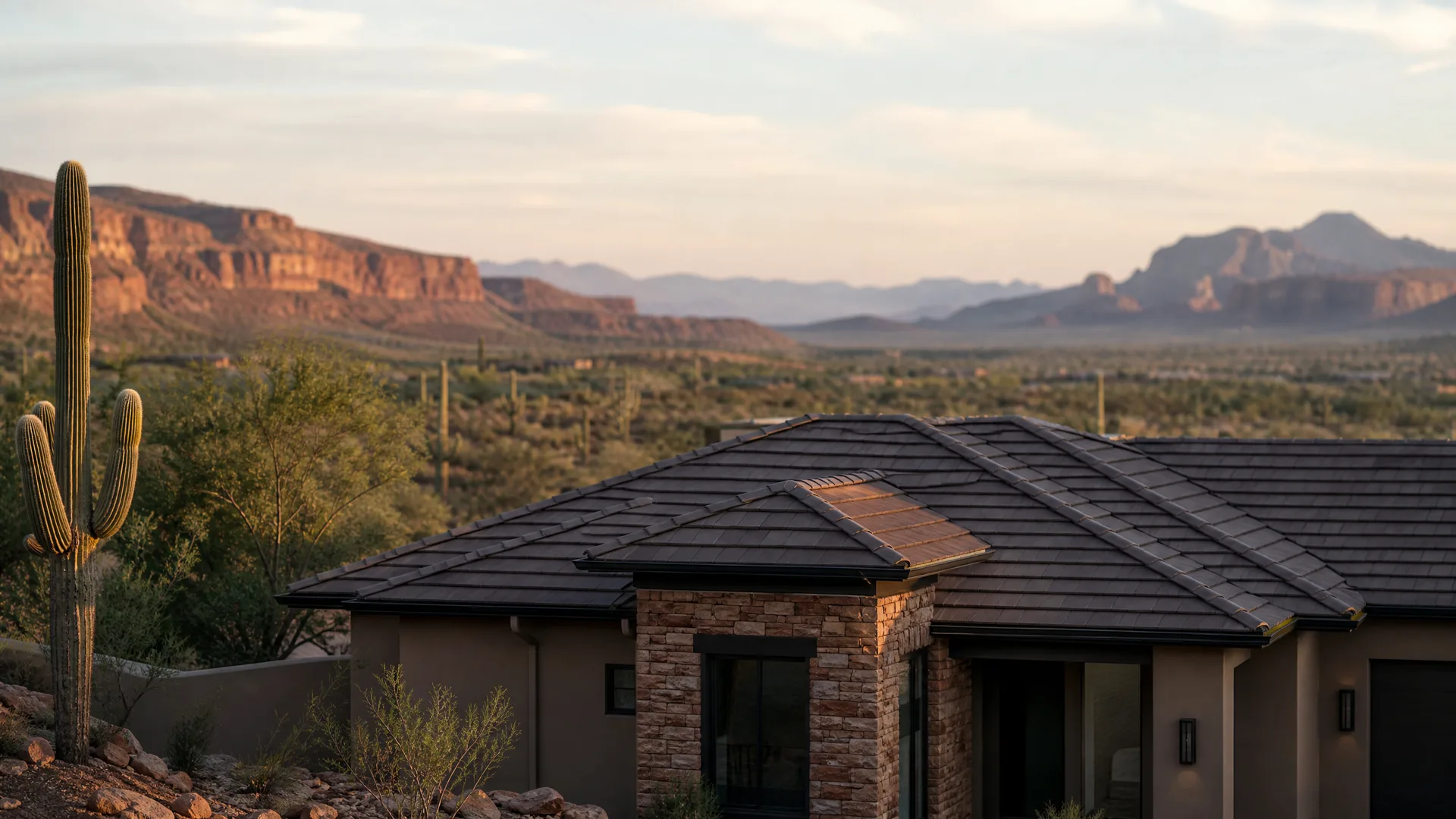
A single-story house with a dark tile hip roof, stucco walls and stone-clad entry, with a saguaro cactus in the left foreground and desert hills and mountains in the background.

Get your heat pump to the right pro

Hand off the search

No charge to send it. You decide if you hire them.

A heat pump stuck on emergency heat won't fix itself, and every night it runs that way costs more than the night before. Send the request and let a contractor sort out the compressor or the valve. You get your heat back and your power bill back to normal.