





View from a shaded covered patio with exposed wood beams toward a single-story tan stucco house, a gray concrete block wall, a gravel yard, and a mesquite-like tree under an overcast sky.

AC Installation in Battle Mountain, NV

Tell us about the job

Takes about a minute. No obligation.

New system or replacementCentral ACLander County, NV
Step 1 of 2

What ZIP code is the job in?

Utility gas heats 48.1% of homes in Lander County, more than any other fuel. Electricity comes in second at 30.6%. That split matters for an AC installation, because most homes here already have a gas furnace paired with a separate cooling system, usually a central air conditioner that shares the furnace's ductwork and blower. If that describes your setup, replacing the AC side alone is usually the simplest path. A contractor can match the new unit to the ductwork and furnace you already have rather than redesigning the whole system.

2 months
July through August, your air conditioner is on duty
85°F
the average summer afternoon it cools against
2 hail events
in ten years, and hail bends the fins on outdoor coils
13.4 SEER2
the federal minimum any new unit must meet
Isometric line illustration of a cutaway house showing interior rooms, a furnace or air handler with ductwork, and an outdoor condenser unit beside the building.
Your air conditioner works hardest from July through August.

NOAA nClimDiv, 1991–2020 normals

AC here runs July through August.

June is the month to get the new system in, before you need it running.

A standard system is the right call here

Half the homes here were built by 1986
Cooling runs July through August
Summer afternoons average 85°F

Lander County sits in zone 5B, a cool, dry climate where heating carries more of the year than cooling does. New central air conditioners still have to clear the efficiency rules that apply here. Since January 2023, units under 45,000 Btu/h sold in the Southwest need to hit at least 14.3 SEER2, and separately meet an EER2 minimum that depends on how the unit is certified. That EER2 number matters here because it reflects how the unit holds up on the hottest, driest afternoons, not just its average efficiency over a season. A contractor sizing your system will only be able to offer units that clear both numbers.

The right size costs less to run here

A standard-size, standard-efficiency system is enough for a home here. Nevada homes paid 15 cents per kilowatthour in 2024, and a correctly sized unit is what keeps that cost in line, not an oversized or upgraded one. Get a quote on a system built for what this place actually needs.

Find a contractor
A man in a gray long-sleeve shirt, brown work pants, boots and a dark cap walks up porch steps toward a red door, carrying a worn canvas tool bag.
An outdoor air conditioning condenser unit mounted on a concrete pad surrounded by gravel, photographed against a partly cloudy blue sky.

The old unit doesn't linger

Once the new system is running, the old condenser usually comes out the same day. The installer needs that pad space clear and the refrigerant lines freed up to make the new connections. The refrigerant in the old unit gets recovered, not vented, so a licensed tech has to be the one to disconnect it. If the furnace and blower are staying, the installer only swaps the coil and the outdoor unit, the parts tied to cooling, and leaves the heating side alone. If the old unit is still under warranty, ask about that before it goes anywhere, since some of that coverage can carry over or matter for a refund.

The ductwork decides more than the unit does

A condenser and coil only move air as well as the ducts let them. If the existing ductwork is too small or leaky for the new system's airflow, a contractor has to address that before the new unit can perform the way it's rated to. That work varies site to site, which is why similar systems can still mean different installation scopes.

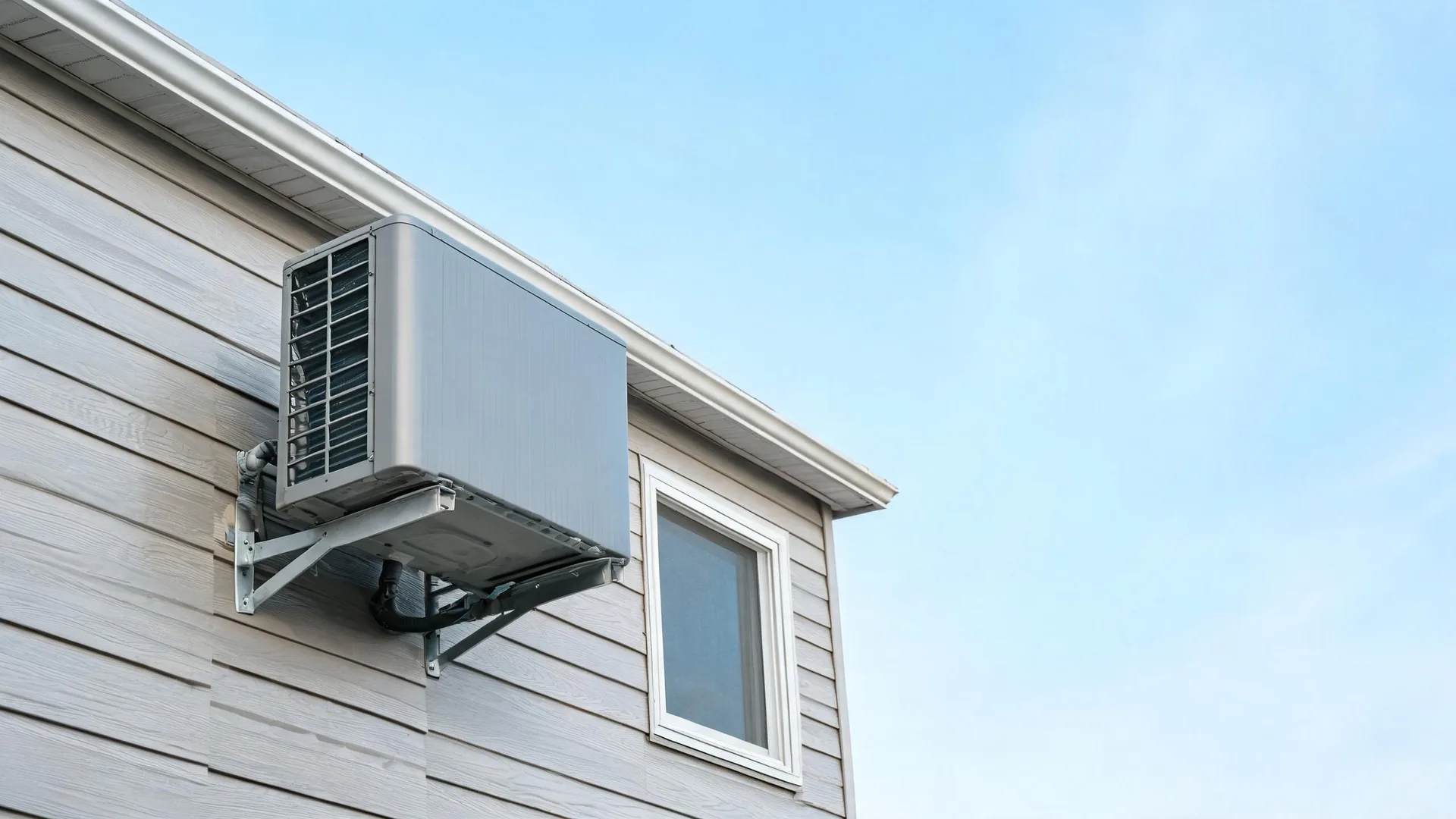
Where the line set runs changes the labor

The refrigerant lines connecting the outdoor unit to the indoor coil have to be sized and routed correctly. Running new line set through a wall or a longer path takes more time than reusing a path that's already there. The route, not just the equipment, is part of what a contractor is pricing when they scope the job.

Overhead view of an air conditioning condenser unit on a concrete pad next to a house with asphalt shingle roofing and vinyl siding.

Going above the federal minimum saves little here, about $10 a year.

  • A higher-efficiency unit$110 a year
  • A new unit at the federal minimum, 14.3 SEER2$120 a year

Estimates for a typical Lander County home, from EIA household energy data, Nevada fuel prices and NOAA climate normals. Your home will differ.

Install day starts with the system off and the refrigerant in the old unit recovered before anything gets disconnected. Once the old condenser and coil are out, the contractor sets the new pad or confirms the existing one is still level, since a unit sitting crooked strains the lines and the compressor over time. Line sets get connected, the system gets evacuated to pull moisture and air out of the lines, then it's charged with refrigerant to the manufacturer's spec. After that, the contractor checks airflow at the vents, confirms the thermostat is talking to the new equipment, and runs the system through a full cycle to see that it's cooling and cycling off the way it should. Most of the day is that pressure testing and charging, not the physical swap itself.