





Adobe-style desert homes with warm exterior lighting, saguaro cacti, and desert landscaping along a curved street at dusk, with mountains in the background.

AC Installation in Gardnerville Ranchos, NV

Tell us about the job

Takes about a minute. No obligation.

New system or replacementCentral ACDouglas County, NV
Step 1 of 2

What ZIP code is the job in?

Gas heats most homes in this part of Douglas County, about seven in ten. Central air conditioning pairs with that setup without much trouble, since the furnace's blower moves the cool air through the same ducts the gas furnace already uses. If your home has gas heat and existing ductwork, adding or replacing central AC usually means matching a new outdoor unit to that duct system rather than building anything new. Electric heat and propane account for the rest, and either can still pair with central air, but gas furnace plus AC is the setup most contractors here see first.

2 months
July through August, your air conditioner is on duty
82°F
the average summer afternoon it cools against
1 hail events
in ten years, and hail bends the fins on outdoor coils
13.4 SEER2
the federal minimum any new unit must meet
Isometric line illustration of a cutaway house showing interior rooms with furniture, ceiling ductwork, an indoor air handler, and an outdoor condenser unit connected by lines.
Your air conditioner works hardest from July through August.

NOAA nClimDiv, 1991–2020 normals

Gardnerville Ranchos runs its AC about two months a year, July and August, with afternoons averaging 82°F.

A system here isn't working against much, so a dependable unit sized right for your ducts matters more than the highest efficiency rating.

Douglas County sees its share of wind and winter storms, but nothing here calls for sizing up

513 severe weather events from 2015 to 2024
13% of homes statewide lost power a day or more in 2024
290 damaging wind events from 2015 to 2024
Get it done in JuneJuly starts the heat. June is when to put in a new system, not when it breaks.

Electricity in Nevada runs about 15 cents a kilowatt-hour, cheaper than a lot of the country. With only two months of real cooling load, that keeps the cost of running AC modest no matter which unit goes in. A high-SEER2 system costs more up front, and with a bill this small to begin with, it takes longer to earn that back. Putting the money into a unit that's sized right for your ducts and installed well tends to matter more here than chasing the top efficiency number.

Any new system here has to clear 14.3 SEER2

Douglas County falls under the Southwest's rule for split-system central air, not just the national minimum. A unit going in below 45,000 Btu/h has to hit 14.3 SEER2. That narrows what a contractor can sell you here, so it's worth asking whether the system they're quoting actually clears that line.

Find a contractor
A man in a dark t-shirt and tan work pants carries a worn canvas tool bag up wooden porch steps toward a red-orange front door of a gray-sided house, with a red ceramic planter holding a shrub to the right.
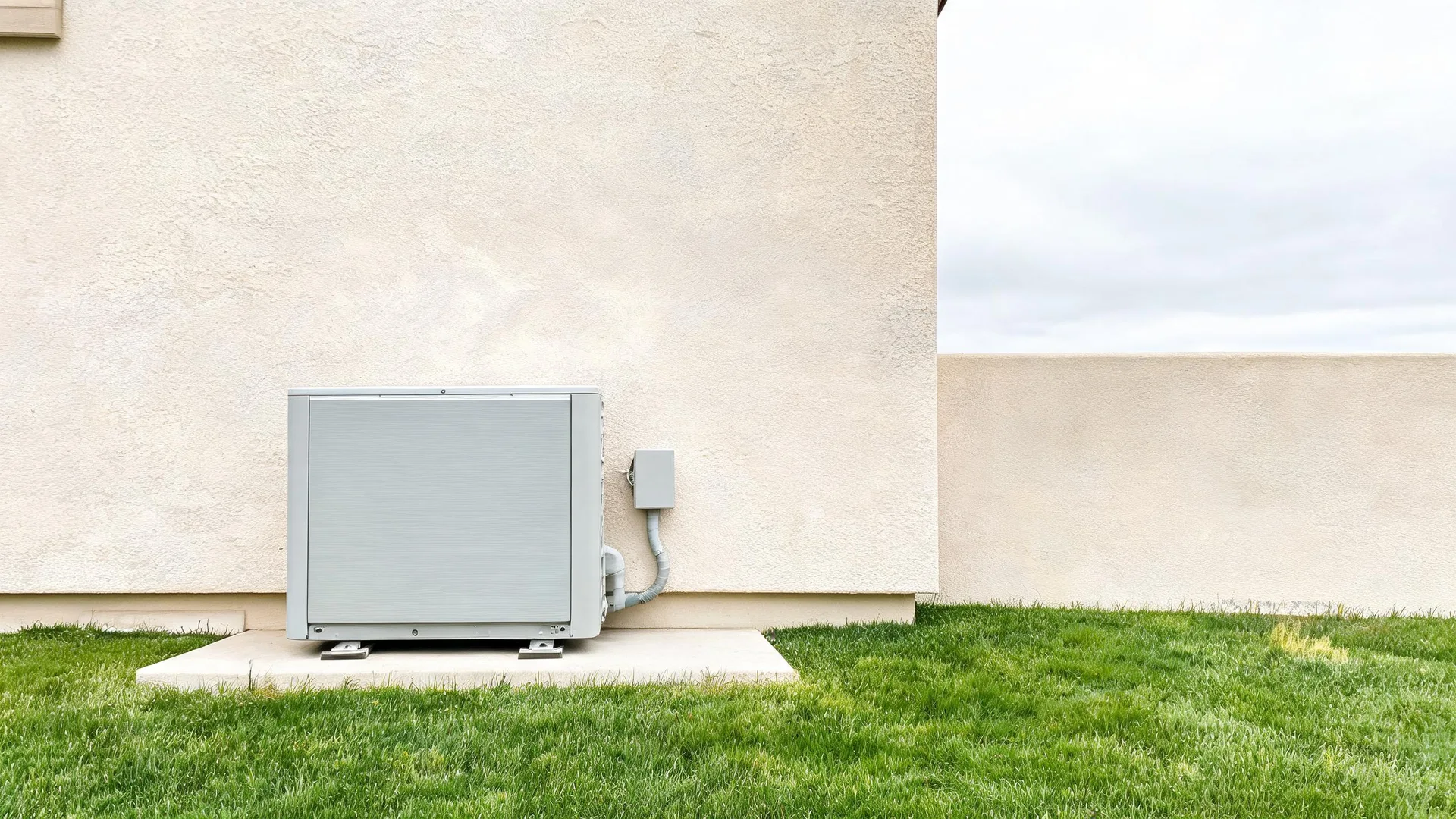
A gray metal air conditioning condenser unit mounted on a concrete pad in a flat grassy field under a partly cloudy sky.

What drives the cost isn't just the box outside

Installation cost tracks the work a system has to do, not just the equipment sitting outside. Tonnage is the first thing a contractor has to get right, and that comes from the size and layout of the space, not a guess based on the unit being replaced. Go too big and the system short cycles, cooling the air without pulling the moisture out, so the house feels clammy even at the right temperature. Go too small and it runs constantly, chasing a setpoint it can't hold. Ductwork is the other part of the cost. If the existing ducts are undersized or leaky, a new condenser can only move air as well as that ductwork lets it, so sealing or modifying ducts sometimes has to happen before the new unit gets credit for what it can do. The coil, the line set, and the refrigerant charge all have to match across indoor and outdoor units, so a straight swap only works when what's already there is compatible with what's going in. None of that shows up as its own line on a quote, but it's what separates a system that just turns on from one that actually cools the way it's supposed to.

The old condenser gets hauled off, not left behind

Whoever installs the new outdoor unit disconnects the old one, recovers the refrigerant from the lines, and takes the unit with them. Refrigerant can't just be vented to the air, it has to be captured with the right equipment, so that part of the job is regulated and tracked.

The indoor coil usually comes out too

If the new condenser uses a different refrigerant or a different charge than the old one, the indoor coil has to be swapped to match it. Leaving a mismatched coil in place can mean poor cooling and a system that trips on pressure it wasn't built to handle.

Overhead view of an outdoor AC condenser unit on a concrete pad next to a house with a dark shingle roof.

Going above the federal minimum saves little here, about $0 a year.

  • A new unit at the federal minimum, 14.3 SEER2$80 a year
  • A higher-efficiency unit$80 a year

Estimates for a typical Douglas County home, from EIA household energy data, Nevada fuel prices and NOAA climate normals. Your home will differ.

A full install usually runs one day, start to finish. The crew shuts off power to the old system, recovers the refrigerant, and disconnects the lines before anything new goes in. Setting the outdoor unit means leveling a pad, running new line set if the old one doesn't match the new refrigerant, and connecting power. Inside, the coil gets swapped and the plenum sealed back up. Once everything's connected, the system gets charged with refrigerant to the exact weight the manufacturer specifies, not just topped off until it feels cold. The last step is airflow. Static pressure gets checked and dampers adjusted so the new unit moves air the way your ducts are built to handle it.