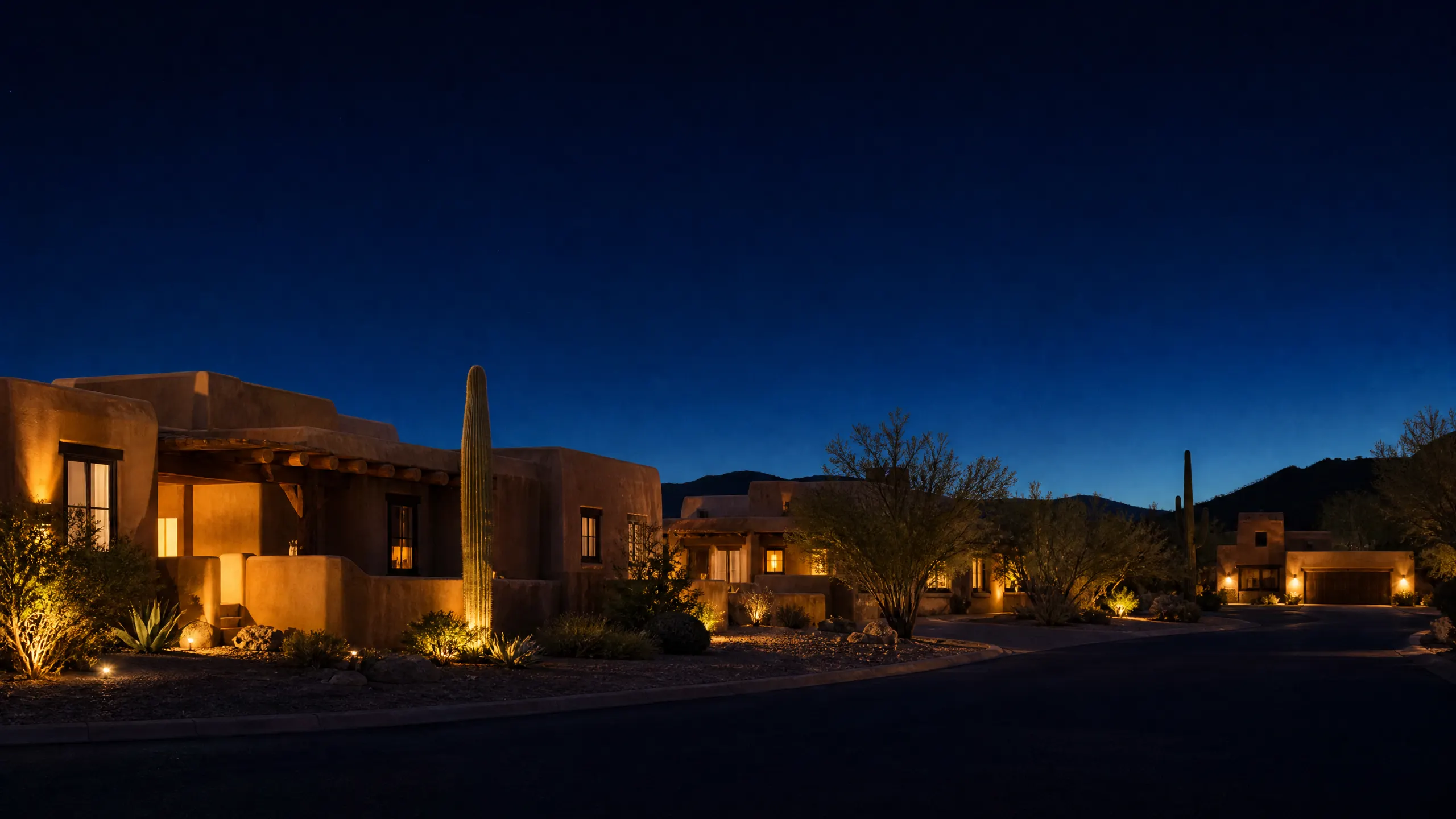







Three adobe-style desert homes with warm landscape lighting, surrounded by saguaro cacti and desert vegetation under a deep blue dusk sky.

AC Installation in Hawthorne, NV

Tell us about the job

Takes about a minute. No obligation.

New system or replacementCentral ACMineral County, NV
Step 1 of 2

What ZIP code is the job in?

Propane heats most homes in Mineral County, almost half. That's a fuel decision tied to the furnace, not the air conditioner, but it tells you something about how these houses are set up. A lot of them run a propane furnace paired with a separate central air conditioner, the two sharing the same ductwork but nothing else. If that's your setup, swapping in a new AC doesn't touch the furnace or the gas line at all. The two systems just need to agree on the same ducts and the same thermostat.

2 months
July through August, your air conditioner is on duty
86°F
the average summer afternoon it cools against
3 hail events
in ten years, and hail bends the fins on outdoor coils
13.4 SEER2
the federal minimum any new unit must meet
Isometric cutaway illustration of a single-story house with a dark shingled roof, showing interior rooms with ductwork and an indoor air handler connected to an outdoor condenser unit beside the building.
Your air conditioner works hardest from July through August.

NOAA nClimDiv, 1991–2020 normals

A standard central AC size matched to your house covers Hawthorne cooling without any upsizing.

At 15 cents a kilowatt-hour, running an oversized unit just costs more to do the same job.

Two months of real heat a year, so a standard system is enough

Cooling runs July through August
Summer afternoons average 86°F
61 damaging wind events from 2015 to 2024
Built for an older houseHalf the homes in Mineral County went up in 1971 or earlier, and almost a quarter are mobile homes.

Mineral County falls under zone 4B, and any split-system AC installed here has to meet the Southwest's regional minimum, not the lower national one. That means 14.3 SEER2 for units under 45,000 Btu/h. There's a second number tied to it, an EER2 rating that depends on how the unit is certified, and it matters because it measures how the system holds up in steady, direct heat rather than its average efficiency over a season. A contractor quoting a system for this address should already be working from the regional number, not the national floor.

June is when this gets installed, not July

Cooling runs July through August here, which makes June the month to get it done. Put the new system in before the heat starts and it's already running when July arrives, nothing to schedule around and no wait while every other AC in the county needs the same attention.

Find a contractor
A man in a dark shirt and tan work pants carries a worn leather tool bag up porch steps toward a red front door, with a potted shrub beside the entry.
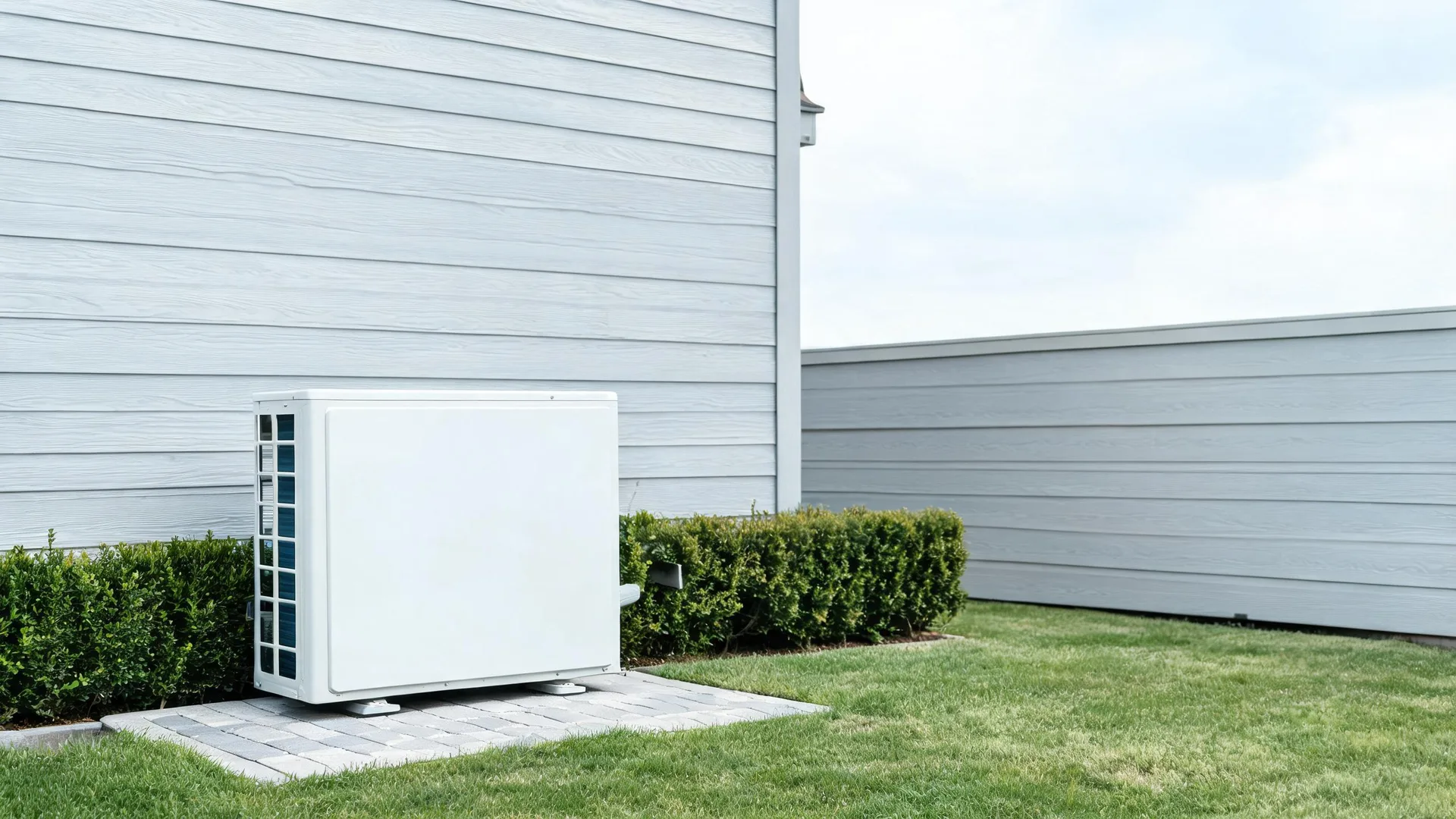
An outdoor residential air conditioning condenser unit mounted on a concrete pad, surrounded by gravel with a blue sky in the background.

Matched to the house, not just the square footage

Sizing an AC isn't about going bigger to be safe. A unit too big for the house cools the air fast and shuts off before it pulls the moisture out. The house ends up feeling clammy even at the set temperature. Short cycles like that wear on the compressor too, since the hardest part of its work is the startup, not the running. A unit too small just runs long and loses the race on the hottest days. Getting the size right means a contractor works out the heat gain for the house itself. That means the square footage, the window area and direction, the insulation, how many walls face the sun. It's a load calculation, not a guess based on the old system or the size of the house next door. A properly sized unit runs long, steady cycles that hold a steady temperature and pull moisture out of the air as it goes.

SEER2 tells you the average, not the day

SEER2 is a seasonal number. It's worked out over a whole range of conditions, mild days and hot ones averaged together. It tells you how the system performs across a stretch of time, not how it holds up on the one afternoon you actually need it most.

EER2 is the number for that afternoon

EER2 measures the same unit under steady, direct heat, running flat out with no break in the load. A system can carry a solid SEER2 rating and still have a weak EER2. When you're comparing quotes, ask for both numbers, not just the one on the sticker.

An outdoor central air conditioning unit mounted on a concrete pad beside a blue-sided house at sunset.

Going above the federal minimum saves little here, about $10 a year.

  • A higher-efficiency unit$140 a year
  • A new unit at the federal minimum, 14.3 SEER2$150 a year

Estimates for a typical Mineral County home, from EIA household energy data, Nevada fuel prices and NOAA climate normals. Your home will differ.

Installation day starts with the old unit coming out, the pad or cradle, the refrigerant lines, the disconnect. If the new system uses a different refrigerant, which is common now, the old line set usually can't be reused, so that gets replaced too. The contractor sets the new outdoor unit, connects it to the indoor coil, and pulls a vacuum on the line set before any refrigerant goes in. That vacuum step matters more than it sounds. Any moisture or air left in the lines turns into acid or ice over time, so it gets pulled down and held there to prove the system is sealed. Once it holds, refrigerant goes in to the weight the manufacturer specifies, not just until the pressure looks right. Then it's a matter of wiring the thermostat, confirming airflow at the vents, and running the system through a full cycle to check that it shuts off and restarts the way it should.