Electricity here runs 15 cents a kilowatt-hour
Nevada homes paid about 15.00 cents per kilowatthour in 2024. An air conditioner that runs inefficiently turns more of that rate into waste, month after month.
Takes about a minute. No obligation.
Nevada homes paid about 15.00 cents per kilowatthour in 2024. An air conditioner that runs inefficiently turns more of that rate into waste, month after month.
When a system is going in new, its efficiency rating is the one thing locked in for as long as it runs. Las Vegas summers mean this unit will work hard, so what you pick now is what every bill is built on.

NOAA nClimDiv, 1991–2020 normals
Gas heats 60.2% of homes in Clark County, electricity heats most of the rest.
Whichever fuel your furnace uses, your air conditioner runs on electricity either way, so its efficiency rating is what decides how hard it works all summer.




April is the month before cooling starts here, and it is the better time to put in a new system than the middle of summer. Cooling runs May through October, six months straight, and once it starts the system you have is the system you are stuck with. Replacing it in April means it goes in on your timeline, with time to size it right for this house instead of matching whatever broke. It also means the new unit is the one running on day one of the season, not partway through it.
Any new split system going in here has to meet 14.3 SEER2 and the matching EER2 rating, the federal minimum for this region since January 2023. That floor already rules out the lower-efficiency models still sold in cooler parts of the country. A system that clears it may also qualify for a federal tax credit. Install it to meet the standard, and the summers here take care of the rest.
Find a contractor
Six months of cooling every year and afternoon highs near 98 degrees mean this system runs longer and harder here than it would almost anywhere else. That is the load it has to be sized for, not the load one bad week in July happens to produce. A unit sized to the house runs steady and wears evenly. One sized off a rule of thumb either struggles when it is hottest or short-cycles in the milder months, and both wear it out sooner. Have the contractor run a load calculation on this house before quoting a tonnage.
A contractor doing this right measures the square footage, counts the windows and which way they face, checks the insulation, and adds up what else gives off heat inside the house. A home with more glass facing the afternoon sun or less insulation in the attic needs a different tonnage than one without, even at the same size. The calculation accounts for all of it before anyone picks a number.
An oversized system cools the air fast and shuts off before it pulls the moisture out, so the house feels cold and damp instead of comfortable. It also cycles on and off more often, and every start puts more wear on the compressor than running steady does. A system sized correctly runs longer stretches at a lower output, which is what actually keeps a house even.
Estimates for a typical Clark County home, from EIA household energy data, Nevada fuel prices and NOAA climate normals. Your home will differ.
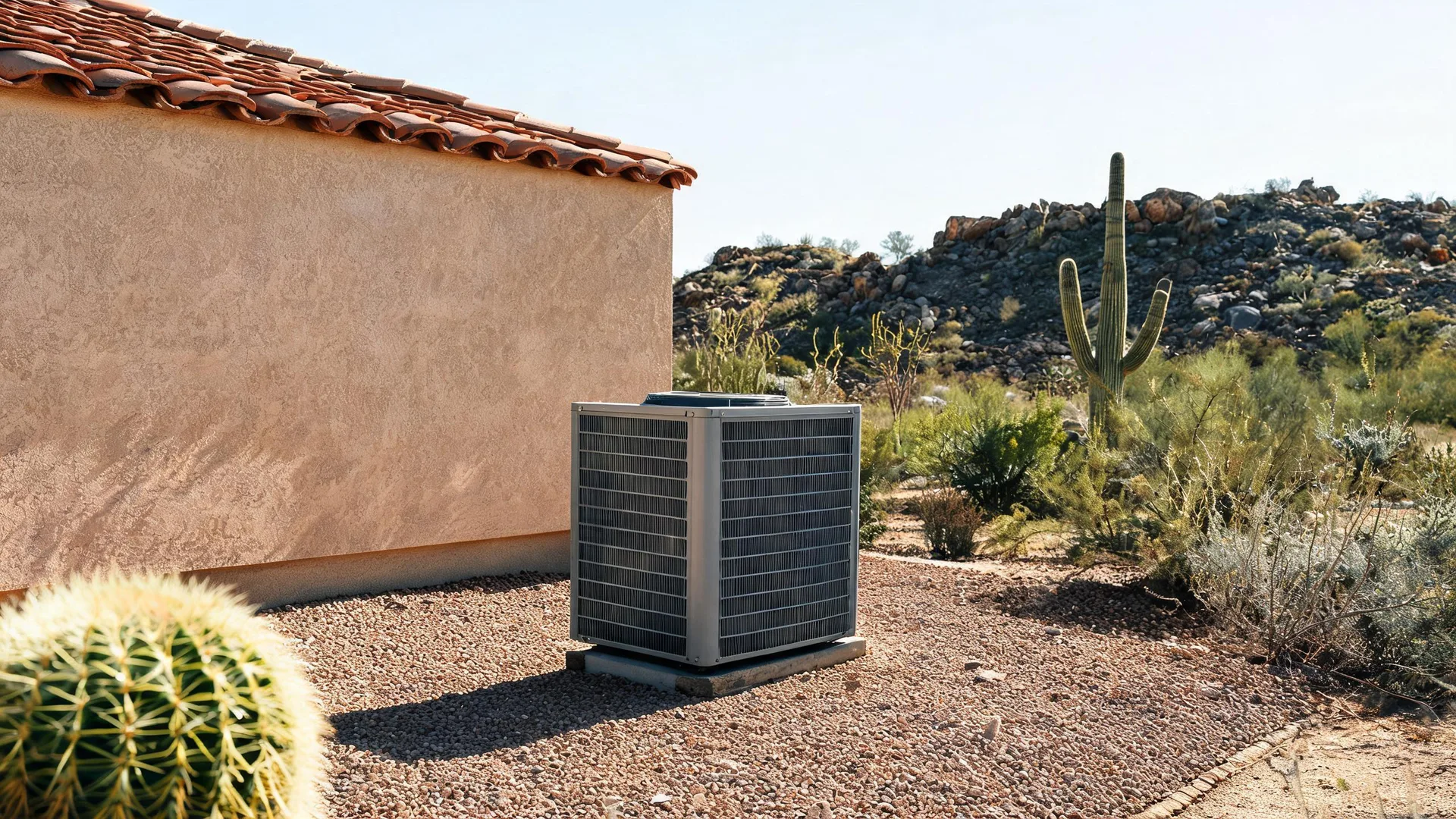
Install day starts with the old system coming out, not the new one going in. The line set usually gets replaced rather than reused, since old refrigerant lines can carry contamination or be the wrong size for a new unit. The indoor coil and outdoor condenser go in as a matched pair, the condenser set on a level pad outside and the coil connected through the wall. Once the lines are run, the system gets evacuated to pull out moisture and air before refrigerant goes in. Either one left behind damages the compressor over time. The last steps decide whether the install was done right. The refrigerant gets charged to the exact weight the manufacturer specifies, then airflow at the vents and the temperature split between the air going in and the air coming out both get checked. A system can look finished and still be set up wrong, so walk through those final checks with the contractor before they leave.