View from beneath a concrete overhang across a gravel yard toward a single-story stucco building with square columns, a gray concrete block wall, and a large bare-branched tree at right.

AC Installation in Virginia City, NV

Tell us about the job

Takes about a minute. No obligation.

New system or replacementCentral ACStorey County, NV
Step 1 of 2

What ZIP code is the job in?

Propane is the fuel to plan around

Propane heats more homes in Storey County than anything else, close to 43 percent. Utility gas and electricity make up most of the rest. If your furnace runs on propane now, that tank and line are already set up for it.


Your AC install doesn't touch your heating fuel

Central air runs on electricity no matter what heats your home, propane, gas or otherwise. An AC installation means new equipment to match your home's cooling load and the ductwork already in place, not a change to how you heat.

2 months
July through August, your air conditioner is on duty
84°F
the average summer afternoon it cools against
13.4 SEER2
the federal minimum any new unit must meet
Isometric line illustration of a cutaway house showing interior rooms with furniture, ductwork leading to an indoor air handler, and an outdoor condenser unit connected by a line set.
Your air conditioner works hardest from July through August.

NOAA nClimDiv, 1991–2020 normals

AC here runs about two months a year, July and August.

Your system doesn't need to be built for heavy, year-round duty.

A standard system handles Virginia City summers fine

Power costs 15 cents a kWh statewide
Cooling runs July through August
Summer afternoons average 84°F

A straightforward single-stage system holds up fine here. Two months of real cooling load a year, with afternoon highs around 84, is not what wears a condenser down early. What matters more at install is matching the unit to your home's size and sealing the ductwork correctly. Storey County also sees damaging wind often, so ask your contractor how the outdoor unit will be secured and where it's placed. A unit built for mild, short summers just needs to be set up right.

Your new AC has to meet the Southwest's efficiency minimum

Any new central air system installed here has to meet the Southwest's minimum of 14.3 SEER2, stricter than the national floor. It also has to meet a separate EER2 requirement depending on the unit's rating. That narrows what a contractor can install, and a federal tax credit is available toward the cost of qualifying equipment.

Find a contractor
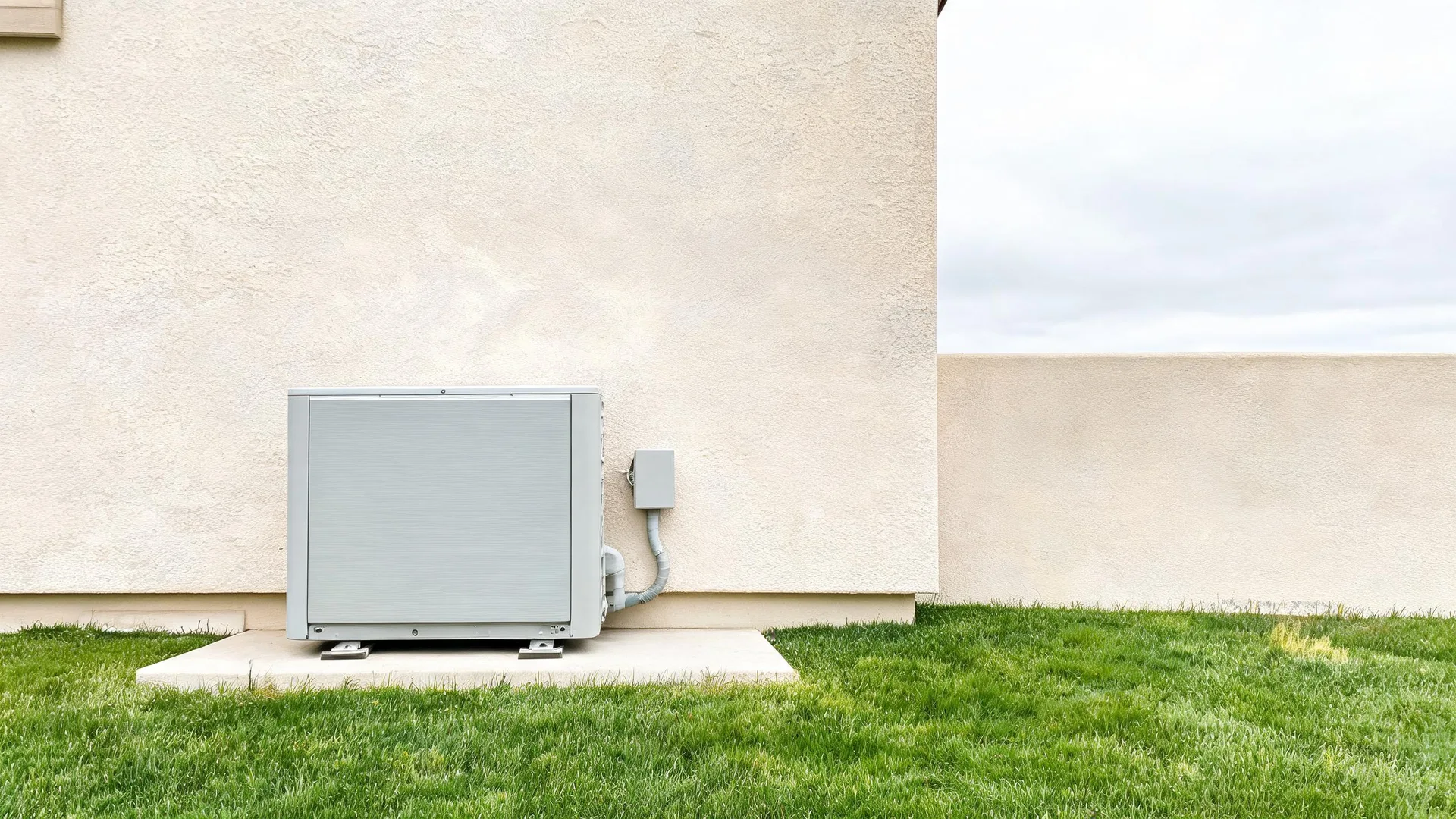
A gray metal air conditioning condenser unit mounted on a concrete pad in a flat grassy field under a partly cloudy sky.

Get it in before June

July through August is the only stretch this system has to work hard. Get it installed before June and it's tested and adjusted before that first real load hits. Wait until July and you're asking a contractor to size and set up a system the same week you need it running.

Ask for the load calculation, not a guess off the old unit

A contractor should size your new system by running a load calculation on your house, checking square footage, windows, insulation and layout, not by matching whatever tonnage was there before. A system sized too big cools the air fast and shuts off before it pulls the moisture out, leaving the house feeling clammy. One sized too small runs long cycles and never quite catches up on the hottest afternoons.

Ask what happens to the ductwork, not just the unit outside

The condenser and air handler only move air through what's already there. If the ducts are leaky, undersized, or were built for a different system, the new equipment won't deliver what the specs promise. Have the contractor walk through the duct plan and the refrigerant line set before anything gets installed, not after.

Overhead view of an outdoor AC condenser unit on a concrete pad next to a house with a dark shingle roof.

Going above the federal minimum saves little here, about $10 a year.

  • A higher-efficiency unit$140 a year
  • A new unit at the federal minimum, 14.3 SEER2$150 a year

Estimates for a typical Storey County home, from EIA household energy data, Nevada fuel prices and NOAA climate normals. Your home will differ.

Installation day starts with the old system coming out, condenser, air handler or coil, whatever your home has. A contractor recovers the refrigerant from the old lines before anything gets disconnected, that's required, not optional. The new condenser gets set on its pad outside, the indoor coil goes in above or beside the furnace, and the line set connecting them gets run, reused if it's in good shape, replaced if it's not. Once everything's connected, the system gets charged with refrigerant to the exact weight the manufacturer specs, then tested under load. A good contractor checks static pressure in the ducts and airflow at the registers before calling it done, not just whether cold air comes out. Expect them to walk you through the thermostat settings and filter location before they leave.