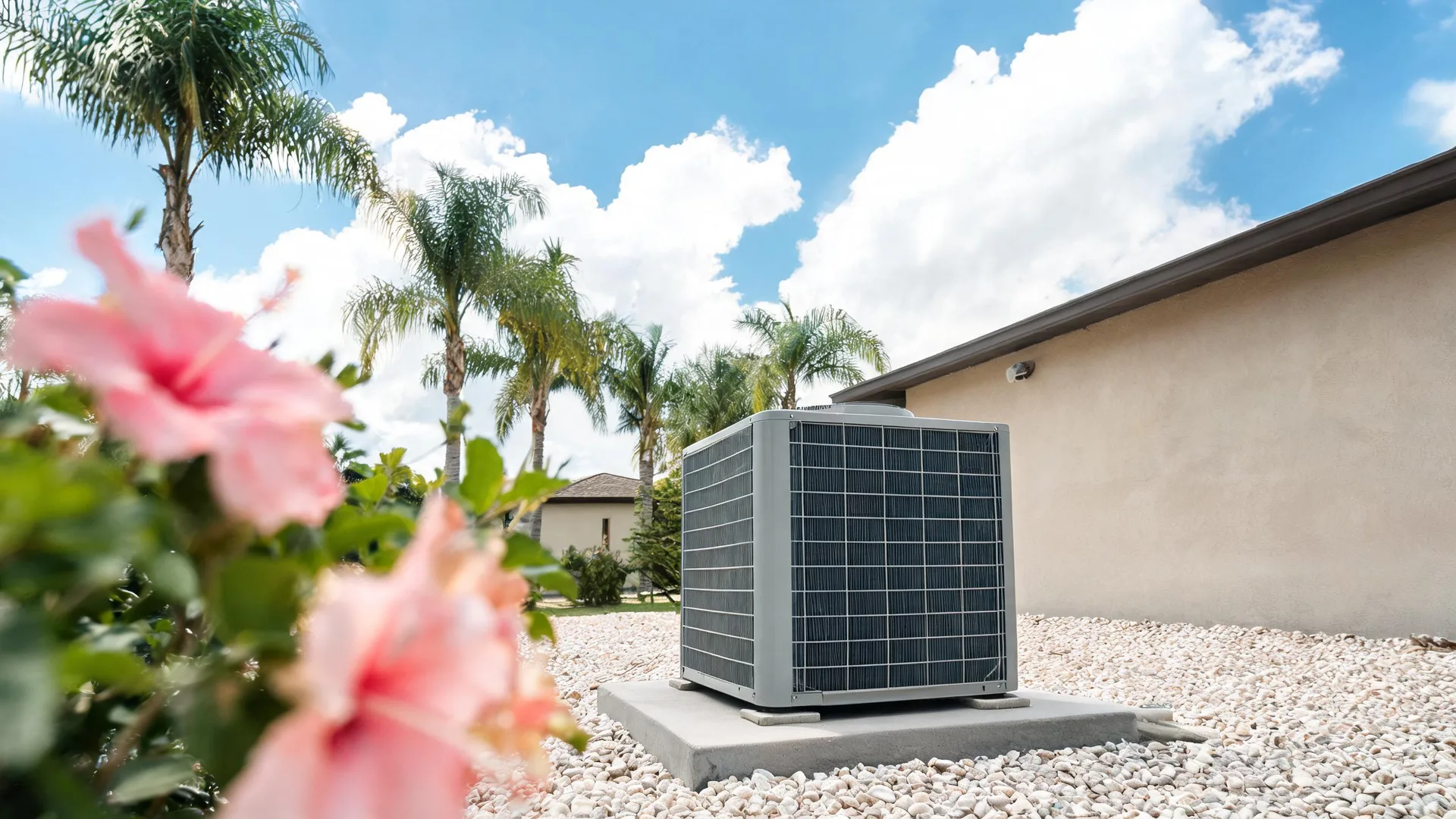
Skip maintenance long enough and the system doesn't fail all at once. It fails slowly first. A dirty coil or a clogged filter makes the compressor work harder to move the same amount of heat, so it runs longer to hit the same temperature. That strain adds up on parts that were never built to work that hard for that long. Capacitors wear out faster under extra load. A loose electrical connection or a slow refrigerant leak, the kind a tune-up is built to catch, turns into compressor damage if nobody looks at it early. By the time the system won't turn on at all, it's usually been struggling for a while.
3 months
June through August, your air conditioner is on duty
89°F
the average summer afternoon it cools against
52 wind events
in ten years, and wind drives debris into outdoor units
Your air conditioner works hardest from July through August.
Jan
Feb
Mar
Apr
May
Jun
Jul
Aug
Sep
Oct
Nov
Dec
NOAA nClimDiv, 1991–2020 normals
A clogged filter cuts off airflow before the coil ever gets dirty.
Swap the filter on a schedule and the coil behind it stays clean longer too.
Three months of real heat, then it sits. One check before June covers it.
Cooling runs June through AugustSummer afternoons average 89°F52 damaging wind events from 2015 to 2024
Dyer AC MaintenanceOne check before summer covers Dyer's AC year
Half the homes in Esmeralda County were built in 1986 or earlier, half in 1986 or later, which is just a normal spread of ages for this area. Nothing about that calls for extra visits. One AC checkup a year, done before the heat sets in, is what this system needs whether the house is older or newer. Mobile homes make up close to a third of the housing here, and the same rule holds for them. The system doesn't need watching every season, just a look at the right time, once, before it has to carry the summer.
A gauge set tells a different story than your thermostat does. Refrigerant charge that's a little low won't always show up as warm air right away, it shows up first as a system that runs longer than it should to get there. A tech checks the pressures against what the system is supposed to run at, not what feels fine from the vent. The coil fins get checked too, not just for dirt but for bent fins blocking airflow that a filter never would have caught. Contacts inside the electrical panel get checked for pitting and heat discoloration, the kind that starts small and ends with a part failing mid-summer. None of this shows up from the thermostat or the outside of the unit. It shows up on the gauges and in the panel, which is the part a yearly check is actually for.
A quick visit checks what's easy to see
A fast tune-up checks the filter, listens to the unit run, and feels for cold air at the vents. That tells you the system turns on and blows cold. It doesn't tell you whether the compressor is straining or whether a connection is about to fail.
A thorough one checks what the gauges show
A full tune-up puts gauges on the lines to read refrigerant pressure, pulls the panel to check connections for pitting, and checks the coil fins for airflow blockage, not just dirt. These are the checks that catch a problem while it's still small enough to fix on the spot.
Book your AC tune-up in May, before homes here start needing cooling in June.
Jan
Feb
Mar
Apr
May
Jun
Jul
Aug
Sep
Oct
Nov
Dec
A tune-up checks the refrigerant charge, cleans the coils, tests the capacitor and tightens the electrical connections.
A proper tune-up starts outside at the condenser. The tech pulls the fan grille and checks the coil fins for anything blocking airflow, then cleans what's built up on them. The fan motor gets checked for play in the bearings and for the right speed, since a slow fan means less heat getting pulled off the coil. Inside, the blower wheel gets looked at too, not just the filter in front of it, because a dirty wheel cuts airflow the same way a clogged filter does. Gauges go on the refrigerant lines to check pressures against what the system is rated for. That's the only way to catch a slow leak before it turns into a warm house. The electrical side gets checked last. Connections at the disconnect box, the capacitor's run reading, the contactor's contacts, since a worn contactor is a common reason a system won't start at all.