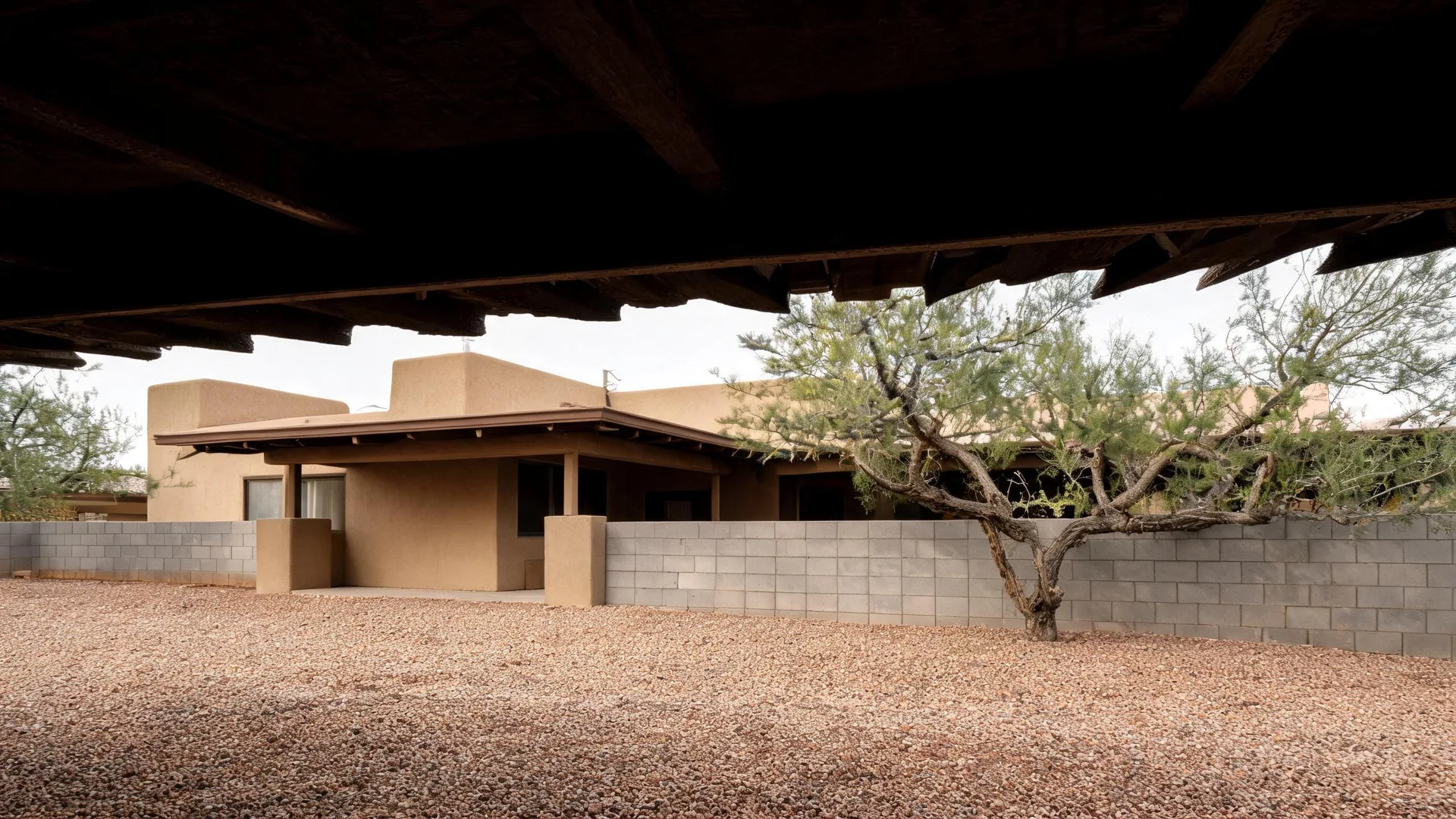





A single-story tan stucco house with wide overhanging eaves seen from beneath a dark wooden canopy, behind a concrete block wall, with a gravel yard and a mesquite-like tree in the foreground.

AC Maintenance in Elko, NV

Tell us about the job

Takes about a minute. No obligation.

Tune-up, service, or cleaningCentral ACElko County, NV
Step 1 of 2

What ZIP code is the job in?

Half the homes in Elko County were built in 1990 or later. If yours is one of them, the air conditioner inside it probably hasn't hit the point where parts start wearing out on their own. A yearly check at this stage catches the small stuff, a weak capacitor or a dirty coil, before it turns into a bigger repair or a system that dies early. Skip the checks for a few years and a newer unit can end up with the same problems as an old one. A unit that gets looked at every year tends to make it to the end of its working life instead of falling short of it.

2 months
July through August, your air conditioner is on duty
82°F
the average summer afternoon it cools against
19 hail events
in ten years, and hail bends the fins on outdoor coils
428 wind events
in ten years, and wind drives debris into outdoor units
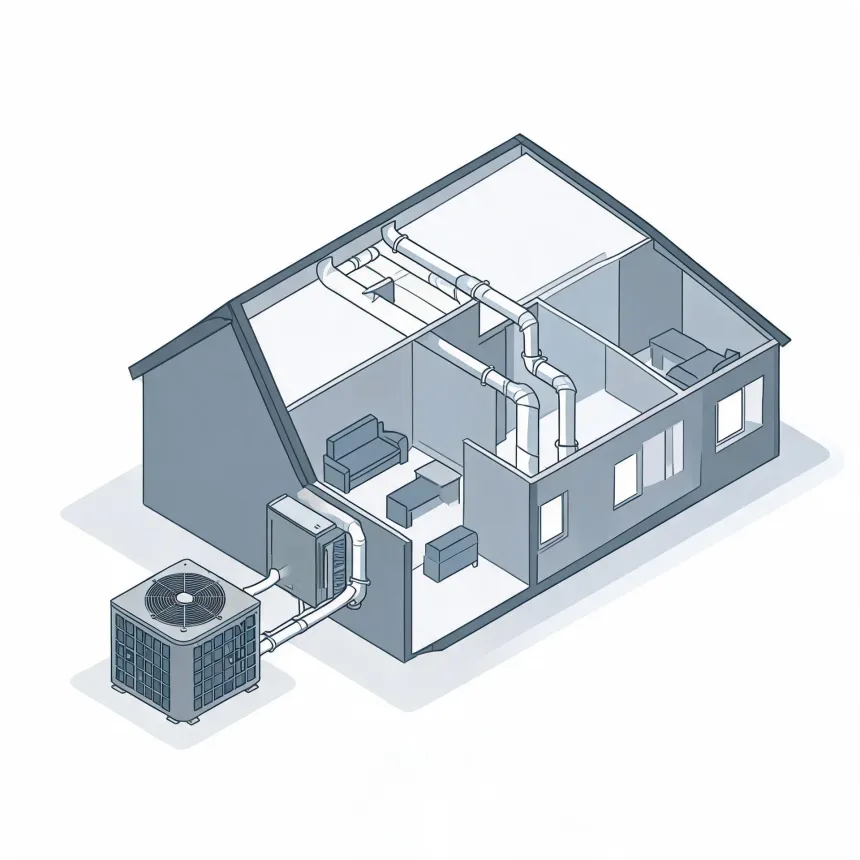
Isometric line illustration of a cutaway house showing interior rooms with ductwork, an indoor air handler, and an outdoor condenser unit connected by lines, on a white background.
Your air conditioner works hardest from July through August.

NOAA nClimDiv, 1991–2020 normals

A system that short cycles, turning on and off in quick bursts, is working harder than it should.

A tech can check the refrigerant charge and the capacitor before that habit wears out the compressor.

Elko sees its share of rough weather. Your AC doesn't need more than one checkup a year to handle it.

792 severe weather events from 2015 to 2024
13% of homes statewide lost power a day or more in 2024
428 damaging wind events from 2015 to 2024

Between visits, the filter is the one thing worth your attention. Check it monthly, and swap it when it looks gray or clogged. A dirty filter chokes airflow across the indoor coil, and the system has to run longer to move the same amount of air. Outside, keep the area around the condenser clear. Grass clippings, leaves, and anything piled against the cabinet block airflow across that coil too, and the unit struggles to shed heat the way it's supposed to. If you ever see ice on the lines or the coil, shut the system off and let it thaw before it runs again. Beyond that, leave the inside of the cabinet alone. The refrigerant charge, the electrical connections, and the capacitor are not things to check yourself.

Keep a newer AC newer, longer

If your AC was built with the house, a yearly check now is what keeps it simple. Get it looked at every year from the start and most problems get caught as a weak capacitor or a dirty coil, not a dead system.

Find a contractor
A man in a dark shirt and tan cargo pants carries a canvas and leather duffel bag up wooden porch steps toward a red front door, with a potted shrub in a red planter beside the entry.
A gray metal air conditioning condenser unit mounted on a concrete pad in a flat grassy field under a partly cloudy sky.

What a yearly check catches before it becomes a breakdown

A tech checks the refrigerant charge against the number on the nameplate. Too little and the coil runs cold enough to ice over, even in the middle of summer. Too much and the compressor works harder than it was built to, and that shortens its life. Neither one shows up by looking at the unit from across the yard. The same goes for the capacitor, which gives the compressor and fan motor the jolt they need to start. A capacitor can test weak long before it fails outright, and a system running on a weak one will short cycle or struggle to start on a hot afternoon. Electrical connections loosen with heat and vibration over time, and a loose one builds resistance and heat right at the terminal. None of this announces itself. The system keeps running, a little worse each season, until something finally gives out.

A quick visit checks that it runs

A fast tune-up gets the system blowing cold air and calls it done. The tech checks that the compressor kicks on, the fan spins, and the thermostat calls for cooling like it should. That tells you the unit works today. It doesn't tell you whether the capacitor is on its way out or the charge is drifting low.

A thorough one checks against the numbers

A thorough tune-up pulls out a gauge and a meter. The refrigerant charge gets checked against the nameplate, not guessed at by how cold the air feels. The capacitor gets tested for its actual output, not just whether the fan starts. Electrical connections get checked for heat damage at the terminals. That's the difference between a system that passes today and one that makes it to next summer without a surprise breakdown.

Overhead view of a gray residential air conditioning condenser unit mounted on a concrete pad beside a house with asphalt shingle roofing.

Book your AC tune-up in June, before homes here start needing cooling in July.

  1. Jan
  2. Feb
  3. Mar
  4. Apr
  5. May
  6. Jun
  7. Jul
  8. Aug
  9. Sep
  10. Oct
  11. Nov
  12. Dec

A tune-up checks the refrigerant charge, cleans the coils, tests the capacitor and tightens the electrical connections.

A tune-up also means pulling the blower access panel and looking at the squirrel cage fan, not just the filter in front of it. Dust builds up on those fan blades over years of operation, and enough of it changes the airflow even with a clean filter in place. The condensate drain gets attention too. That line can grow algae or collect dust until it clogs, and when it does, water backs up into the pan it was built to carry away. Some systems have a float switch that shuts the unit down when that happens, and a tech checks that it actually trips rather than assuming it will. The outdoor fan motor gets checked for play in the bearing and noise at startup, since a motor that's starting to go often sounds different before it quits outright. None of this shows up on a thermostat display. It shows up when someone opens the cabinet and looks.