View from beneath a covered patio of a single-story stucco house with a block wall, gravel ground cover, and two twisted-trunk trees under an overcast sky.

AC Maintenance in Gardnerville Ranchos, NV

Tell us about the job

Takes about a minute. No obligation.

Tune-up, service, or cleaningCentral ACDouglas County, NV
Step 1 of 2

What ZIP code is the job in?

Two months of real work

Your air conditioner in Gardnerville Ranchos runs from July through August, with afternoon highs averaging around 82 degrees. The rest of the year it mostly sits. A compressor that only carries load for two months doesn't wear out from the heat here.


What wears it down instead

A unit that sits idle most of the year still needs a yearly check, because what fails here is usually age or neglect, not strain. Add in wind, which has hit the county 290 times over the past decade, and a loose connection or a dirty coil can go unnoticed until the first hot week finds it.

2 months
July through August, your air conditioner is on duty
82°F
the average summer afternoon it cools against
1 hail events
in ten years, and hail bends the fins on outdoor coils
290 wind events
in ten years, and wind drives debris into outdoor units
Isometric cutaway illustration of a house showing interior ductwork, an air handler, and an outdoor condenser unit connected by lines, with simple furniture in the rooms.
Your air conditioner works hardest from July through August.

NOAA nClimDiv, 1991–2020 normals

Half the homes in Douglas County were built in 1990 or later.

A system that age still has years ahead of it, and a yearly check is what gets it there.

June is the month to check it. July is the month it has to work.

Cooling runs July through August
Summer afternoons average 82°F
290 damaging wind events from 2015 to 2024
Once a year covers it hereWind has hit Douglas County 290 times between 2015 and 2024. A yearly check catches what that leaves behind.

The filter is the part the owner can actually see, and it does more work than people think. Air has to pass through it before it reaches the coil, and once it's clogged, the coil behind it can ice over even on a hot day. That ice blocks airflow completely, and the system can end up running with almost no cooling coming out of the vents. The coil itself needs to be clean to give up its heat properly, and a dirty one makes the compressor work harder to do the same job. Down below, the drain line carries off the water the coil pulls out of the air, and when that line clogs, the water backs up and finds somewhere else to go, usually a pan or a ceiling underneath. None of this happens suddenly. It builds quietly in a system nobody's looked at.

Light duty is still worth checking every year

A compressor that only works two months a year can still coast for years on a bad connection or a dirty coil nobody's caught. A yearly check before June is what catches it.

Find a contractor
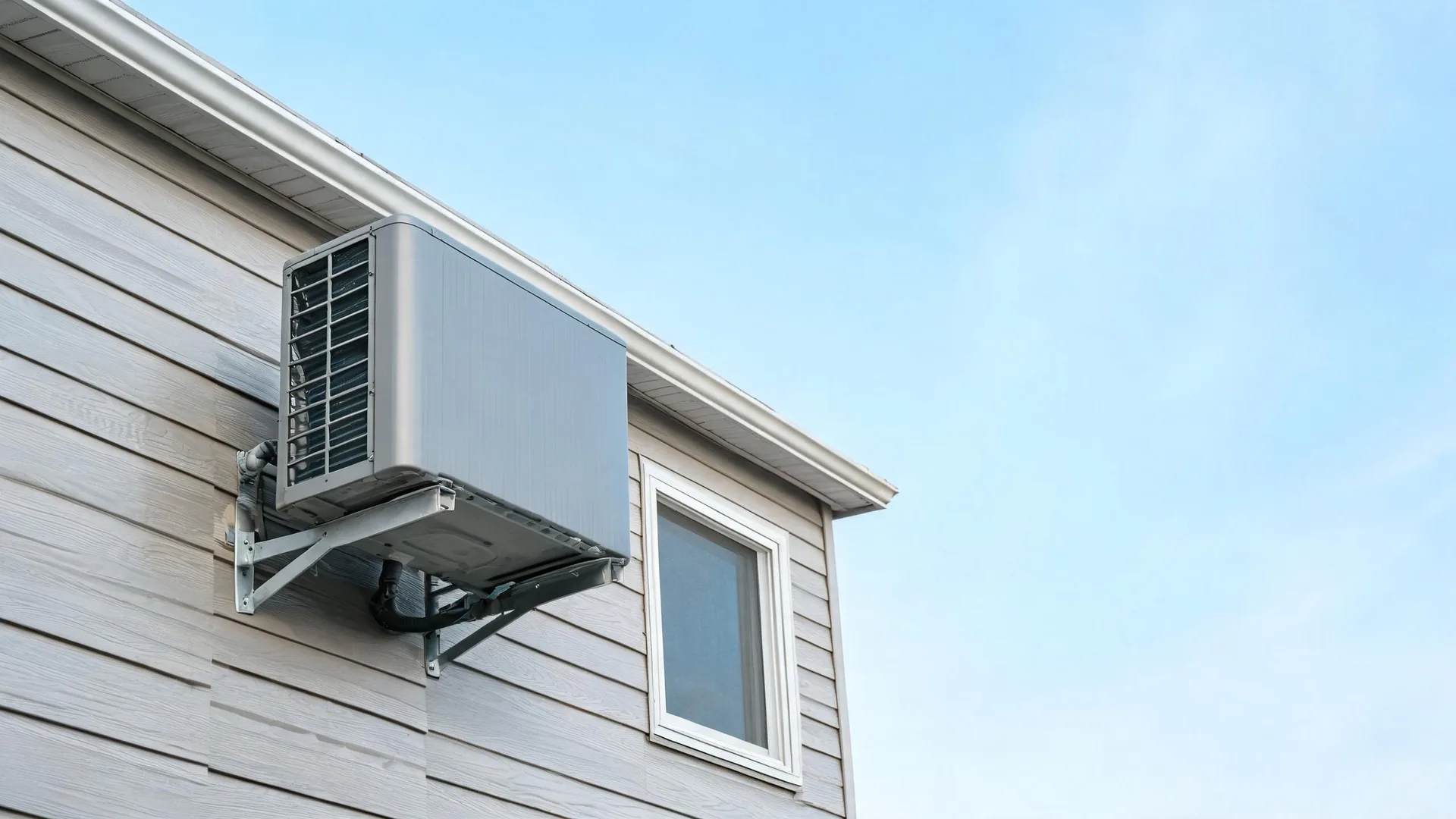
An outdoor air conditioning condenser unit mounted on a concrete pad surrounded by gravel, photographed against a partly cloudy blue sky.

What the gauges find that the thermostat won't

A gauge set on the refrigerant lines tells you things a thermostat never will. Low charge shows up as a pressure reading before it shows up as warm air. A capacitor gets tested under load, not just looked at, because a weak one can still start the compressor and still fail a few weeks later. The contactor gets checked for pitting, since a pitted one burns hotter each time it closes and eventually sticks or fails to close at all. None of this is visible with the panel on.

Short cycles the owner barely notices

A healthy system runs a long, steady cycle and holds the temperature once it gets there. One that's starting to fail shuts off and restarts every few minutes, even on a mild day. It still cools the house, so nobody thinks much of it. That pattern usually means a refrigerant or electrical problem that gets worse left alone, and it's easy to catch on a gauge long before it turns into a no-cool call.

A sound or a smell that wasn't there before

A grinding or squealing noise usually means a motor bearing wearing out. A musty smell from the vents usually means moisture sitting somewhere it shouldn't, often the drain pan or the coil. Neither stops the system from running, so both get ignored until the noise turns into a seized motor or the smell turns into a wet ceiling. A yearly check is when someone's actually listening and looking for these before they become the reason for the call.

Overhead view of an air conditioning condenser unit on a concrete pad next to a house with asphalt shingle roofing and vinyl siding.

Book your AC tune-up in June, before homes here start needing cooling in July.

  1. Jan
  2. Feb
  3. Mar
  4. Apr
  5. May
  6. Jun
  7. Jul
  8. Aug
  9. Sep
  10. Oct
  11. Nov
  12. Dec

A tune-up checks the refrigerant charge, cleans the coils, tests the capacitor and tightens the electrical connections.

A tune-up starts outside, at the condenser. The fins around it get bent or packed with grass clippings and cottonwood, and that blocks the airflow the whole system depends on to dump heat. Straightening fins and clearing the cabinet is part of the visit, along with checking that the unit sits level, since a tilted compressor wears its mounts unevenly over time. Refrigerant lines get checked for rubbing or chafing where they run through the wall, because a worn line leaks slowly long before it fails outright. Electrical connections at the disconnect box and inside the unit get tightened, since a loose one heats up under load and that heat is what eventually takes out a capacitor or a contactor. None of this shows up by looking at the thermostat. It shows up months later as a system that won't start.