







An overhead view of a residential air conditioning condenser unit mounted on a concrete pad next to a house with vinyl siding.

AC Maintenance in Reno, NV

Tell us about the job

Takes about a minute. No obligation.

Tune-up, service, or cleaningCentral ACWashoe County, NV
Step 1 of 2

What ZIP code is the job in?

Half the homes in Washoe County were built in 1991 or later. If your house falls on that side, your air conditioner is probably not old enough to be the reason it struggles. A yearly check on a newer system catches the small things, a dirty coil or a sensor out of calibration, before they turn into a reason to replace it early. That's a different job than fixing a system already on its way out. On a unit with years ahead of it, maintenance is what gets you the rest of those years.

2 months
July through August, your air conditioner is on duty
84°F
the average summer afternoon it cools against
3 hail events
in ten years, and hail bends the fins on outdoor coils
343 wind events
in ten years, and wind drives debris into outdoor units
Isometric cutaway illustration of a house interior showing ducted HVAC piping, an indoor air handler unit, and an outdoor condenser with fan connected by a line, rendered in grey tones on a white background.
Your air conditioner works hardest from July through August.

NOAA nClimDiv, 1991–2020 normals

A dirty filter starves the coil of airflow, and a starved coil can ice over.

Checking the filter and the drain line catches that before the ice turns into a shutdown.

Weather here is hard on power lines more than on your AC

579 severe weather events from 2015 to 2024
13% of homes statewide lost power a day or more in 2024
343 damaging wind events from 2015 to 2024
Two months, no slackCooling in Washoe County runs July through August. Book the check in June.

One visit a year covers what this machine needs. A yearly check is when a contractor cleans the coil, checks the refrigerant charge, and makes sure the capacitor is holding up before it fails. Skip a few years and small things stack up quietly, since none of them stop the system outright. The unit still runs, just harder than it needs to, and that shows up on the electric bill. Nevada homes paid 15 cents per kilowatt-hour in 2024, so a system working harder than it should costs more every month it runs that way.

Light duty is still worth a yearly check

Two months of real heat a year is a light load on this system. That's why a yearly check goes further here than it does in places running cooling most of the year. It catches the coil or the capacitor while the fix is still small, on a system that has every reason to last.

Find a contractor
A man in a cap, blue long-sleeve shirt and tan pants climbs porch steps toward a red front door, carrying a canvas tool bag beside a red planter.
A gray residential air conditioning condenser unit mounted on a concrete pad outdoors, surrounded by green grass under a partly cloudy blue sky.

Young system, keep it that way

Put the yearly check on the calendar now, before the system has a reason to remind you. On a unit that's not old enough to be worn out, the visit is quick. A clean coil, a steady charge, a capacitor that's still holding up. Keep doing that every year and there's no reason this one won't run as long as it's built to.

A gauge set tells you something a glance can't

A thorough tune-up checks the refrigerant charge with gauges and checks the capacitor and contactor under a meter, not by eye. A quick visit is a rinse of the coil and a new filter, done in a few minutes without ever opening the electrical panel. Both look like a tune-up from the driveway. Only one of them finds the part that's about to fail.

Ask what happened to the drain line

The condensate line clogs with algae over time, and a blocked line backs up into the pan and can shut the system down or damage the space around it. Clearing that line and checking that it drains is part of a real tune-up. If nobody mentions the drain line, the coil probably got a quick rinse and nothing else.

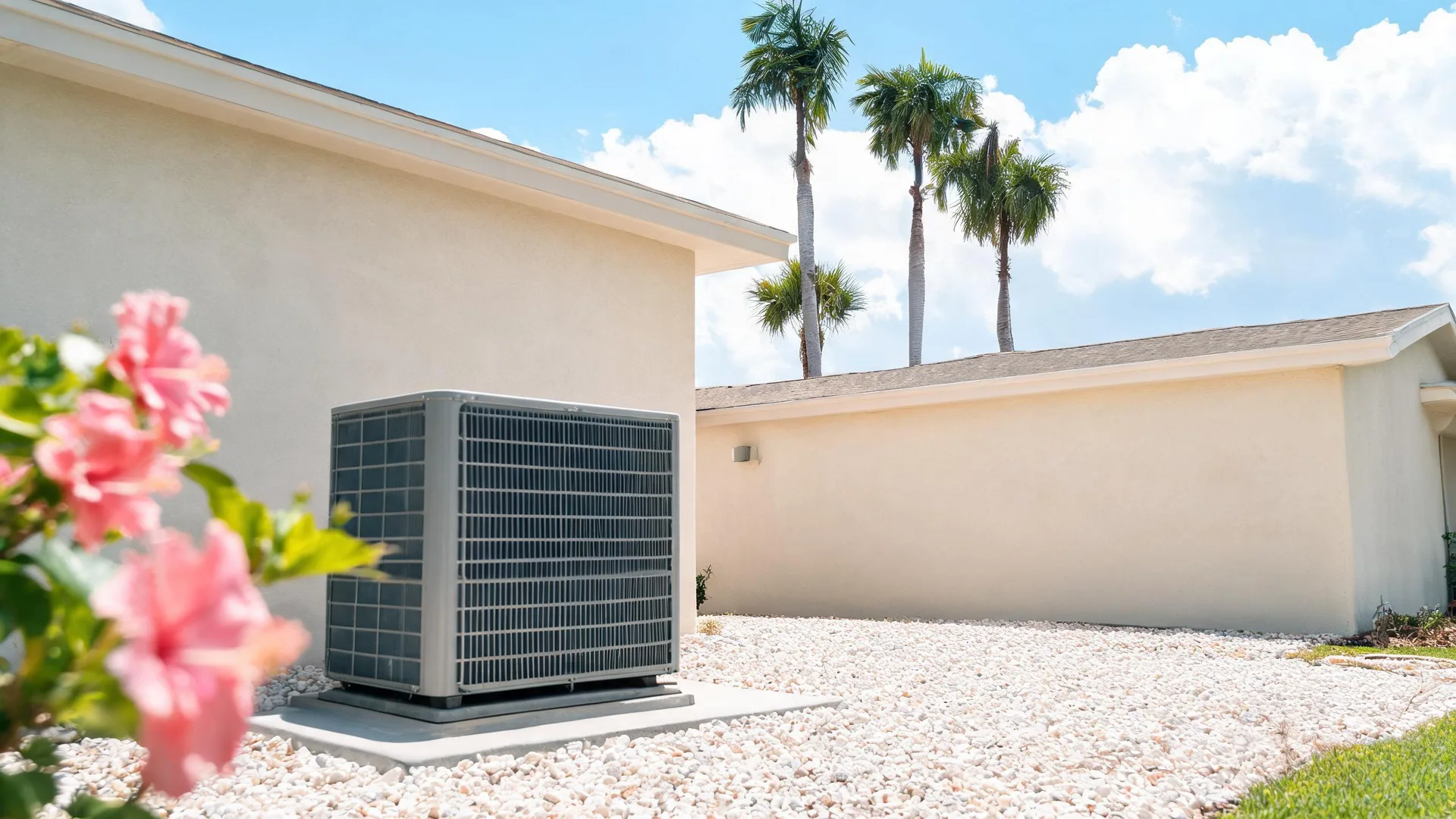
An outdoor air conditioning condenser unit on a concrete pad next to the gray vinyl siding of a residential home.

Book your AC tune-up in June, before homes here start needing cooling in July.

  1. Jan
  2. Feb
  3. Mar
  4. Apr
  5. May
  6. Jun
  7. Jul
  8. Aug
  9. Sep
  10. Oct
  11. Nov
  12. Dec

A tune-up checks the refrigerant charge, cleans the coils, tests the capacitor and tightens the electrical connections.

A tune-up worth paying for touches the outdoor unit and the indoor coil both. Outside, that means straightening bent fins on the condenser, checking that the fan spins freely, and confirming refrigerant pressure matches what the system calls for. Too little refrigerant and the compressor works harder for less cooling. Inside, the evaporator coil gets inspected and cleaned if it's caked with dust, since a dirty coil can't pull heat out of the air the way it should. A tech also checks that the blower wheel is clean and spinning at the right speed, because weak airflow strains everything downstream of it. Electrical connections get tightened and the contactor gets checked for pitting, since a worn contactor is a common reason a system won't start on a hot afternoon.