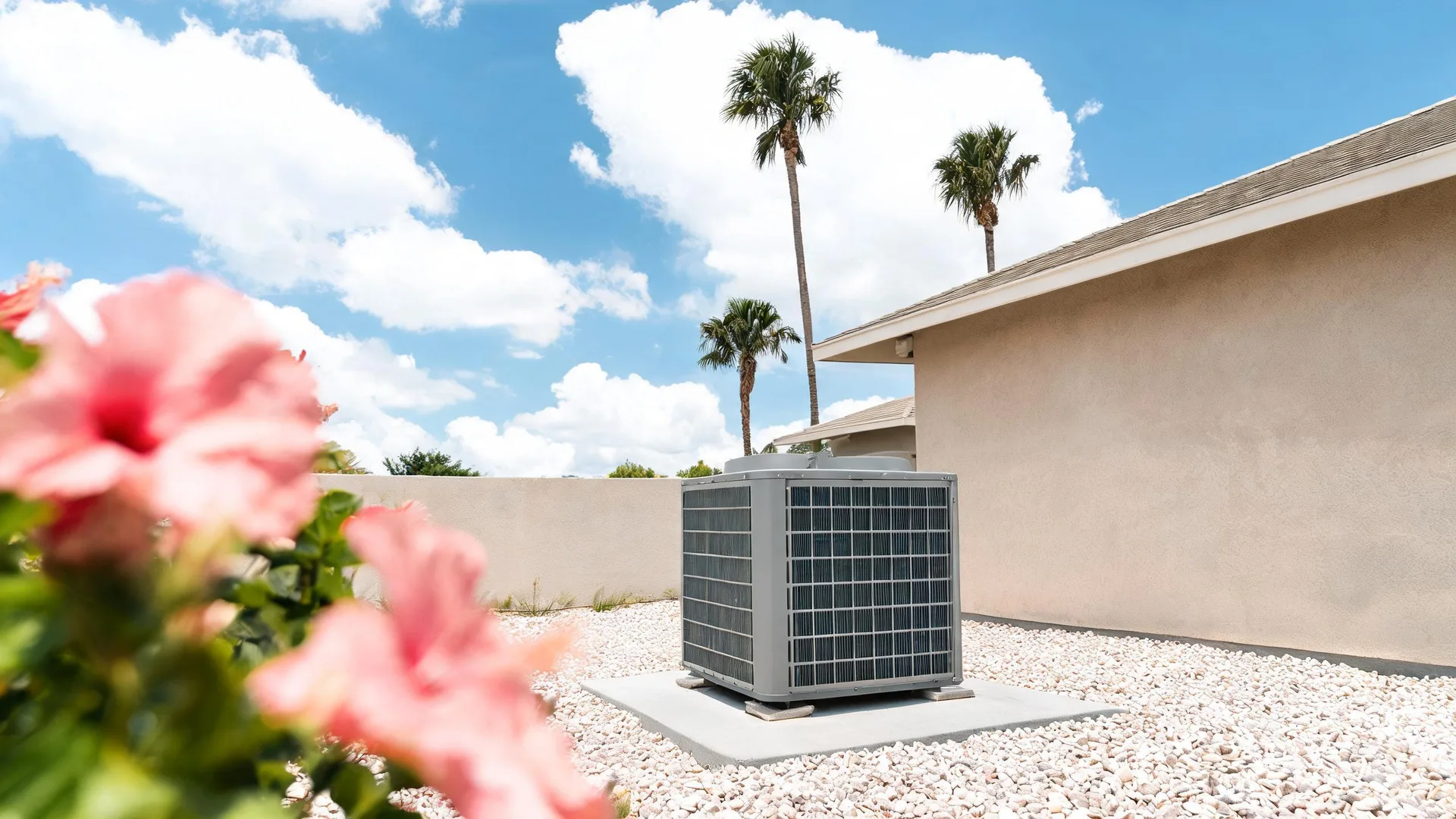
Aerial view of a square outdoor air conditioning condenser unit on a concrete pad beside a house wall with a sliding glass door.

AC Maintenance in Virginia City, NV

Tell us about the job

Takes about a minute. No obligation.

Tune-up, service, or cleaningCentral ACStorey County, NV
Step 1 of 2

What ZIP code is the job in?

The refrigerant charge gets checked, not just glanced at

A quick visit means someone looks at the outdoor unit, hoses off the condenser coil, and calls it done. A thorough one means the tech hooks up gauges and checks the refrigerant charge against what the system is supposed to carry. Low charge from a slow leak won't show up as a problem yet, but it's already making the compressor work harder than it should.


What this means for your system

A capacitor that's starting to weaken or a contactor with pitted contacts won't stop your AC from running today. It'll stop it from running on the day you need it most. The tune-up that's worth paying for is the one that catches the part that's drifting toward failure, not just the one that confirms the air coming out of the vents feels cold.

2 months
July through August, your air conditioner is on duty
84°F
the average summer afternoon it cools against
200 wind events
in ten years, and wind drives debris into outdoor units
Isometric cutaway illustration of a house showing attic ductwork, an indoor air handler, and an outdoor condenser unit connected by lines.
Your air conditioner works hardest from July through August.

NOAA nClimDiv, 1991–2020 normals

The blower motor amp draw tells a tech if the motor is wearing out before it ever stops turning.

Catching that now means replacing a motor on a schedule, instead of getting the call from someone standing in a hot house.

Cooling starts in July. Get it checked in June.

Cooling runs July through August
Climate zone 5B
Power costs 15 cents a kWh statewide

Once a year is enough for this system. Nevada homes paid 15 cents per kilowatt-hour in 2024, and a system that's maintained keeps that rate from climbing on you through the summer. A weak capacitor or a contactor with pitted contacts doesn't get worse because nobody looked at it. It just fails on its own schedule, checked or not. The only thing a yearly visit changes is whether someone finds that part before it quits, instead of you finding out when the house is hot and the system won't start.

Book it before the season

It starts running hard in the first month of the season here. Book the check the month before.

Find a contractor
An outdoor air conditioning condenser unit mounted on a concrete pad beside a house, with electrical conduit running to a wall-mounted disconnect box.

Two months of work a year, still worth a yearly look

Cooling here only runs two months, July and August, with afternoon highs around 84. That's a short season compared to most of the country. The parts don't know that though. A capacitor weakens and contacts pit on their own schedule, whether the system ran all day or barely kicked on. Storey County has also seen damaging wind 200 times in the past decade, and that's what piles debris into a condenser or cakes it with grit between one summer and the next. Light duty means a yearly check is usually enough. It doesn't mean skipping it.

Keep the area around the outdoor unit clear

Grass clippings, leaves, and anything stacked against the condenser block the airflow it needs to shed heat. Keep at least a couple feet open on all sides, and skip the weed trimmer close to the cabinet since a cut line or wire can nick the fins or wrap around the fan.

Change the filter, don't just check it

A dirty filter starves the system of airflow, which makes the evaporator coil run colder than it should and can ice it over. Once that coil ices up, the system can't cool the house no matter how hard it runs. Look at the filter monthly during the months it's working hardest and swap it when it's visibly gray or clogged, not on a fixed schedule.

Aerial view of a gray outdoor air conditioning condenser unit mounted on a concrete pad next to a house with vinyl siding.

Book your AC tune-up in June, before homes here start needing cooling in July.

  1. Jan
  2. Feb
  3. Mar
  4. Apr
  5. May
  6. Jun
  7. Jul
  8. Aug
  9. Sep
  10. Oct
  11. Nov
  12. Dec

A tune-up checks the refrigerant charge, cleans the coils, tests the capacitor and tightens the electrical connections.

A real tune-up starts with the thermostat calling for cooling and someone watching what actually happens, not just whether air comes out cold. The tech checks static pressure across the system, because a system straining to push air through a clogged filter or undersized ductwork wears out its blower motor early no matter how clean the coils are. The condensate drain gets checked too, since algae and dirt build up in that line and a clogged drain backs up water into the pan or the house. Electrical connections get tightened, because a loose connection at the contactor or disconnect runs hotter than it should and that heat degrades the connection further over time. None of this shows up by looking at the unit from across the yard. It shows up when someone opens the cabinet and tests it.