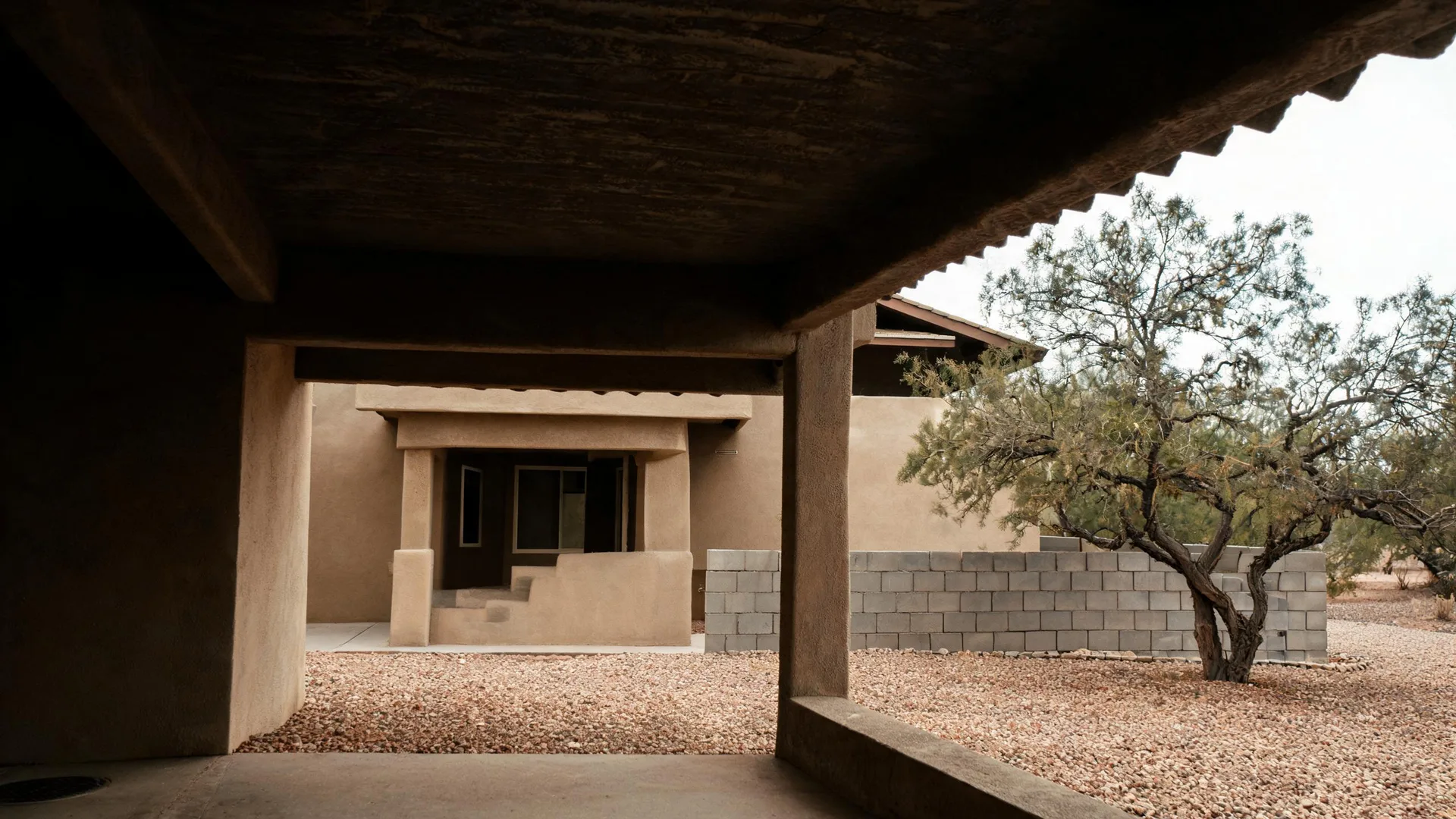






View from a shaded covered porch of a single-story stucco house with a recessed entry, gravel ground cover, a concrete block wall, and a large multi-trunked tree under an overcast sky.

AC Repair in Caliente, NV

Tell us about the job

Takes about a minute. No obligation.

RepairCentral ACLincoln County, NV
Step 1 of 2

What ZIP code is the job in?

A technician starts by asking what the system is doing. Short cycling, blowing warm air, tripping the breaker, making noise. Then they check the thermostat signal, the refrigerant pressures, and the electrical readings at the condenser and the air handler. A low charge, a failing capacitor, and a dirty coil each show up differently on those readings, so the gauges tell the story before any panel comes off. If the compressor is pulling too much amperage or not starting at all, that points to the capacitor or the contactor rather than the refrigerant. Once the cause is clear, the technician can explain what it takes to fix it and what happens if it gets left alone.

4 months
June through September, your air conditioner is on duty
90°F
the average summer afternoon it cools against
2 hail events
in ten years, and hail bends the fins on outdoor coils
30 wind events
in ten years, and wind drives debris into outdoor units
Isometric cutaway illustration of a single-story house with a dark shingled roof, showing interior rooms with ductwork and an indoor air handler connected to an outdoor condenser unit beside the building.
Your air conditioner works hardest from June through August.

NOAA nClimDiv, 1991–2020 normals

Caliente runs its AC June through September, with afternoon highs averaging 90°F.

A summer like that doesn't wear out a system early, so a broken AC here usually means one part failed, not that the heat beat it.

At 15 cents a kWh, a system running wrong is costing you right now

Power costs 15 cents a kWh statewide
Cooling runs June through September
Summer afternoons average 90°F

Half the homes in Lincoln County were built in 1982 or earlier, and half since, and neither tells you much about the AC inside. A house from either side of that line can carry a new system or an old one, serviced well or skipped for years. Mobile homes make up a real share of the housing stock here too, and they run the same split systems and package units as any other home. The diagnosis doesn't change with the house around it. What matters is the unit itself, its age, and whether it's been kept up, not when the walls went up.

Get it fixed before it runs up your bill

A bad capacitor or a low charge doesn't fix itself, and at 15 cents a kWh it keeps costing you with every hour the system runs wrong. Get the cause found and fixed.

Find a contractor
A man in a dark shirt and tan work pants carries a worn leather tool bag up porch steps toward a red front door, with a potted shrub beside the entry.
An outdoor residential air conditioning condenser unit mounted on a concrete pad, surrounded by gravel with a blue sky in the background.

Left alone, a small problem becomes a dead compressor

A compressor that's struggling doesn't pace itself. If the charge is low or a capacitor is weak, the compressor still tries to hit the same pressures it always has, and it draws more amperage doing it. That heat has to go somewhere, and it goes back into the compressor's own windings. Run it like that for an afternoon and it gets hot enough to trip an internal overload. Run it like that for days and the windings break down for good. A dirty coil does something similar from the other side, making the system run longer to move the same heat, which just means more hours of strain on a part that was already struggling. None of this fixes itself by running longer. It only gets to the breaking point sooner.

Most failures trace back to one weak part

A capacitor loses its charge over time and stops giving the compressor and fan motor the jolt they need to start. A contactor's contacts pit and burn from years of arcing until they stick or stop conducting. A run capacitor can be weak enough that the fan still turns but slower than it should, which shows up as warm air and long run times before it quits outright. None of these fail because of one hot day. They fail because they've been opening and closing thousands of times for years.

Dirt and neglect cause the rest

A coil caked with dust and yard debris can't give up heat the way it's supposed to, so the system runs longer and the compressor works harder for the same result. A clogged filter starves the system of airflow, which drops pressures on the low side and can ice the coil over. A drain line that's never been cleared backs up and trips the float switch, shutting the system down to protect against a flooded pan. These are the failures that build slowly and show up as a system that runs worse each month, not one that breaks all at once.

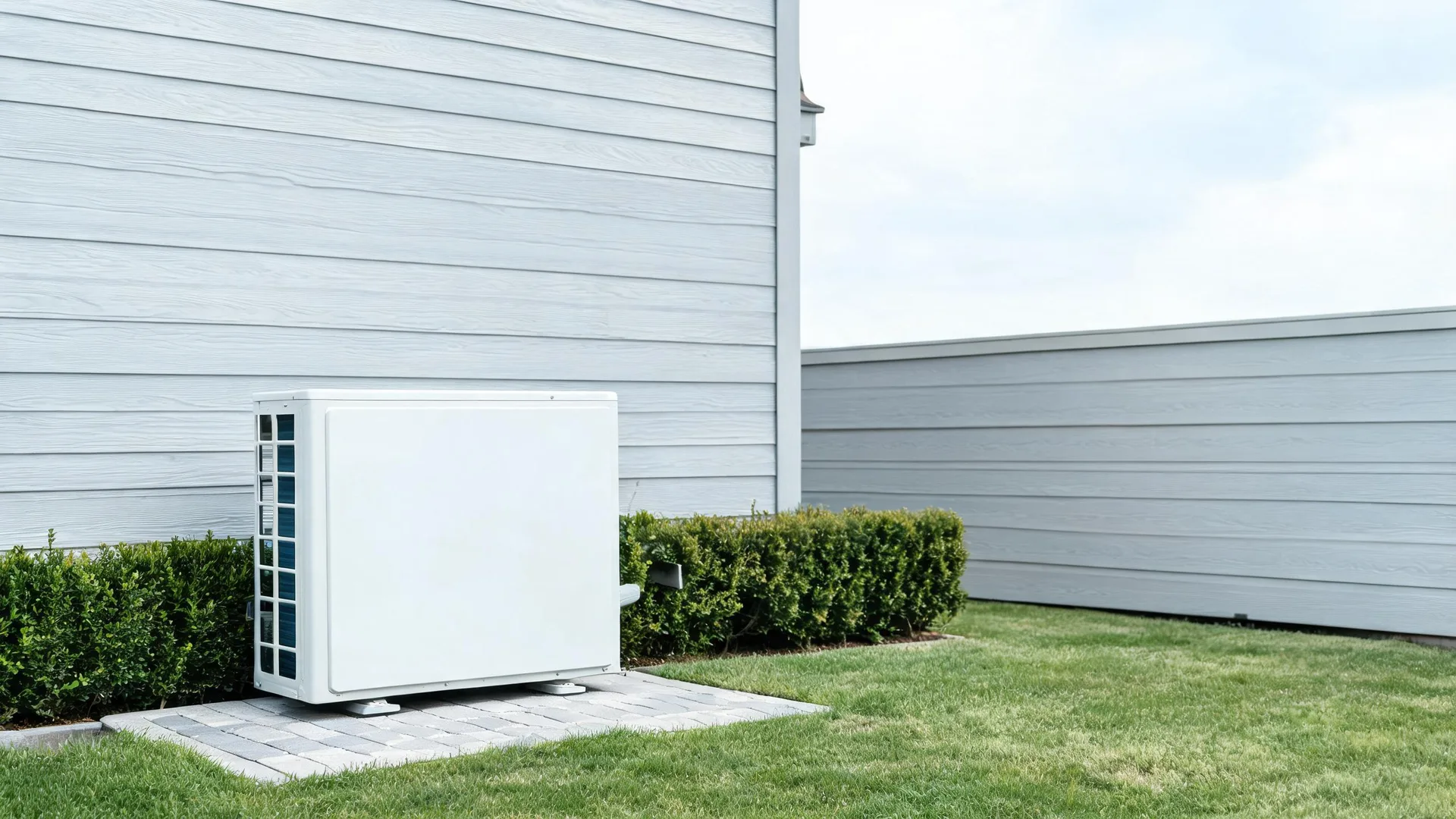
An outdoor air conditioning condenser unit positioned on a concrete pad next to a blue-sided house, surrounded by green shrubs and flowering hydrangeas at sunset.

A new air conditioner would cut about $40 a year off cooling for a typical Lincoln County home.

  • A new one at the federal minimum, 14.3 SEER2$270 a year
  • An older air conditioner$310 a year

Estimates for a typical Lincoln County home, compared with an older unit built to the previous federal minimum, from EIA household energy data, Nevada fuel prices and NOAA climate normals. Your home will differ.

Repair makes sense when a part like a capacitor or contactor has failed.

Replacement makes sense when the compressor has failed or the system uses R-22 refrigerant, which is no longer made.

A repair makes sense when one part failed and the rest of the system is sound. A new capacitor or contactor costs little next to the system around it, and if the compressor still starts strong and the coil is clean, there's no reason to touch the rest. Replacement starts to make sense when the compressor itself is the problem. A compressor that's cracked or seized can't be repaired, only swapped, and it's the most expensive part in the system. A system that's been skipped on maintenance for years tells a different story than one that's been kept up, even at the same age, because a part left dirty or unchecked wears down other parts along with it. The honest question isn't how old the system is. It's whether the part that failed is a cheap fix on a sound system, or the first of several.