





An outdoor air conditioning condenser unit mounted on a concrete pad next to a blue-sided residential house at sunset.

AC Repair in Crescent Valley, NV

Tell us about the job

Takes about a minute. No obligation.

RepairCentral ACEureka County, NV
Step 1 of 2

What ZIP code is the job in?

Cooling in Crescent Valley only runs July through August, about two months a year. June is when most systems here switch on for the first time after sitting idle. A capacitor or contactor that was marginal last August doesn't get better over the winter, and the first real hot day is what finds it. That's why repair calls cluster right at the start of the season instead of spreading out evenly. If your AC is struggling now, odds are it's a part that was already close to failing, not something new caused by this week's heat.

2 months
July through August, your air conditioner is on duty
84°F
the average summer afternoon it cools against
5 hail events
in ten years, and hail bends the fins on outdoor coils
97 wind events
in ten years, and wind drives debris into outdoor units
Isometric cutaway illustration of a small house showing interior rooms, ductwork, an indoor air handler, and an outdoor condenser unit connected by lines, on a plain white background.
Your air conditioner works hardest from July through August.

NOAA nClimDiv, 1991–2020 normals

Two months of real cooling load a year is light work for a condenser.

An AC in Crescent Valley is rarely worn out, so fixing what's wrong usually makes more sense than replacing it.

Half these homes are older, but that's not what's wrong with your AC

Half the homes here were built by 1988
Cooling runs July through August
Summer afternoons average 84°F

Eureka County has logged 203 severe weather events over the years tracked, mostly wind and winter storms rather than hail. That kind of weather is harder on roofs and power lines than on a condenser sitting on a pad. Wind can blow grit into the coil, and a power blip during a storm can trip a unit's safety switch so it won't restart on its own. Neither one means something inside the system has failed. If your AC quit during or after a storm, check the breaker and the disconnect near the unit before assuming the worst. Most of what brings an AC down here is the same wear any unit gets after sitting idle all winter, not the weather itself.

This AC has an easy job. Fixing it is usually the right call.

Get the repair done. A condenser that only works two months a year doesn't wear out, it just sits, and sitting is what lets a weak part get worse. Have someone look at what's actually failing before you consider anything bigger.

Find a contractor
A gray cylindrical air conditioning condenser unit mounted on a concrete pad next to a light-colored vinyl-sided house exterior.

What actually wears out, and why it shows up now

A capacitor fails because the run capacitor loses its charge over time, especially after sitting through a winter with nobody asking it to work. The contactor fails because the contacts pit and burn a little every time they close, until one day they don't close all the way. The fan motor fails because the bearings dry out from sitting still as much as from running. None of this is dramatic. It's just a part reaching the end of what it had, and the first hot stretch of the year is what shows you.

A weak part doesn't hold steady, it slides

A capacitor that's lost some of its charge might still start the compressor on a cool morning and fail once the heat builds and the system has to run longer. A contactor with pitted contacts can close fine most of the time and then arc once, and that arc pits it a little more. Keep the system running through that and you're not giving the part a chance to settle. You're giving it more chances to fail.

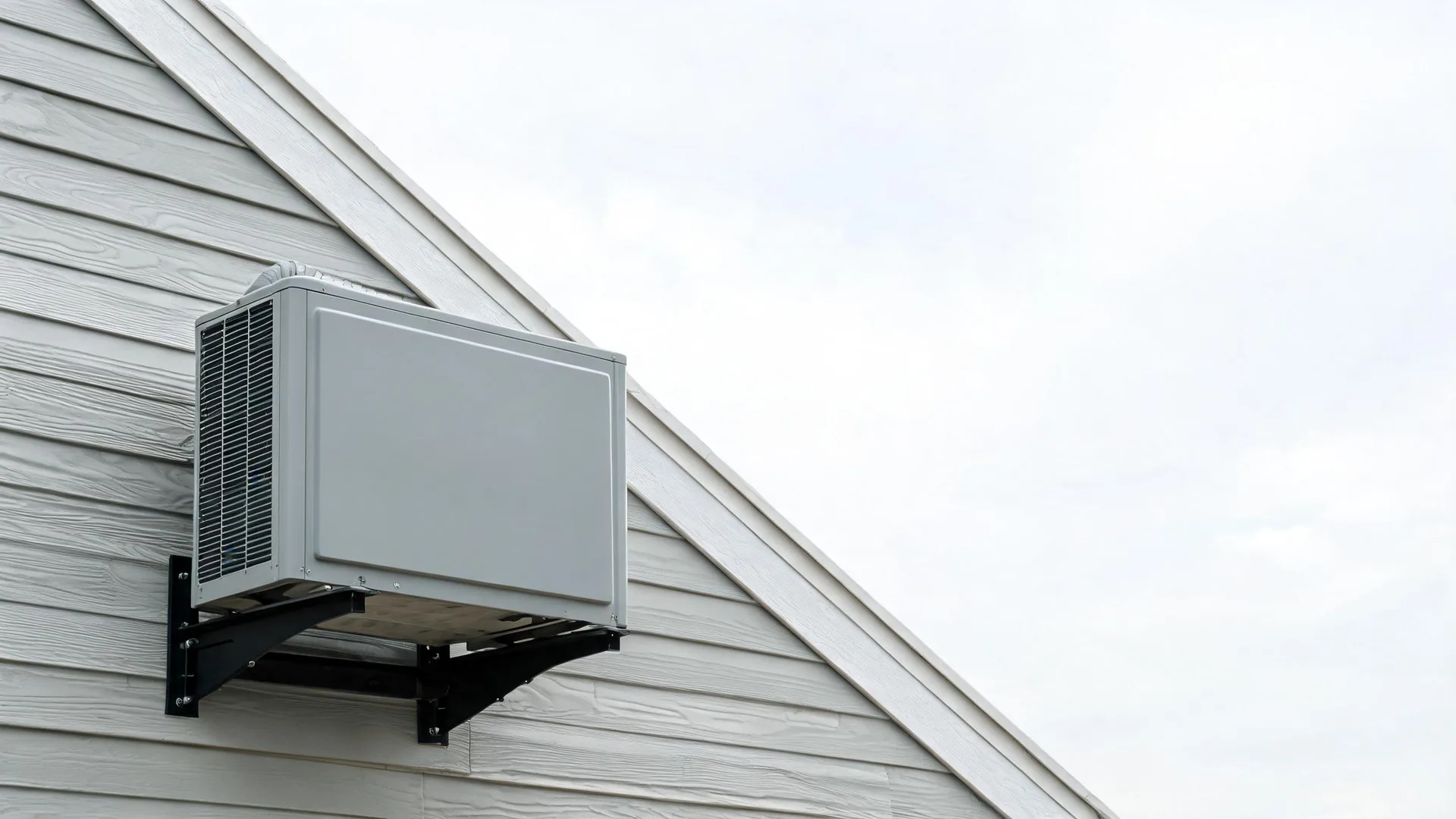
A small problem can take the compressor with it

A failing capacitor makes the compressor motor strain to start, and a motor that strains draws more current than it should. Do that enough and the windings heat past what they're built for. A refrigerant leak wears on the compressor the same way, from a different angle. The system keeps running low on charge, the compressor works harder to move what's left, and it can overheat before anyone notices the house isn't cooling. The part that was simple to replace on its own isn't simple anymore once the compressor goes with it.

An outdoor central air conditioning unit mounted on a concrete pad beside a blue-sided house at sunset.

A new air conditioner would save little on running costs in Eureka County, so the repair decision comes down to the unit's condition.

  • A new one at the federal minimum, 14.3 SEER2$90 a year
  • An older air conditioner$100 a year

Estimates for a typical Eureka County home, compared with an older unit built to the previous federal minimum, from EIA household energy data, Nevada fuel prices and NOAA climate normals. Your home will differ.

Repair makes sense when a part like a capacitor or contactor has failed.

Replacement makes sense when the compressor has failed or the system uses R-22 refrigerant, which is no longer made.

When something fails on an AC, the question is always whether the rest of the system is still sound. A capacitor or contactor is a small, self-contained part. Replacing one doesn't depend on the age or condition of anything else, because it either does its job or it doesn't. A compressor is a different matter. It can't be opened up and repaired, only replaced as a whole, and it's the most expensive part in the system. That difference is what should guide the decision, not how old the unit is. A system that's needed a few small parts over the years isn't a system in decline. It's a system that's been kept running the way it's supposed to be. The time to think harder is when the compressor itself is the one failing, since that's the one part a repair can't bring back.