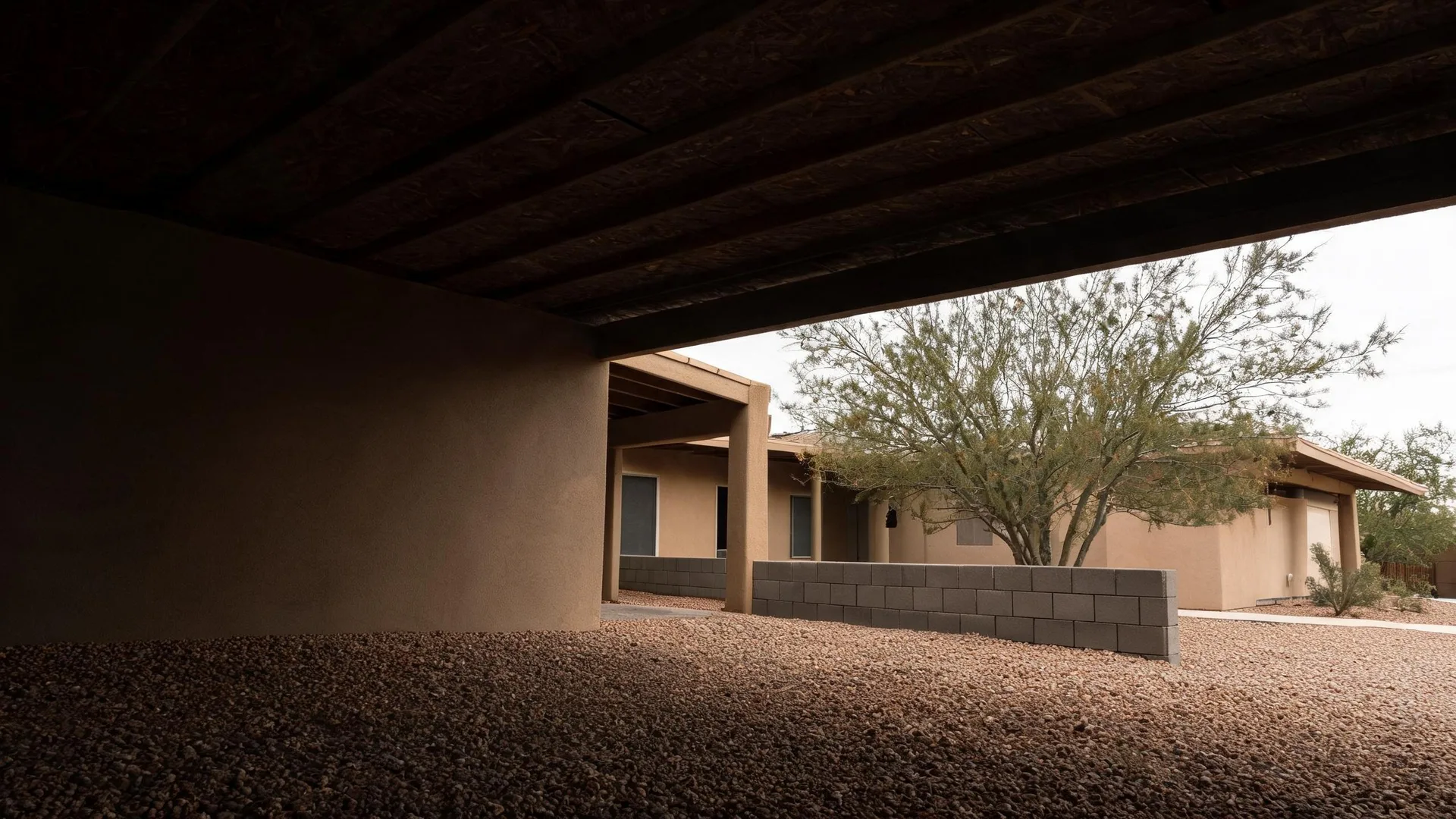





View from under a shaded wood-beamed patio of a single-story stucco house with a gray concrete block wall, gravel ground, and a mesquite-like tree under an overcast sky.

AC Repair in Dyer, NV

Tell us about the job

Takes about a minute. No obligation.

RepairCentral ACEsmeralda County, NV
Step 1 of 2

What ZIP code is the job in?

Summer here runs June through August, with afternoon highs averaging 89. That's three months of real work for your AC, not year round strain. Most repair calls in Dyer come down to the same handful of causes you'd find anywhere. A weak capacitor, a low refrigerant charge, a clogged filter making the system work harder than it should. Damaging wind has hit the county 52 times over the past decade. That can knock debris into an outdoor unit or loosen a connection, so it's worth a look if your trouble started after a storm. Either way, the fix is usually straightforward once someone finds the actual cause.

3 months
June through August, your air conditioner is on duty
89°F
the average summer afternoon it cools against
52 wind events
in ten years, and wind drives debris into outdoor units
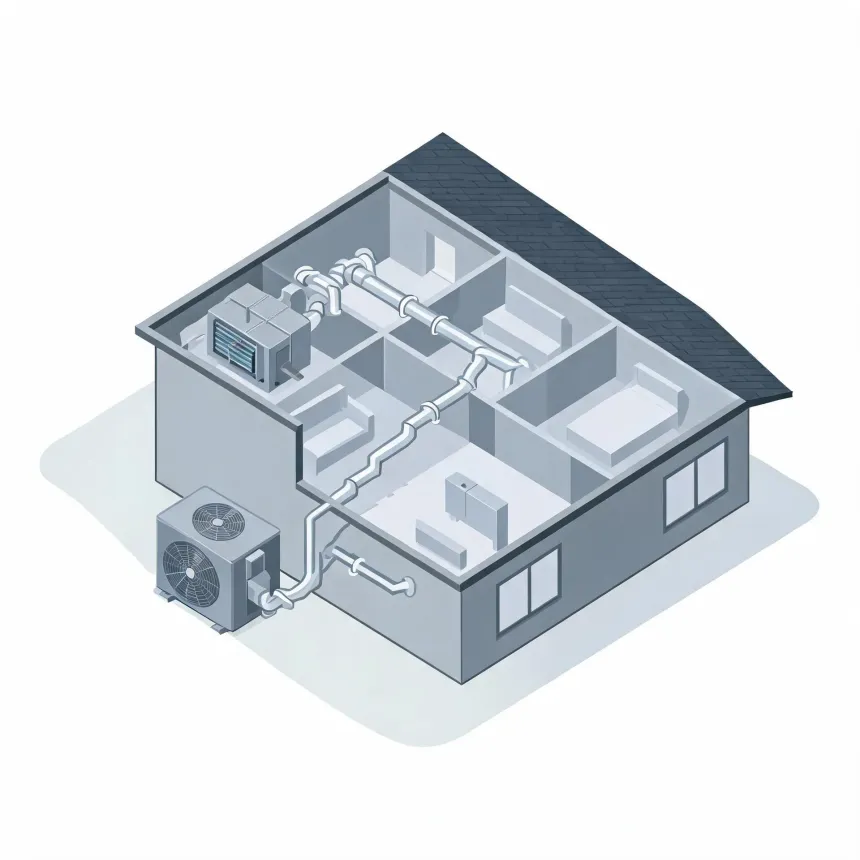
Isometric grey illustration of a cutaway single-story house showing interior rooms, ceiling ductwork connected to an indoor air handler, and an outdoor condenser unit linked by lines outside the wall.
Your air conditioner works hardest from July through August.

NOAA nClimDiv, 1991–2020 normals

AC here runs June through August, three months straight.

Have it looked at in May, before the first hot week finds the weak part.

Climate zone 4B is a mixed climate. Dyer's AC problems are the ordinary kind.

Power costs 15 cents a kWh statewide
Climate zone 4B
Cooling runs June through August

Half the homes in Esmeralda County were built in 1986 or earlier, half in 1986 or later. That split doesn't tell you much about a specific AC, since the house and the system cooling it are two different clocks. What matters is whether yours is the original unit or a replacement, because that's what tells you how many years it's actually been running. Mobile homes make up close to a third of the housing here, and those usually run a smaller system than a site-built house carries. A smaller system still fails for the same reasons. A weak capacitor, a dirty coil, a low charge. Worth finding the actual cause before anyone talks about replacing the unit.

Get the usual fix

Nothing about this area is especially hard on it. It's most likely the usual problem with the usual fix.

Find a contractor
A man in a cap, gray shirt and tan work pants, seen from behind, carries a canvas tool bag up stone steps toward a red front door, with a potted plant beside the entry.
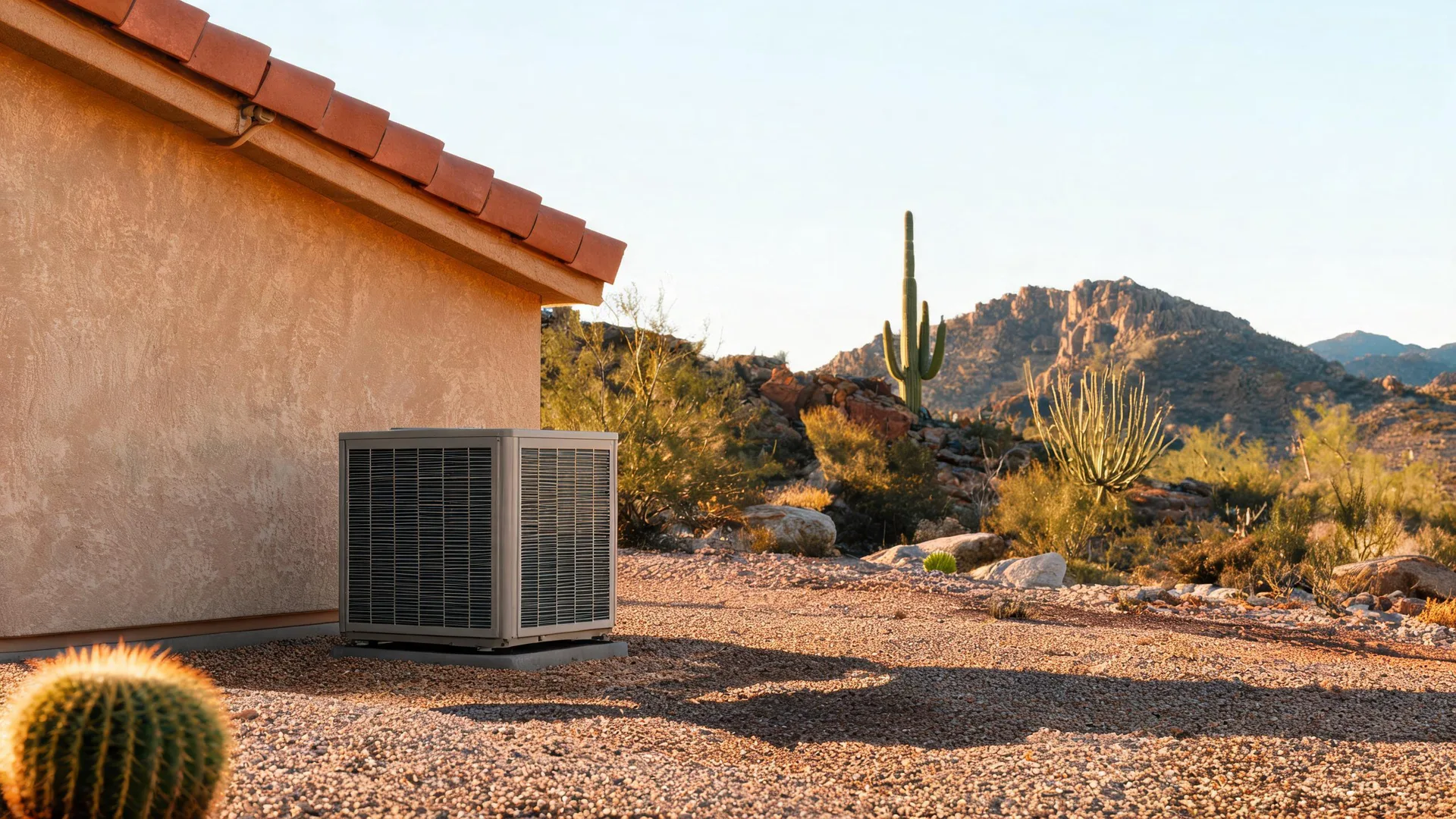
An outdoor air conditioning condenser unit mounted on a concrete pad surrounded by gravel, photographed against a partly cloudy blue sky.

The system tells you before it quits

An AC that's struggling gives you warning before it quits outright. Warm air from the vents when it's running flat out is usually the first thing people notice. Short cycling, where it kicks on and off every few minutes instead of running a steady stretch, points to something shutting it down early, often a safety switch tripped by a dirty coil or low airflow. Ice on the refrigerant lines or the indoor coil means something's wrong even though it looks like the opposite problem. A hard start, where the outdoor unit hesitates or hums before it catches, is often a capacitor going weak. Water pooling near the indoor unit means the condensate line is clogged or the drain pan has rusted through. None of these fix themselves, and running the system while they're happening usually turns a small repair into a bigger one, since the compressor and other parts keep working harder to make up for whatever's failing.

A weak part drags the others down with it

A capacitor that's losing strength makes the compressor and fan motor work harder to start and keep running. Run it long enough that way and you're not replacing a capacitor anymore, you're replacing a compressor too.

Low refrigerant gets worse, not better

A low charge means the system is leaking somewhere, and running it short on refrigerant forces the compressor to work outside what it's built for. Left alone, that turns a leak repair into a compressor replacement.

Overhead view of a gray outdoor AC condenser unit on a concrete pad beside a mulched garden bed and a house with vinyl siding.

A new air conditioner would cut about $40 a year off cooling for a typical Esmeralda County home.

  • A new one at the federal minimum, 14.3 SEER2$220 a year
  • An older air conditioner$260 a year

Estimates for a typical Esmeralda County home, compared with an older unit built to the previous federal minimum, from EIA household energy data, Nevada fuel prices and NOAA climate normals. Your home will differ.

Repair makes sense when a part like a capacitor or contactor has failed.

Replacement makes sense when the compressor has failed or the system uses R-22 refrigerant, which is no longer made.

At some point the question isn't what's wrong, it's whether this unit is worth fixing again. Age on its own doesn't answer that. A unit that's been maintained and only sees its first real failure is usually worth repairing no matter how long it's been running. One that's had a string of separate problems in the last couple years is telling you something different, even if each repair was small on its own. The compressor matters most here. It's the expensive part to replace, and when a compressor fails on an older unit, a tech will usually walk you through replacing the whole system instead, since the rest of it is close behind. A refrigerant that's being phased out is worth asking about too, since parts and refrigerant for older systems get harder to find, not easier.