





Overhead view of a gray outdoor AC condenser unit on a concrete pad beside a mulched garden bed and a house with vinyl siding.

AC Repair in Elko, NV

Tell us about the job

Takes about a minute. No obligation.

RepairCentral ACElko County, NV
Step 1 of 2

What ZIP code is the job in?

Half the houses in Elko County were built in 1990 or later. If yours is one of them, your AC unit is probably not old enough to be the real problem. A newer home usually means newer ductwork and a system sized right for the house, so when the air conditioner starts acting up, it's more likely a failed capacitor, a low charge, or a dirty coil than a unit on its last leg. That's the kind of thing a repair fixes. Worth checking what year your system was put in, if you know it, before anyone talks about replacing it.

2 months
July through August, your air conditioner is on duty
82°F
the average summer afternoon it cools against
19 hail events
in ten years, and hail bends the fins on outdoor coils
428 wind events
in ten years, and wind drives debris into outdoor units
Isometric grey illustration of a cutaway single-story house showing interior rooms, ceiling ductwork connected to an indoor air handler, and an outdoor condenser unit linked by lines outside the wall.
Your air conditioner works hardest from July through August.

NOAA nClimDiv, 1991–2020 normals

Elko County cooling runs about two months a year, July and August, with afternoon highs around 82.

A compressor with a short, mild season behind it usually fails on a bad part, not from wear.

Wind and winter storms are common here, and the fix is usually the same small part

792 severe weather events from 2015 to 2024
13% of homes statewide lost power a day or more in 2024
428 damaging wind events from 2015 to 2024

June is a good month to get your AC looked at here. Cooling doesn't start until July, so whatever was already weak has had all winter to sit. A capacitor that was marginal last August is the same capacitor now, just untested. Once the heat hits and the compressor is running every afternoon, that's when it gives out. Getting it checked before July means a tech can catch a weak part on a slow day instead of the first hot afternoon of the season.

Two months of summer a year means your AC is probably worth fixing

Two mild months of real strain a year adds up to less wear than most compressors see. If yours is acting up now, that points to a bad part, not a worn-out unit. Get it looked at before the next hot afternoon finds it.

Find a contractor
A gray residential air conditioner condenser unit mounted on a concrete pad in an open grass field.

Know the install year before you talk replacement

If your system is original to the house, check the install date against the year the house was built before you decide anything. A short mismatch there, a system a few years newer than the house, usually just means a prior repair or a replacement already happened, which is one more reason to think the parts inside are sound. Either way the math favors a tech finding the one part that failed, not a full swap.

Warm air from the vents means the system stopped cooling, not that it's dying

When the vents blow air that isn't cold, the compressor outside has either stopped running or stopped pulling heat out of the house. A failed contactor can leave the compressor dead quiet. A low charge can let it run but do almost nothing. Both feel the same standing in the house. Air is moving. There's just no cold behind it.

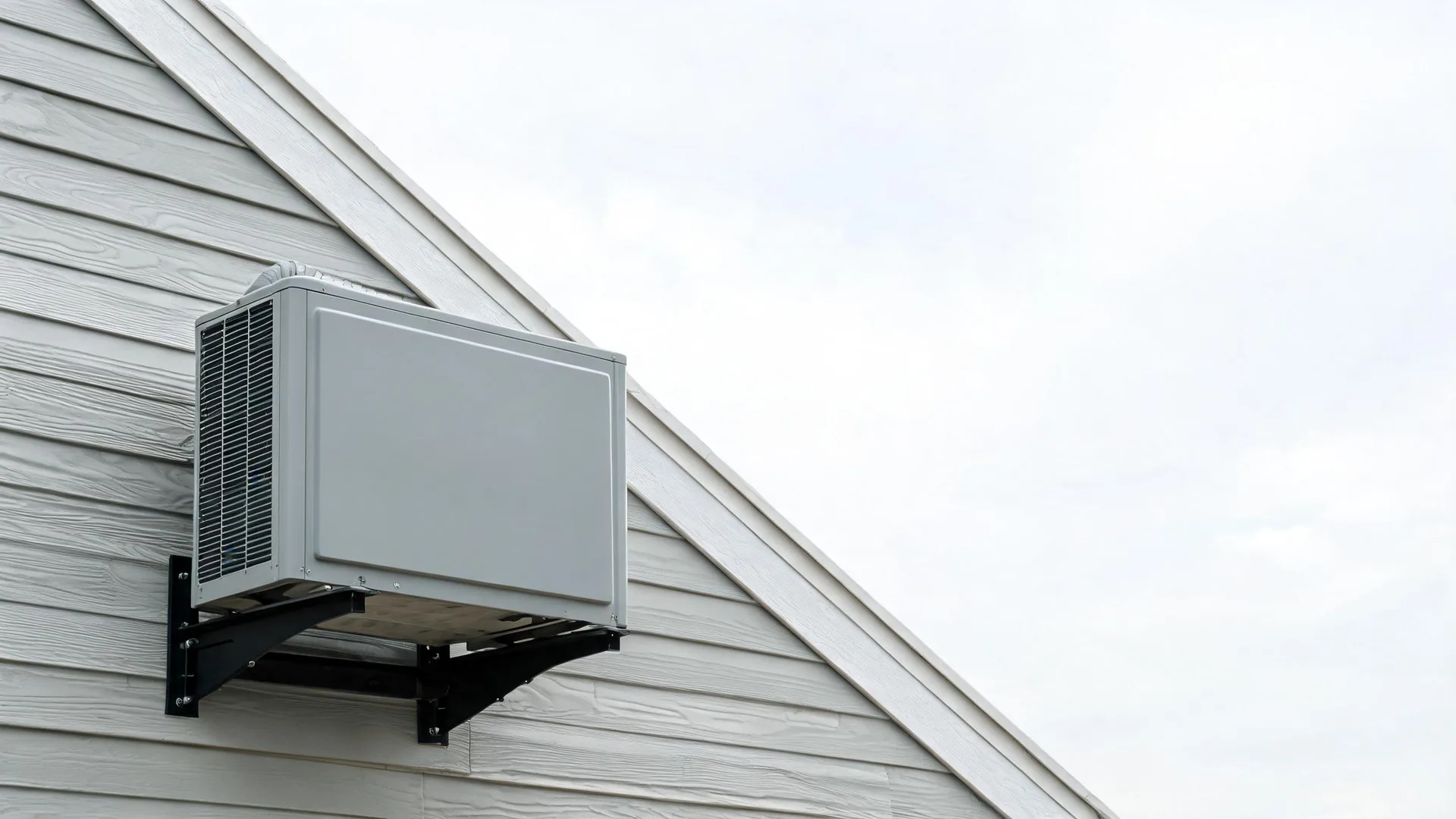
What the system sounds like matters as much as what it does

A hard clank or a grinding noise when the unit kicks on points to the fan motor or something loose in the blower. A hissing sound near the lines points to a refrigerant leak. Short cycling is when the system shuts off a few minutes after it starts. That usually means the compressor is overheating or tripping a safety switch. It's worth calling in before it tries to run that way all afternoon.

An outdoor air conditioning condenser unit mounted on a concrete pad next to a blue-sided residential house at sunset.

A new air conditioner would save little on running costs in Elko County, so the repair decision comes down to the unit's condition.

  • A new one at the federal minimum, 14.3 SEER2$70 a year
  • An older air conditioner$80 a year

Estimates for a typical Elko County home, compared with an older unit built to the previous federal minimum, from EIA household energy data, Nevada fuel prices and NOAA climate normals. Your home will differ.

Repair makes sense when a part like a capacitor or contactor has failed.

Replacement makes sense when the compressor has failed or the system uses R-22 refrigerant, which is no longer made.

Age of the unit matters less than what's actually failed. A compressor that still starts and runs cold, but trips the breaker or cycles too soon, has something around it going bad, not the compressor itself. The hard parts to accept a repair on are the ones that cost almost as much as starting over. A seized compressor. A coil leaking refrigerant from more than one spot. Everything short of that, a contactor, a capacitor, a fan motor, a control board, is a known job with a known fix. The question worth asking a tech isn't just what broke. It's whether what broke took anything else down with it when it failed.