




Three adobe-style desert homes with warm landscape lighting, surrounded by saguaro cacti and desert vegetation under a deep blue dusk sky.

AC Repair in Fernley, NV

Tell us about the job

Takes about a minute. No obligation.

RepairCentral ACLyon County, NV
Step 1 of 2

What ZIP code is the job in?

AC here only has to work about two months a year, July and August, with afternoon highs around 87. That's not a hard load for a home system to carry. When a unit in Fernley starts short cycling or blowing warm air, the cause is usually something a tech has seen a hundred times before, a weak capacitor, a low charge, a coil caked with dust. Lyon County does get a lot of damaging wind, and that's worth a second thought, since wind can knock debris into an outdoor unit or shake a wire connection loose. Past that, there's nothing about the climate here that wears a system down faster than anywhere else. Most of the time it's one part doing its job poorly, and once that part is found, the fix is straightforward.

2 months
July through August, your air conditioner is on duty
87°F
the average summer afternoon it cools against
1 hail events
in ten years, and hail bends the fins on outdoor coils
305 wind events
in ten years, and wind drives debris into outdoor units
Isometric cutaway illustration of a single-story house showing interior ductwork and an air handler connected by lines to an outdoor condenser unit on a pad beside the building.
Your air conditioner works hardest from July through August.

NOAA nClimDiv, 1991–2020 normals

AC in Fernley starts working in July, after sitting idle since June.

The first hot days are when a weak capacitor or low charge finally gets tested.

Two months of summer heat, so it's usually just one tired part

Power costs 15 cents a kWh statewide
Climate zone 4B
Cooling runs July through August

A newer system is worth fixing, not replacing

Half the homes in Lyon County were built in 1998 or later. If that includes yours, the AC is likely well within its working life, and a repair should hold up fine. Worth getting the actual part diagnosed before anyone talks replacement.

Find a contractor
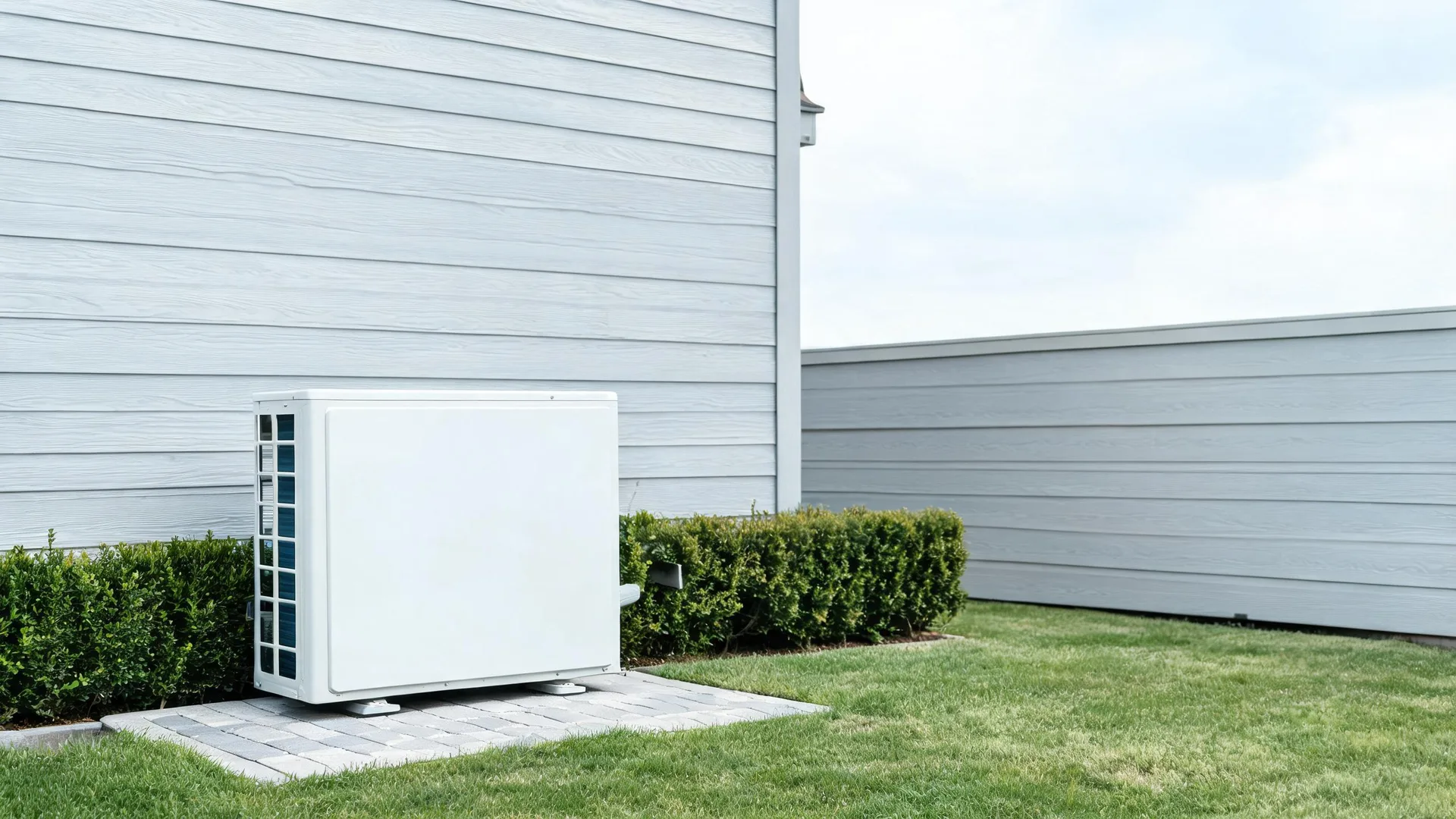
An outdoor residential air conditioning condenser unit mounted on a concrete pad, surrounded by gravel with a blue sky in the background.

Some of this gets worse the longer it runs

A system that's already struggling only gets worse the longer it stays running. A capacitor that's weak but still working forces the compressor to draw harder on startup, and every cycle after that adds more strain to a motor that was never the problem to begin with. A low refrigerant charge makes the compressor run hotter than it should. Heat is what wears a compressor down over time. Ice on the indoor coil is the clearest case. Once airflow or charge is off enough to let frost form, running the system longer just builds more ice, chokes off more airflow, and can send liquid refrigerant back into the compressor, which it isn't built to handle. None of this fixes itself by giving it time. Shutting the system off when something looks or sounds wrong keeps a small repair small.

What you can check yourself

Look at the outdoor unit first. Make sure nothing is pressed against it, no leaves, no branches, no debris blocking the sides. Check that the breaker hasn't tripped and the indoor thermostat is set to cool and actually set below room temperature. Swap the air filter if it looks gray or clogged, a blocked filter can starve the system enough to make it act like it's failing. Check that the outdoor fan is actually spinning when the system is running. If it's silent or the fan isn't turning, that's worth telling the tech before they arrive.

What to leave alone

Don't open the outdoor unit's electrical panel or touch the capacitor, it holds a charge even with the power off. Don't add refrigerant or try to find a leak yourself, that takes gauges and training to do safely. If the system is tripping the breaker repeatedly, stop resetting it and get it looked at, a repeated trip usually means a short or a failing compressor, and running it anyway can turn a repair into a replacement.

An outdoor central air conditioning unit mounted on a concrete pad beside a blue-sided house at sunset.

A new air conditioner would cut about $30 a year off cooling for a typical Lyon County home.

  • A new one at the federal minimum, 14.3 SEER2$150 a year
  • An older air conditioner$180 a year

Estimates for a typical Lyon County home, compared with an older unit built to the previous federal minimum, from EIA household energy data, Nevada fuel prices and NOAA climate normals. Your home will differ.

Repair makes sense when a part like a capacitor or contactor has failed.

Replacement makes sense when the compressor has failed or the system uses R-22 refrigerant, which is no longer made.

A repair makes sense as long as the part that failed is one part, and the rest of the system is sound. A capacitor, a contactor, a fan motor, these can be swapped without touching anything else, and the unit runs like new once it's in. Replacement starts to make more sense when the compressor itself is failing, since that's not really a repair, it's most of the cost of a new system anyway. Age matters too, but not on its own. A unit that keeps needing a tech back out is telling you something different than one that's never needed anything until now. The honest way to decide is to get the actual failed part diagnosed first. Guessing at replacement before anyone's opened the unit up usually means paying for more than the problem calls for.