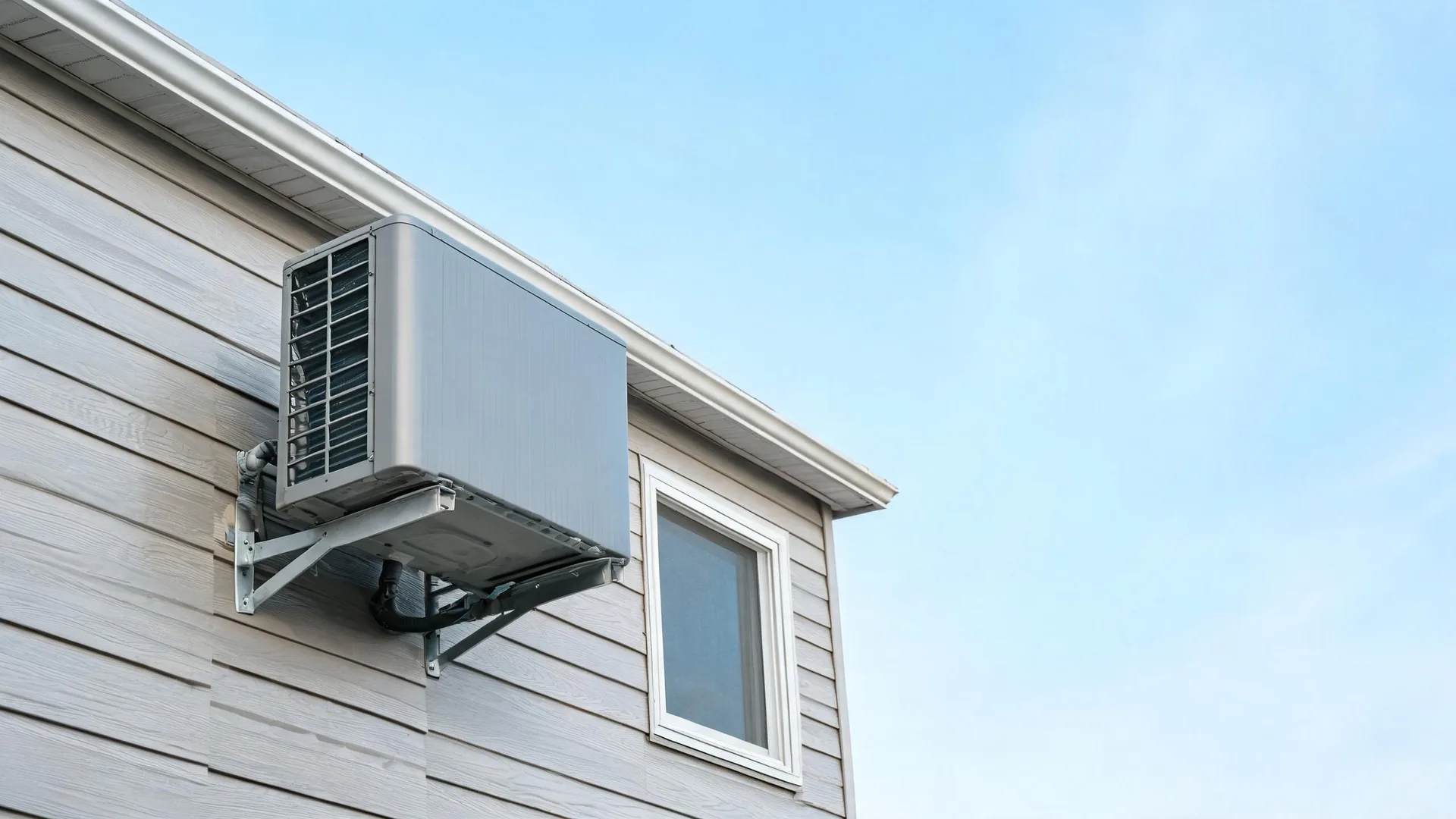
Two months of real heat
Hawthorne runs its AC in July and August, with afternoon highs around 86°F. That's a short stretch compared to a lot of the country, and it means the unit isn't working as hard over its life as one in a hotter climate.
Takes about a minute. No obligation.
Hawthorne runs its AC in July and August, with afternoon highs around 86°F. That's a short stretch compared to a lot of the country, and it means the unit isn't working as hard over its life as one in a hotter climate.
A unit that hasn't been pushed hard tends to have more good years left in it when something breaks. If your AC is acting up, the cause is more likely a single part that failed on its own than a system worn out from overwork, and that kind of problem is usually worth fixing.

NOAA nClimDiv, 1991–2020 normals
June is the quiet month before cooling starts in Mineral County.
A failure in July or August usually traces back to a part that was already weak before the heat hit it.




A compressor is the one part that usually settles the question. It's the most expensive thing in the unit, and if it's failing, the cost of replacing it gets close to the cost of a new system. A bad capacitor, a stuck contactor, a low charge from a slow leak, those are worth fixing almost every time. They're parts a tech can replace in an afternoon without touching the rest of the system. Age matters too, but not on its own. A unit near the end of its expected life that needs a cheap part is still worth fixing. The harder call is a unit that age has made unreliable, where one repair just buys time until the next part gives out.
If your AC came with the house, ask the tech how much life is left in it, not just what's wrong today. A bad capacitor is worth fixing on a unit of any age. A compressor failing on an older unit is a different question. Get that answer before you decide.
Find a contractorMost AC failures start small. A capacitor weakens and the compressor or fan motor has to struggle to start, which puts strain on the parts around it. A contactor pits and sticks from the constant arcing of the unit cycling on and off. A coil gets dirty and starves the system of airflow, so it runs long and hot when it doesn't need to. None of that is about how many hours the unit has logged. It's about one part reaching the end of its own life, on its own schedule, separate from everything around it. That's why a unit that's run for years without trouble can still go down over a bad run capacitor, and why fixing the part that failed is usually all it takes.
The air coming out of the vents feels wrong before anything shuts down. It runs warm. It runs weak. The unit cycles on and off faster than it used to. Sometimes it's a sound instead. The outdoor unit hums but doesn't turn into a start. A rattle shows up that wasn't there before. A hard click happens and then nothing. Any of these means a part is struggling before it quits outright.
A struggling part rarely stays a one-part problem. A weak capacitor makes the compressor strain to start, and a compressor that strains every time wears out faster than it should. A dirty coil makes the whole system run longer and hotter to do the same job. Catching the first sign usually means replacing one part. Waiting usually means the next part goes with it.
Estimates for a typical Mineral County home, compared with an older unit built to the previous federal minimum, from EIA household energy data, Nevada fuel prices and NOAA climate normals. Your home will differ.
Repair makes sense when a part like a capacitor or contactor has failed.
Replacement makes sense when the compressor has failed or the system uses R-22 refrigerant, which is no longer made.
A diagnostic starts with the tech asking what's been happening, when it started, what it sounds or feels like. Then they check the electrical side first. That means the capacitor, the contactor, the wiring at the disconnect. It's usually faster to rule in or out than anything else. If that's clean, they'll check refrigerant charge and look for signs of a leak, since low charge won't fix itself even after a recharge. They'll pull the panel and look at the coil and the blower while they're in there, because airflow problems get blamed on the wrong part all the time. A compressor gets tested last, not first. It's the part a tech wants to be sure about before saying it's the problem. By the end you should get a straight answer. What failed, what it takes to fix it, and whether that fix makes sense on a unit like yours.