






View from beneath a shaded wooden patio roof toward a tan stucco house with tile-edged rooflines, a gravel yard, a gray concrete block wall, and a gnarled tree under an overcast sky.

AC Repair in Las Vegas, NV

Tell us about the job

Takes about a minute. No obligation.

RepairCentral ACClark County, NV
Step 1 of 2

What ZIP code is the job in?

Your AC runs about six months straight here, May through October, with afternoon highs averaging 98°F in June, July and August. That's a long stretch of nonstop work, and it adds up. The compressor cycles more. The capacitor and contactor see more hours. Wind is part of it too. Clark County gets hit with damaging wind often enough to rattle an outdoor unit or knock debris into the coil. None of that means something is wrong with how your system was installed or maintained. It means the parts inside it wear sooner than they would somewhere milder, and whatever is acting up right now probably traces back to that.

6 months
May through October, your air conditioner is on duty
98°F
the average summer afternoon it cools against
28 hail events
in ten years, and hail bends the fins on outdoor coils
306 wind events
in ten years, and wind drives debris into outdoor units
Isometric illustration of a cutaway house showing interior ductwork, an indoor air handler and furniture, connected by lines to an outdoor condenser unit on a pad.
Your air conditioner works hardest from June through September.

NOAA nClimDiv, 1991–2020 normals

May is when cooling starts here, and when a weak part gets found out.

If your AC is struggling now, this is the month it was always going to.

At 15 cents a kWh, a struggling AC costs you more here than almost anywhere

Power costs 15 cents a kWh statewide
Climate zone 3B
Cooling runs May through October
Half the homes here are newer than you'd thinkHalf of Clark County's homes were built in 1998 or later, so a lot of AC systems still have years left in them.

A system that's low on charge or running on a weak capacitor doesn't just cool poorly, it pulls more power doing it. At 15 cents a kWh, that difference shows up on the bill every month it runs, not just once. Left alone, a small problem keeps costing you for as long as the AC stays on. Getting it looked at now costs you one visit. Waiting costs you the rest of the summer.

Have it diagnosed, not just patched

Whatever is acting up in your AC right now probably wore in faster because of the hours it runs here and the heat it runs against. A proper diagnosis finds the actual part at fault, so the fix holds up for the rest of the summer instead of needing a second visit.

Find a contractor
A man in a dark knit hat, navy long-sleeve shirt and tan work pants walks up painted wooden porch steps toward an orange front door, carrying a canvas tool bag.
A gray cylindrical air conditioning condenser unit mounted on a concrete pad next to a light-colored vinyl-sided house exterior.

Worth fixing, not replacing

If your house went up in 1998 or later, the system in it hasn't had to fight as many summers as you'd think. That's a reason to get a repair done right rather than treat the whole unit as expendable. A tech can tell you fast whether what's failing is a single part or a sign the unit itself is at the end of its life.

The capacitor goes first, most often

The capacitor gives the compressor and fan motor the jolt they need to start. It takes a charge every single cycle, and over time it weakens until it can't push the motor hard enough. A weak capacitor shows up as a unit that hums but won't start, or a fan that spins slow. It's a small part, and it's usually the reason a whole system looks dead.

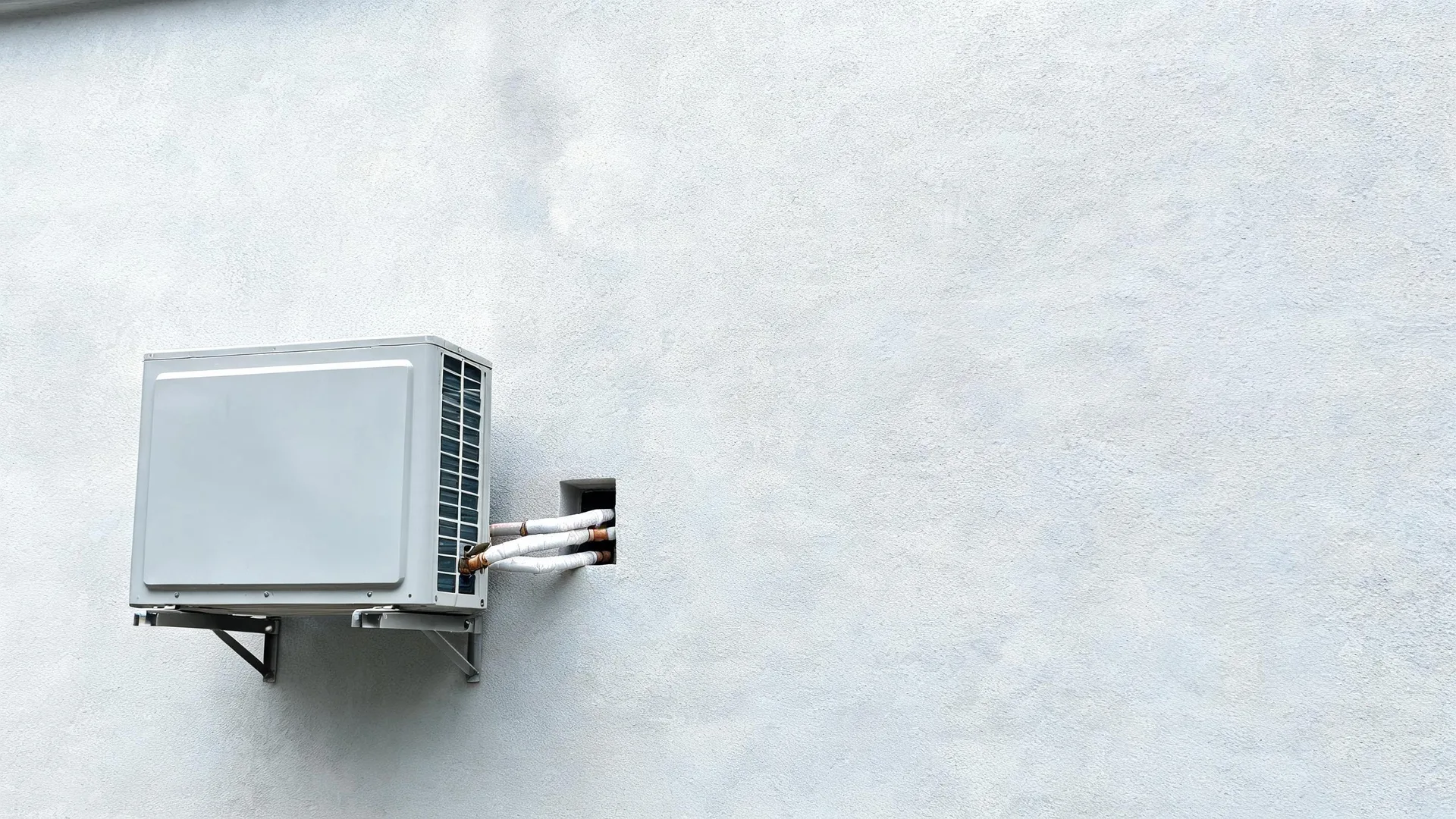
A refrigerant leak won't heal itself

If your AC is low on charge, it's because refrigerant is escaping somewhere, usually a worn fitting or a small crack in the coil. It doesn't get used up by running. Topping it off without finding the leak just means doing it again in a few months, and running low makes the compressor work harder than it's built for.

An outdoor air conditioning condenser unit positioned on a concrete pad next to a blue-sided house, surrounded by green shrubs and flowering hydrangeas at sunset.

A new air conditioner would cut about $90 a year off cooling for a typical Clark County home.

  • A new one at the federal minimum, 14.3 SEER2$620 a year
  • An older air conditioner$710 a year

Estimates for a typical Clark County home, compared with an older unit built to the previous federal minimum, from EIA household energy data, Nevada fuel prices and NOAA climate normals. Your home will differ.

Repair makes sense when a part like a capacitor or contactor has failed.

Replacement makes sense when the compressor has failed or the system uses R-22 refrigerant, which is no longer made.

A diagnostic visit starts with what the system is actually doing. Running but not cooling, short cycling, tripping a breaker, blowing warm air. The tech checks the charge, checks the electrical side (capacitor, contactor, wiring), and looks at the coils for dirt or damage. Airflow gets checked too, since a clogged filter or blocked return can mimic a refrigerant problem. Gauges on the lines tell them whether the charge is right, because low charge means a leak somewhere, not refrigerant wearing out. By the time they're done, you should know which part failed, why it failed, and whether it's isolated or a sign of something else wearing out nearby.