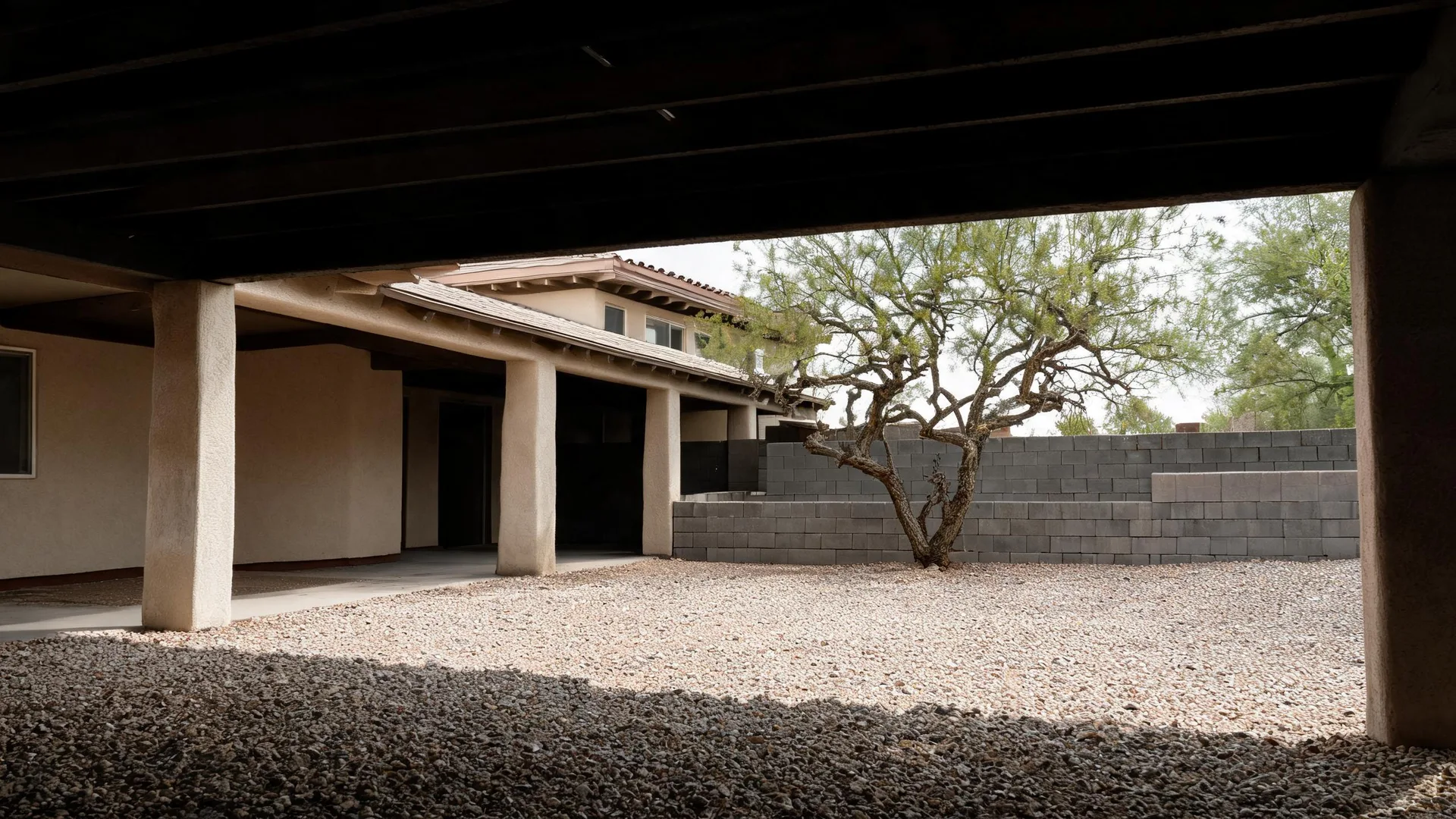






View from under a covered patio toward a single-story stucco house with a tiled roof, a gravel yard, a bare-branched tree, and a gray concrete block wall.

AC Repair in Pahrump, NV

Tell us about the job

Takes about a minute. No obligation.

RepairCentral ACNye County, NV
Step 1 of 2

What ZIP code is the job in?

May is when it's worth getting ahead of an AC problem in Pahrump. Cooling runs June through August here, just three months, and whatever was already weak in your system tends to give out in the first stretch of real heat. A capacitor that was marginal last summer doesn't get better sitting idle all winter. The moment the compressor starts working hard again, it's the first thing to fail. Having it looked at in May means a tech finds that weak part on their schedule, not yours, and not on the day you've got no cool air coming through the vents.

3 months
June through August, your air conditioner is on duty
88°F
the average summer afternoon it cools against
3 hail events
in ten years, and hail bends the fins on outdoor coils
356 wind events
in ten years, and wind drives debris into outdoor units
Isometric line illustration of a cutaway single-story house showing interior rooms with furniture, ceiling ductwork, an indoor air handler, and an outdoor condenser unit connected by lines along the exterior wall.
Your air conditioner works hardest from July through August.

NOAA nClimDiv, 1991–2020 normals

Three months of real heat a year is not hard on an AC system.

When one quits in Pahrump, it's usually a part that failed, not a system that got overworked.

Summer here is short. A failed part doesn't care.

Power costs 15 cents a kWh statewide
Climate zone 4B
Cooling runs June through August
A newer system, more often than notHalf the homes in Nye County were built in 1998 or later.

Most AC problems announce themselves before the system quits outright. Warm air blowing from the vents while the thermostat says it's running means the compressor isn't doing its job, or the refrigerant charge is low. A system that short cycles, turning on and off every few minutes instead of running a full cooling cycle, is usually telling you the capacitor is going or the coil is dirty enough that it can't shed heat. A hard rattle or a squeal when it starts up points to the fan motor or a loose part on the condenser. Ice on the refrigerant line means airflow is restricted somewhere, often a dirty filter or a coil that needs cleaning, and running it that way only pushes the compressor harder. None of these mean the whole system is done. They mean one part is struggling, and it's worth having someone look before that part takes the compressor down with it.

Newer system, worth repairing

If your AC came with the house, chances are it's a newer unit with plenty of life left. That makes repair the right call, not replacement. Get the broken part fixed and get back to cool air.

Find a contractor
An outdoor air conditioning condenser unit mounted on a concrete pad beside a house, with electrical conduit running to a wall-mounted disconnect box.

A small problem left running becomes a big one

A capacitor that's gone weak doesn't take the compressor down right away. It makes the compressor work harder to start each cycle, drawing more current than it should. Keep calling on it and the motor runs hotter than it was built to. A refrigerant leak works the same way from another angle. Low charge means the compressor has to run longer to move the same heat out of the house, and it runs hotter the whole time. Either one left alone can take a compressor from fixable to seized, and that turns a small repair into a much bigger one. A dirty condenser coil adds to it too. The coil can't shed heat the way it should, pressures climb, and the compressor is what absorbs that strain. None of this is about how hot the season is. It's about a weak part getting asked to keep working instead of getting looked at.

What actually wears out first

The capacitor and the contactor take the brunt of it. The capacitor gives the compressor and fan motor the kick they need to start, and that kick weakens it a little every cycle until one day it can't deliver. The contactor is the switch that sends power to the compressor, and its contacts pit and burn from the arc every time it closes. Both cause a no-cool call the moment they finally let go.

What that means for the fix

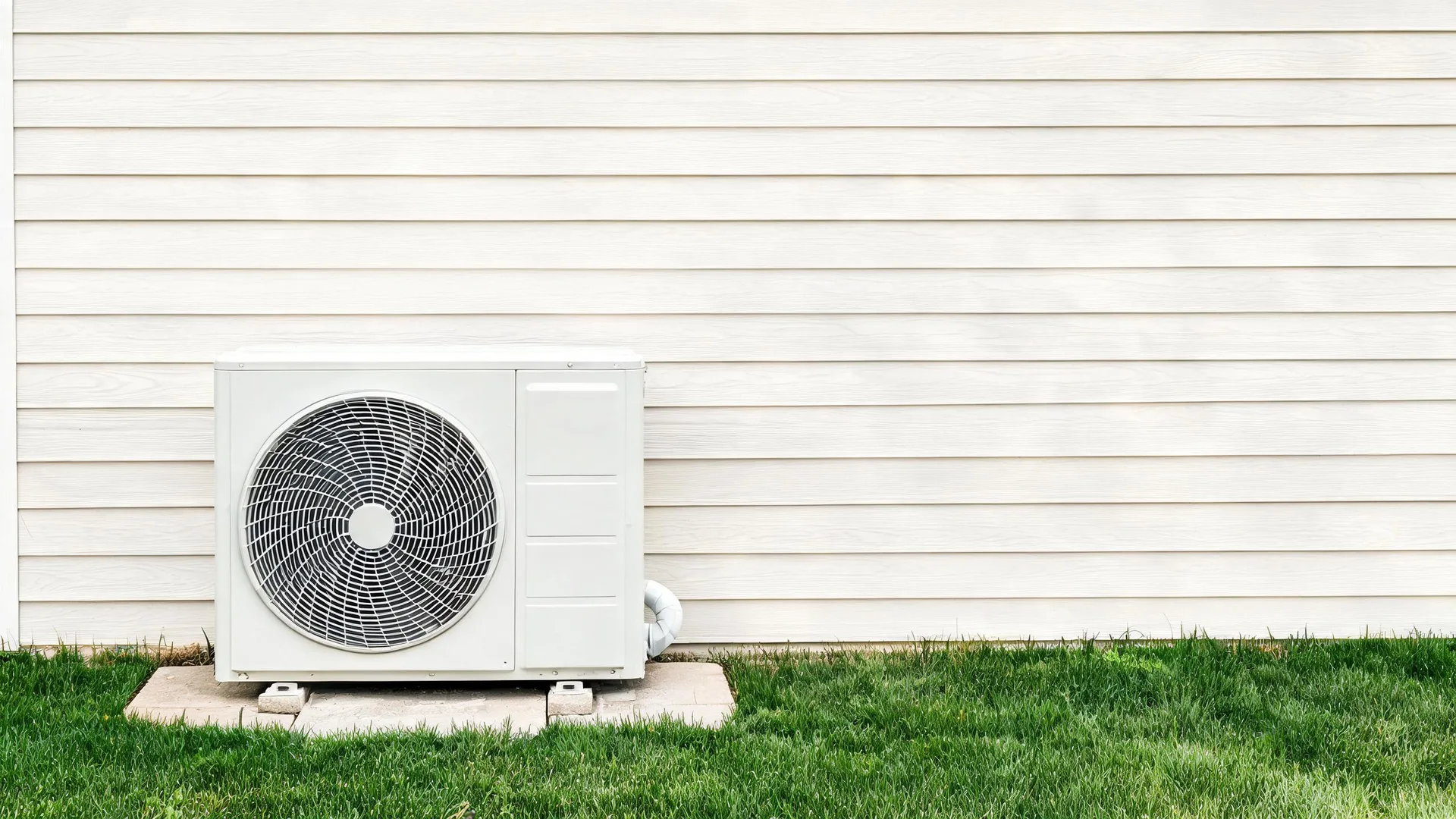
A failed capacitor or contactor is a straightforward swap, not a sign anything else is wrong with the system. A tech checks the capacitor's rating against what it should be and tests the contactor for pitting or a weak coil. If the compressor itself was never asked to run hot or starved of refrigerant, replacing the part that failed is usually all the job takes.

An outdoor air conditioning condenser unit installed beside the exterior wall of a blue vinyl-sided house at sunset.

A new air conditioner would save little on running costs in Nye County, so the repair decision comes down to the unit's condition.

  • A new one at the federal minimum, 14.3 SEER2$200 a year
  • An older air conditioner$220 a year

Estimates for a typical Nye County home, compared with an older unit built to the previous federal minimum, from EIA household energy data, Nevada fuel prices and NOAA climate normals. Your home will differ.

Repair makes sense when a part like a capacitor or contactor has failed.

Replacement makes sense when the compressor has failed or the system uses R-22 refrigerant, which is no longer made.

A tech weighing repair against replacement is really asking one question. Did the part that failed take anything else down with it. A capacitor or contactor that quit on its own is an easy call. Swap it and the system runs the way it always has. It gets harder when the compressor itself has been running hot for a while or pumping on a low charge. A compressor that's overheated repeatedly can short internally even after the original problem gets fixed, and there's no part for that, only a new unit. What matters is what the system has been asked to run through, not how long it's sat in the yard. A system that's always had good charge and clean coils is a different repair decision than one that's been low on refrigerant for a stretch. The condition of the compressor is what the decision turns on.