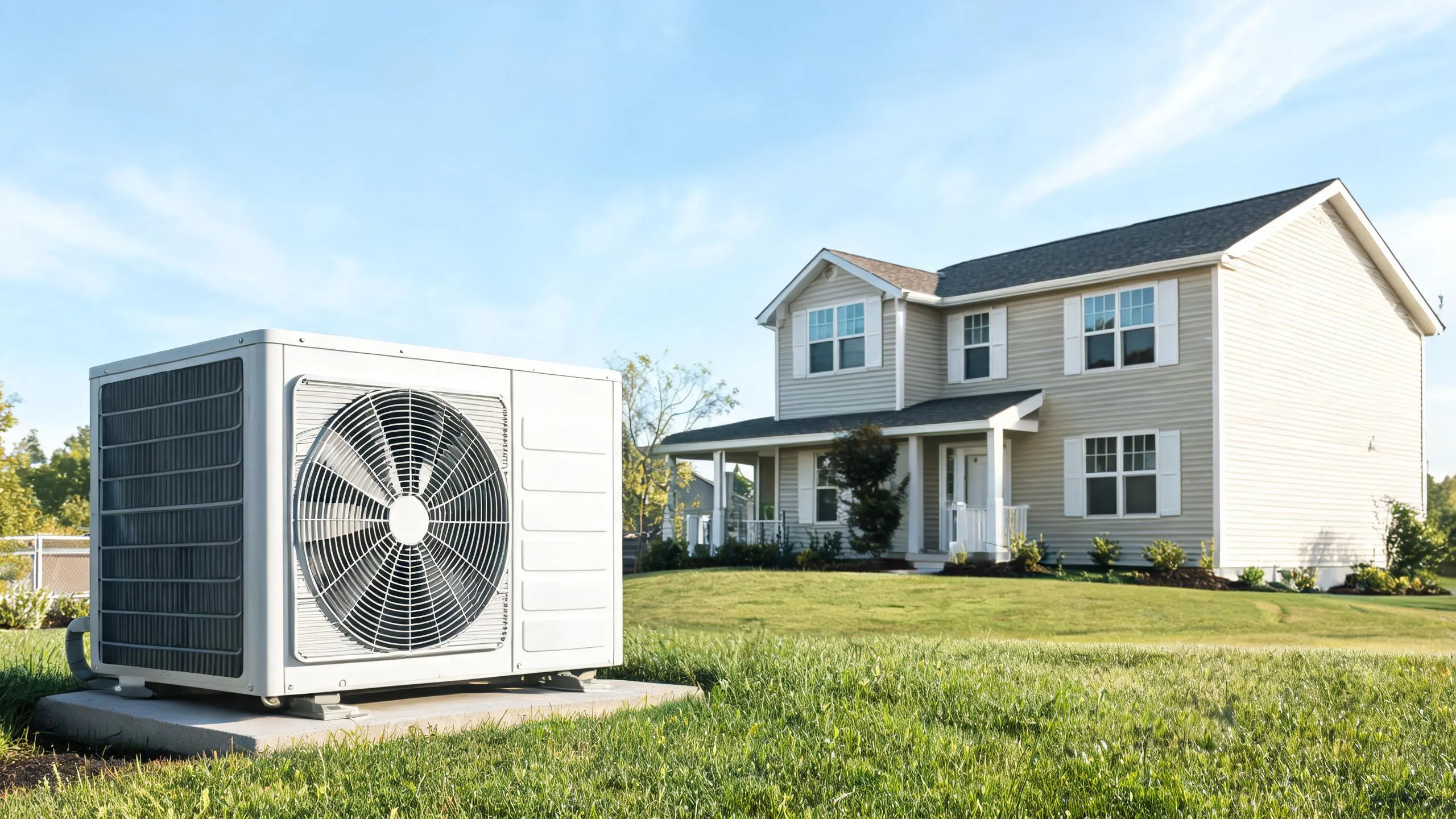





An outdoor heat pump unit mounted on a concrete pad in front of a two-story suburban house.

Heat Pump Repair in Carson City, NV

Tell us about the job

Takes about a minute. No obligation.

RepairHeat PumpCarson City, NV
Step 1 of 2

What ZIP code is the job in?

A heat pump here switches jobs twice a year, cooling in July and August, then heating from October through May. That second stretch does most of the work. If something was already marginal, a weak capacitor, a low charge, a worn contactor, it tends to hold up fine in mild weather and then fail in the first cold snap when the system finally has to work hard. That is usually what is happening if yours is acting up now, right at the start of heat season. Worth checking in September next year, before the load hits it again.

8 months
October through May, your system heats
2 months
July through August, it cools
25°F
the average winter night it heats against
83°F
the average summer afternoon it cools against
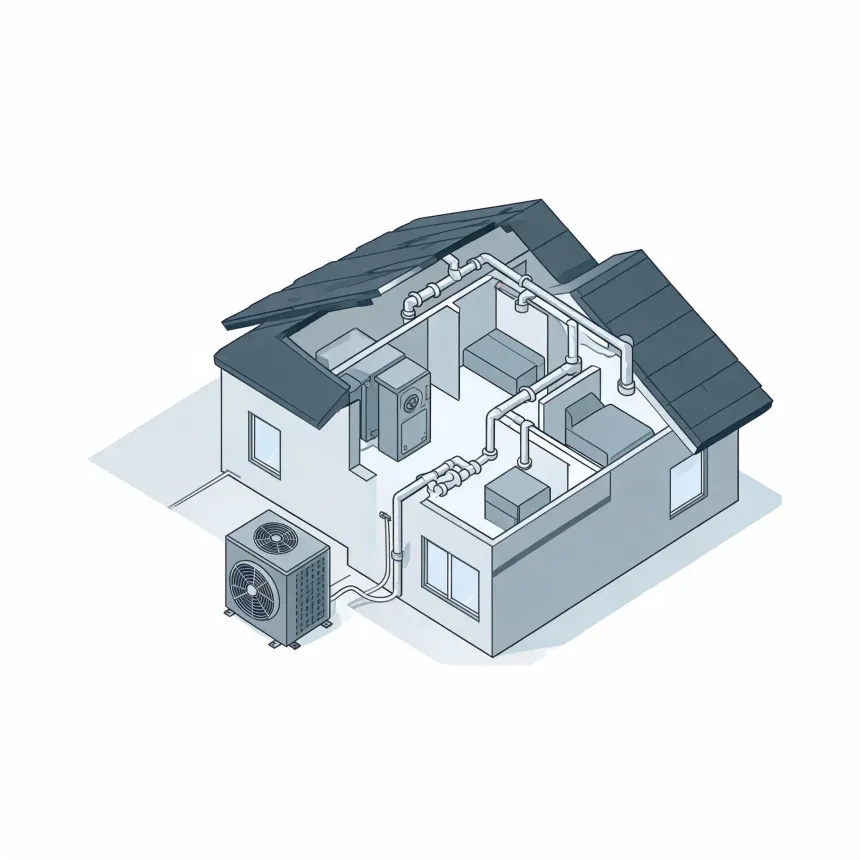
Isometric grayscale illustration of a cutaway two-story house showing interior ductwork, an indoor air handler unit, and an outdoor condenser unit on a pad beside the building.
Your system heats October through May and cools July through August.

NOAA nClimDiv, 1991–2020 normals

Carson City winters bring overnight lows around 25°F from December through February.

A heat pump that struggled to keep up on the first cold nights usually had a weak part waiting to fail, not a system overwhelmed by the cold itself.

At 15 cents a kWh, a heat pump that's struggling is costing you every month it runs

Power costs 15 cents a kWh statewide
Climate zone 4B
Cooling runs July through August
A newer house means your heat pump is probably worth fixingHalf the homes in Carson City were built in 1981 or later.

Age matters more than any single symptom. A heat pump that's old and now needs a compressor or a reversing valve is usually not worth that repair, because the parts most likely to fail next are already close behind it. A newer unit with a bad capacitor or a failed contactor is a different case, those are wear parts, cheap to replace, and fixing one doesn't say anything bad about the rest of the system. Ask what's actually failed before asking whether to fix it. A refrigerant leak is worth knowing more about too, since a system that's lost its charge once usually has a reason, and finding that reason matters more than just adding refrigerant back.

A struggling heat pump is running up your bill right now

At 15 cents a kWh, a weak capacitor or low charge makes the system work harder every time it cycles on, not just on the coldest nights. Getting the actual cause diagnosed now stops that cost instead of paying it every month this winter.

Find a contractor
A gray heat pump outdoor unit mounted on a concrete pad next to a residential house with lap siding and stone accents.

A newer system is worth a proper diagnosis, not a guess

If your heat pump came with the house, get the actual part named before deciding anything. A capacitor or contactor is a straightforward swap on a system this age. There's no reason to hold off and see if it gets worse.

The reversing valve is what makes it a heat pump

The reversing valve switches the system between heating and cooling. When it sticks, the unit blows cold air during a heating cycle, or it gets stuck in one mode and won't switch at all. It takes real stress every time it shifts, and a stuck valve is a different repair than the wear parts around it.
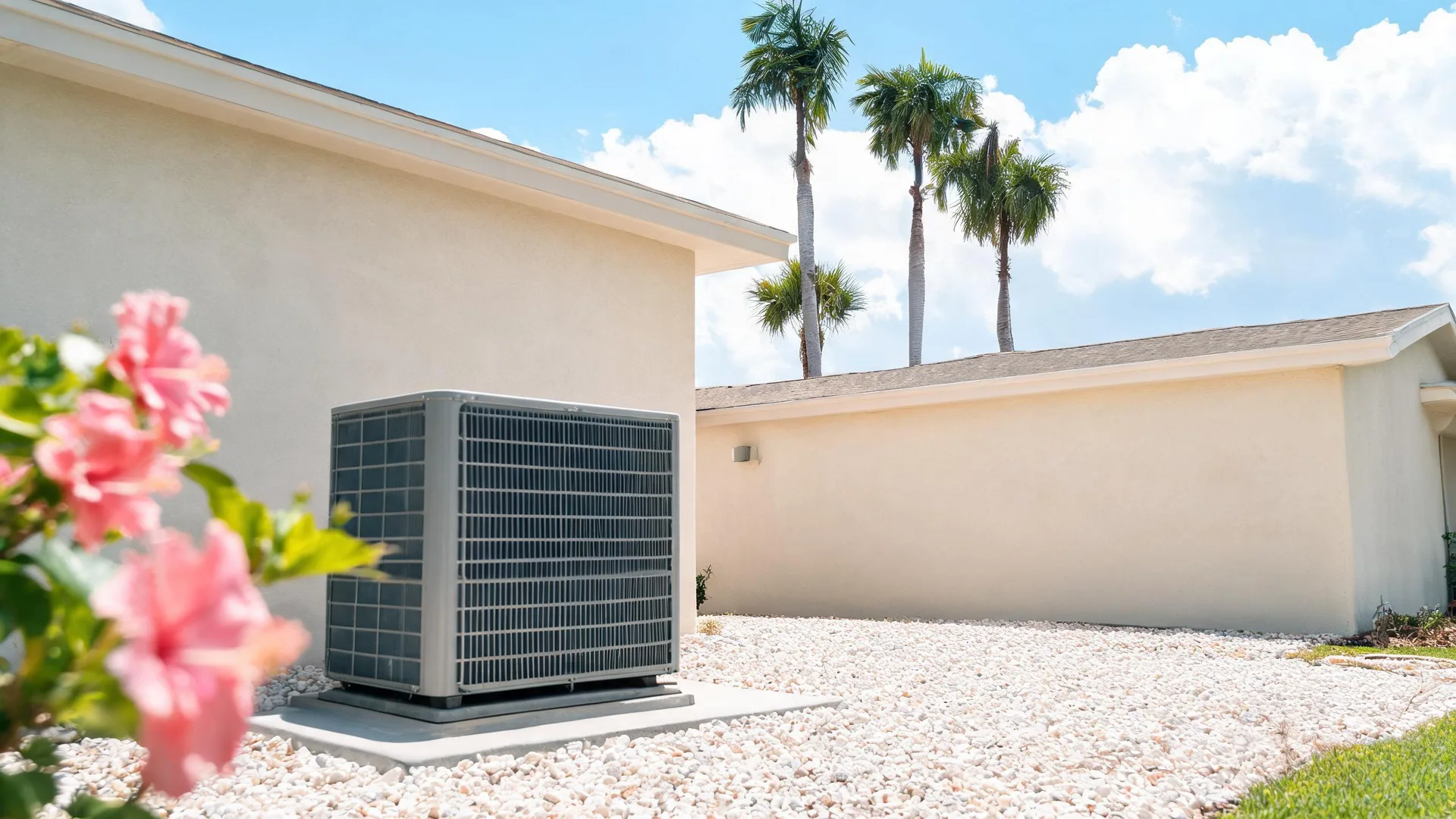
Most failures aren't in the valve

A capacitor weakens over time until it can't start the compressor or the fan motor. A contactor pits from arcing until it stops making contact. A low refrigerant charge means a leak somewhere in the line set or the coil. All of these show up as the system running weak or short cycling, long before anything as serious as the valve or the compressor is involved.

A heat pump that needs attention doesn't usually go quiet, it just stops doing its job well. Air comes out of the vents that's barely warm, or barely cool, like the system is running but not working. It might start, run a short while, then shut off before the house is anywhere near the temperature you set. Some run long stretches without ever seeming to catch up. Outside, the unit might ice over when it shouldn't, or you'll hear it humming without the fan turning, which usually means something electrical is trying and failing to do its job. A clicking sound when it tries to start and doesn't catch is worth paying attention to as well. None of these mean the same thing every time, but all of them mean something back there has already started to go.

A diagnostic visit starts with the thermostat and works back toward the unit, not the other way around. A tech checks what the system is actually doing. Is it running, short cycling, or blowing air that isn't the right temperature. That behavior narrows things down before any panel comes off. Electrical readings come next. Voltage to the compressor and fan motor, resistance across the capacitor, continuity through the contactor. Refrigerant charge gets checked against what the system is supposed to hold, since too little almost always means a leak rather than just needing a top off. The reversing valve gets tested on its own, because a stuck valve looks like other problems until someone checks it directly. By the end, the failed part has a name, and that name is what decides whether the repair is worth doing.