View from beneath a dark shaded overhang toward a single-story stucco house with a concrete block wall, gravel ground, and a large twisting tree at right.

Heat Pump Repair in Crescent Valley, NV

Tell us about the job

Takes about a minute. No obligation.

RepairHeat PumpEureka County, NV
Step 1 of 2

What ZIP code is the job in?

Heat pumps here work almost all year

Heat runs September through June in Eureka County, and the same system switches over to cooling for July and August. There is barely an off season, so a weak part does not get much chance to rest before it is called on again.


August and June are when trouble shows up

A heat pump that struggled by the end of June, when cooling was still running, often fails outright once heat starts up in September. The same goes for August, the last month before the long heating stretch begins. If something felt off near the end of a season, that is usually the part to ask a contractor to check first.

10 months
September through June, your system heats
2 months
July through August, it cools
18°F
the average winter night it heats against
84°F
the average summer afternoon it cools against
Isometric grayscale illustration of a cutaway two-story house showing interior ductwork, an indoor air handler unit, and an outdoor condenser unit on a pad beside the building.
Your system heats September through June and cools July through August.

NOAA nClimDiv, 1991–2020 normals

Winter here means cold, not wind or hail wearing on the outdoor unit.

A heat pump in Crescent Valley usually fails from age or a worn part, not from what the weather did to it.

203 severe weather events on record, and none of it is why your heat pump quit

203 severe weather events from 2015 to 2024
13% of homes statewide lost power a day or more in 2024
97 damaging wind events from 2015 to 2024

Before anyone comes out, there are a few things worth checking. Look at the thermostat first. Make sure it's set to the mode you want, heat or cool, and that the set temperature is actually past the room temperature. A dead thermostat battery can make a system look broken when it isn't. Next, check the outdoor unit. If the fan isn't spinning at all, or if the unit is caked with debris, that alone can stop it from running right. Inside, pull the air filter and hold it up to light. If you can't see through it, it's choking off airflow and the system will struggle no matter what else is wrong. Last, check the breaker panel. A tripped breaker will shut the whole unit down without any other warning sign. If all of that checks out and the system still isn't heating or cooling right, the cause is inside the unit, and that's a job for a contractor.

Electricity here runs 15 cents a kilowatt-hour. A heat pump that's struggling costs you more every day it keeps running that way.

Nevada homes pay more for power than most of the country, and this system runs almost year round. A worn part doesn't just risk a bigger breakdown later. It's driving up what you pay right now. Getting the real cause found and fixed stops that.

Find a contractor
A man in a gray long-sleeve shirt and brown work pants, seen from behind, climbs wooden porch steps toward a red door while carrying a canvas tool bag holding pliers and screwdrivers, with a potted plant at right.
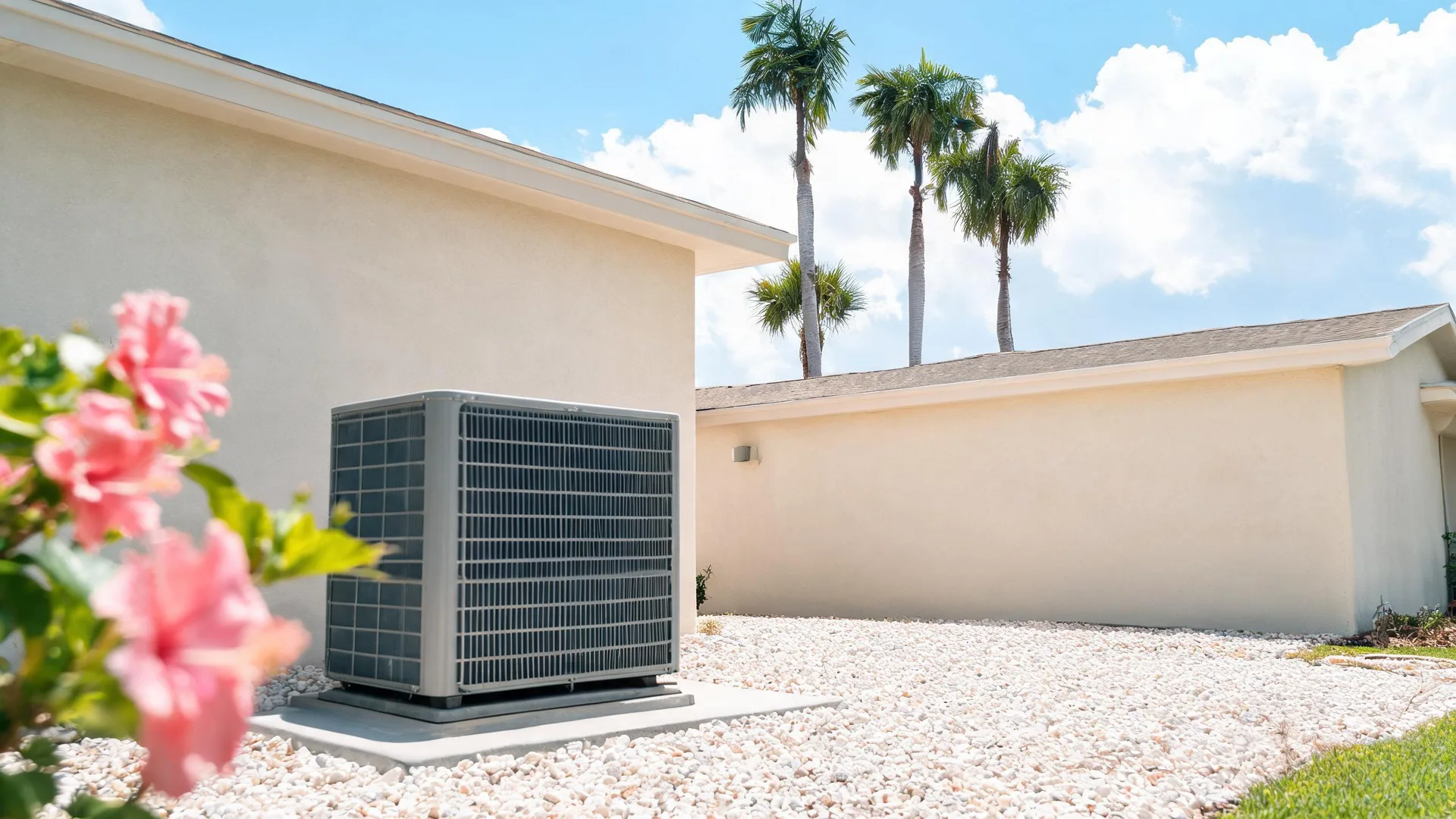
A gray heat pump outdoor unit mounted on a concrete pad next to a residential house with lap siding and stone accents.

Cold wears on you, not on the unit

Eighteen degrees is the average overnight low here in December and January. That's cold, steady cold, not the kind of weather that beats on an outdoor unit. So when a heat pump here is acting up, the cause is almost always inside it. Worth asking a contractor to check the reversing valve and the compressor first. If the system is old enough, it may just be worn out, and that's worth knowing too before you pay for a repair.

Blowing air that isn't the right temperature

A heat pump stuck in one mode, or blowing air that feels barely warm in winter or barely cool in summer, usually means the reversing valve isn't switching the way it should. It can also mean the refrigerant charge is low. Either way the system keeps running, it just isn't doing the job, and that's worth a call before it quits outright.

Short cycling or running nonstop

A unit that kicks on and off every few minutes is short cycling, often from a failing capacitor or a thermostat sensor reading wrong. One that runs constantly without hitting the set temperature is usually low on refrigerant or has a compressor working harder than it should. Both patterns wear the system down faster the longer they go unchecked.

Most heat pump failures trace back to a handful of parts. The reversing valve is one, since it switches the system between heat and cooling every cycle, and that constant switching wears it out over years. The compressor is another, and it tends to fail after something smaller went wrong first and nobody caught it, like a refrigerant leak that left it running low on charge and working harder than it should. Capacitors wear out on their own schedule, and when one goes the unit struggles to start or runs in short bursts instead of settling into a steady cycle. The outdoor fan motor and its bearings can wear down too, after years of constant turning. None of this is about one bad storm or one bad day. It's parts doing their job for years until they don't anymore.

A failed reversing valve or a bad capacitor is usually a clean swap. The part gets replaced and the rest of the unit keeps running the way it always did. A compressor is different. It rarely fails on its own, usually something else was wrong first, a slow refrigerant leak or a part working harder than it should, and nobody caught it in time. Replacing a compressor without finding what caused it to fail means paying for the symptom while the real problem stays put. Age matters too, not because old parts are automatically bad, but because a unit near the end of its expected life has less reason behind a major repair. A contractor who knows the model and the part that failed can tell you honestly which side of that line the system is on.