







Two illuminated adobe-style desert homes at night, surrounded by saguaro cacti and low desert shrubs along a curved driveway.

Heat Pump Repair in Dyer, NV

Tell us about the job

Takes about a minute. No obligation.

RepairHeat PumpEsmeralda County, NV
Step 1 of 2

What ZIP code is the job in?

Heat pumps in Dyer earn their keep most of the year here, with heat running October through May and cooling taking over for the summer. That switch in October is when a weak part tends to fail. The system has been sitting since May, cooling mode only, and now it has to reverse and push heat for the first time in months. A contactor or capacitor that was already marginal often won't make that jump. If your heat pump is struggling now, in early fall, that timing is not a coincidence. The same thing happens in reverse come June, when cooling starts back up after a long heating stretch.

8 months
October through May, your system heats
3 months
June through August, it cools
24°F
the average winter night it heats against
89°F
the average summer afternoon it cools against
Isometric cutaway illustration of a single-story house showing interior ductwork, an air handler and rooms, with an outdoor condenser unit connected by refrigerant lines on a plain white background.
Your system heats October through May and cools June through August.

NOAA nClimDiv, 1991–2020 normals

Dyer sees winter lows around 24°F, not the deep cold that pushes a heat pump hard for months on end.

A heat pump here is less likely to be worn out, so a repair is usually the right call, not a stall before replacement.

A heat pump that's struggling here costs more to ignore than in most states

Power costs 15 cents a kWh statewide
Climate zone 4B
Cooling runs June through August
Dyer's winters don't wear out a heat pumpOvernight lows here average 24°F in December, January and February, well short of the cold that runs a heat pump into the ground.

Before anyone comes out, go outside and look at the outdoor unit. Check that the fan is spinning and air is moving through it, not just the compressor humming while nothing turns. Look at the coil for ice. A heat pump should never be solid with frost in one spot while running, and if it is, switch to fan only or turn it off until someone can look at it, since running it iced up can push the problem into the compressor itself. Inside, check your thermostat batteries and make sure it's actually set to heat or auto, not cool. Pull the filter and hold it up to a light. If you can't see through it, that's airflow the system isn't getting, and it will struggle no matter what else is wrong. Last thing, check the breaker. Heat pumps trip breakers more than people expect, and a reset that holds is a different job than one that trips again right away.

A heat pump problem here costs you every day it waits

At 15 cents a kilowatt-hour, a heat pump that's cycling wrong or running longer than it should is adding to your power bill every day it sits broken. Get the part that failed found and replaced now, before another season puts the same strain on it again.

Find a contractor
A man in a dark jacket, cap and tan work pants climbs wooden porch steps toward a red door, carrying a canvas tool bag beside a potted shrub in a red planter.
A dark gray heat pump unit mounted on a concrete pad next to a house with gray siding and a stone veneer wall.

Running a struggling heat pump doesn't give it time to recover, it gives the damage time to spread

A heat pump that's icing up, short cycling, or struggling to reverse mode doesn't fix itself by staying on. Ice on the coil blocks airflow, so the system pulls in less heat and runs longer trying to make up for it, and that longer runtime builds more ice. A compressor working against that kind of restriction runs hotter than it should, and compressors don't tolerate heat for long before something inside fails for good. Short cycling does its own damage. Every start draws a surge of current through the windings, and a contactor or capacitor that's already weak gets pushed a little closer to full failure with each cycle. A reversing valve stuck partway is the same story. It keeps trying to switch and keeps drawing power to do it, which is wear the valve was never built to handle. None of this gets better by leaving it running. It gets worse the longer the system keeps trying to push through it.

The sounds tell you what's failing

A clicking sound when the thermostat calls for heat, then nothing starting up, usually means a failed contactor or capacitor. A hissing or bubbling sound from the outdoor unit points to the refrigerant line, not something a homeowner can chase down. A grinding or screeching from the outdoor unit is almost always the fan motor bearings giving out, and that motor won't fix itself by running less.
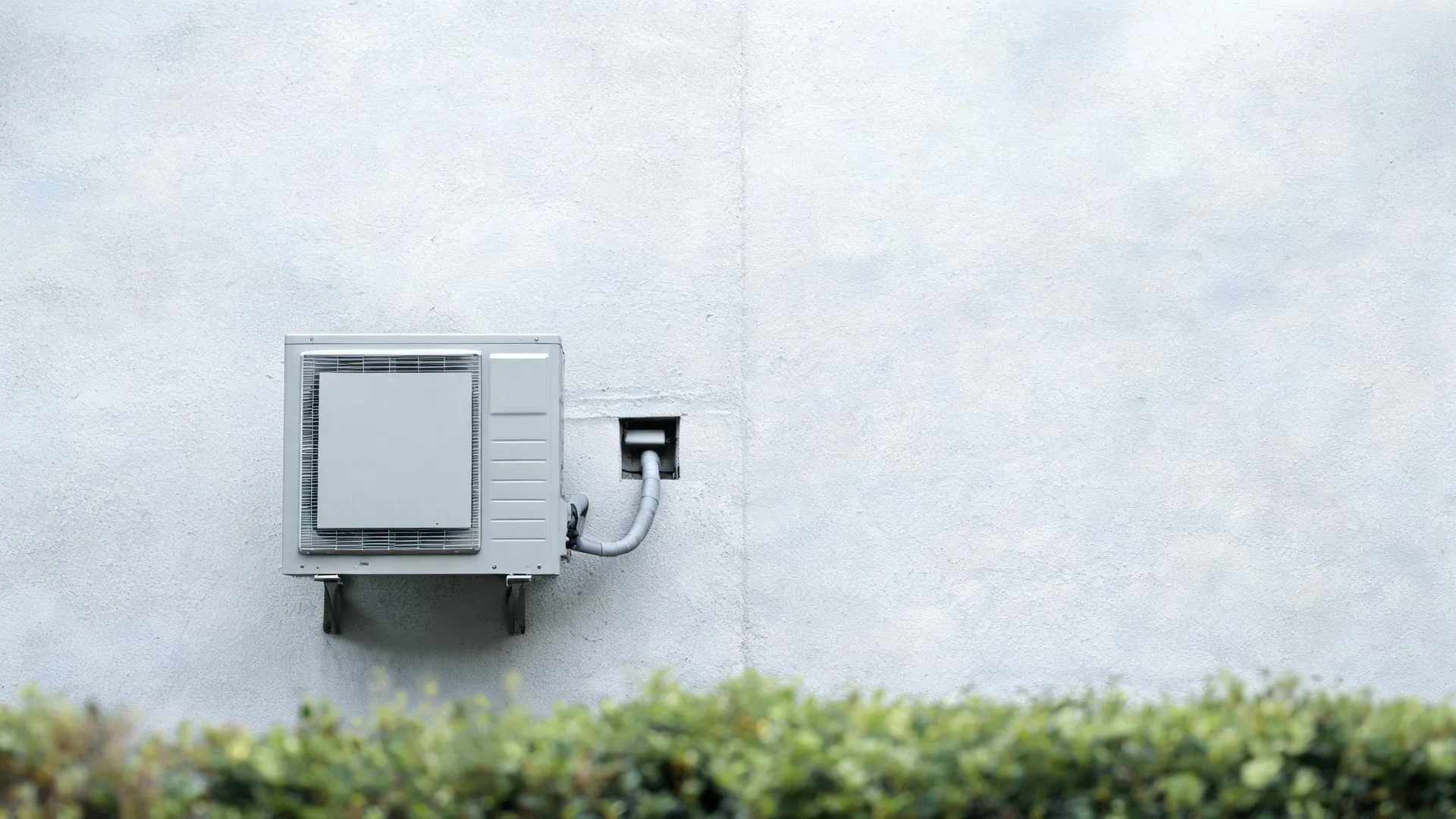
Warm air from the vents in heating mode isn't always a failure

A heat pump moves heat, it doesn't burn fuel to make it, so the air coming out of the vents in heating mode feels warm, not hot like a furnace. That's normal. What isn't normal is air that's barely above room temperature, or air that goes from warm to cold and back over a single cycle. That swing usually means the reversing valve isn't fully switching, and it's worth having someone check before it gets stuck.

Most heat pump failures trace back to the same handful of parts. The reversing valve is the part unique to a heat pump, and it fails because the coil that moves it loses power or the valve body sticks after years of switching back and forth. When that happens it stops fully seating in one position, which is why a system starts blowing warm air and then cold. The capacitor and contactor wear out from plain repetition. Every start and stop asks a little more of them until one day they don't make the connection. Fan motor bearings wear the same way any bearing does, slowly, until the grinding gives it away. The compressor is the part nobody wants to hear is the problem, and it's rarely the first thing to fail on its own. Usually something upstream, like a dirty coil or low refrigerant, made it work harder than it was built to for too long, and it gave out last.

A repair is worth it when the failed part is the kind that just does one job, like a capacitor, contactor, or fan motor. Those parts don't tell you anything about the rest of the system. They just wear out and get replaced, and the heat pump goes back to running the way it did before. Replacement starts to make sense when the compressor is the part that failed, or when whatever caused it to fail is still there after the repair. A coil that was left dirty too long, or a refrigerant leak that never got fixed, will wear out a new compressor the same way it wore out the old one. The other sign is a system that needs a different repair every season. Each one might be a fair fix on its own, but a heat pump that keeps finding new ways to fail is telling you something about its overall condition, not just about that one part.