Adobe-style desert homes lit by warm exterior lights at dusk, surrounded by saguaro cacti and native desert plants.

Heat Pump Repair in Ely, NV

Tell us about the job

Takes about a minute. No obligation.

RepairHeat PumpWhite Pine County, NV
Step 1 of 2

What ZIP code is the job in?

August is when weak parts fail

Heat here starts up in September, and August is when a heat pump switches over and starts working hard after sitting idle most of the summer. A capacitor or contactor that was already marginal tends to give out right at that switch, not months into the season.


This system works most of the year

Heat pumps in Ely run from September through June, about ten months a year. A repair here is worth doing right, since whatever gets fixed now is going to carry most of the year's load.

10 months
September through June, your system heats
2 months
July through August, it cools
17°F
the average winter night it heats against
82°F
the average summer afternoon it cools against
Isometric cutaway illustration of a gray house showing interior rooms, a central air handler with ducts in the attic, and refrigerant lines running to an outdoor condenser unit beside the building.
Your system heats September through June and cools July through August.

NOAA nClimDiv, 1991–2020 normals

A heat pump fails most often at the reversing valve, the part that switches it between heating and cooling.

When that valve sticks, the system keeps running but stops putting out the right air, so it looks like low output instead of a broken part.

Half the homes in White Pine County are old enough that their heat pump isn't the first one

Half the homes here were built by 1970
246 damaging wind events from 2015 to 2024
226 winter storms from 2015 to 2024

A heat pump that's struggling still draws power the whole time it runs, and in Nevada that power costs 15 cents a kilowatt-hour. A reversing valve stuck halfway doesn't shut the system off. It keeps pulling current and blowing air that's the wrong temperature, so you're paying full price for a machine that isn't heating your house. This system carries most of the year's load here, so a stuck valve isn't a short stretch to wait out. The longer it sits, the more it costs before anyone fixes it.

Most heat pump problems here come down to one part

White Pine County sees plenty of wind and winter storms. None of that is especially hard on a heat pump. When one stops working right, it's almost always the same part, a reversing valve or a failing capacitor, not weather damage. Worth having someone find the actual cause before the heating months ahead put more hours on it.

Find a contractor
A man in a dark jacket, beanie, and tan pants seen from behind carrying a worn canvas duffel bag as he steps up porch stairs toward a red front door.
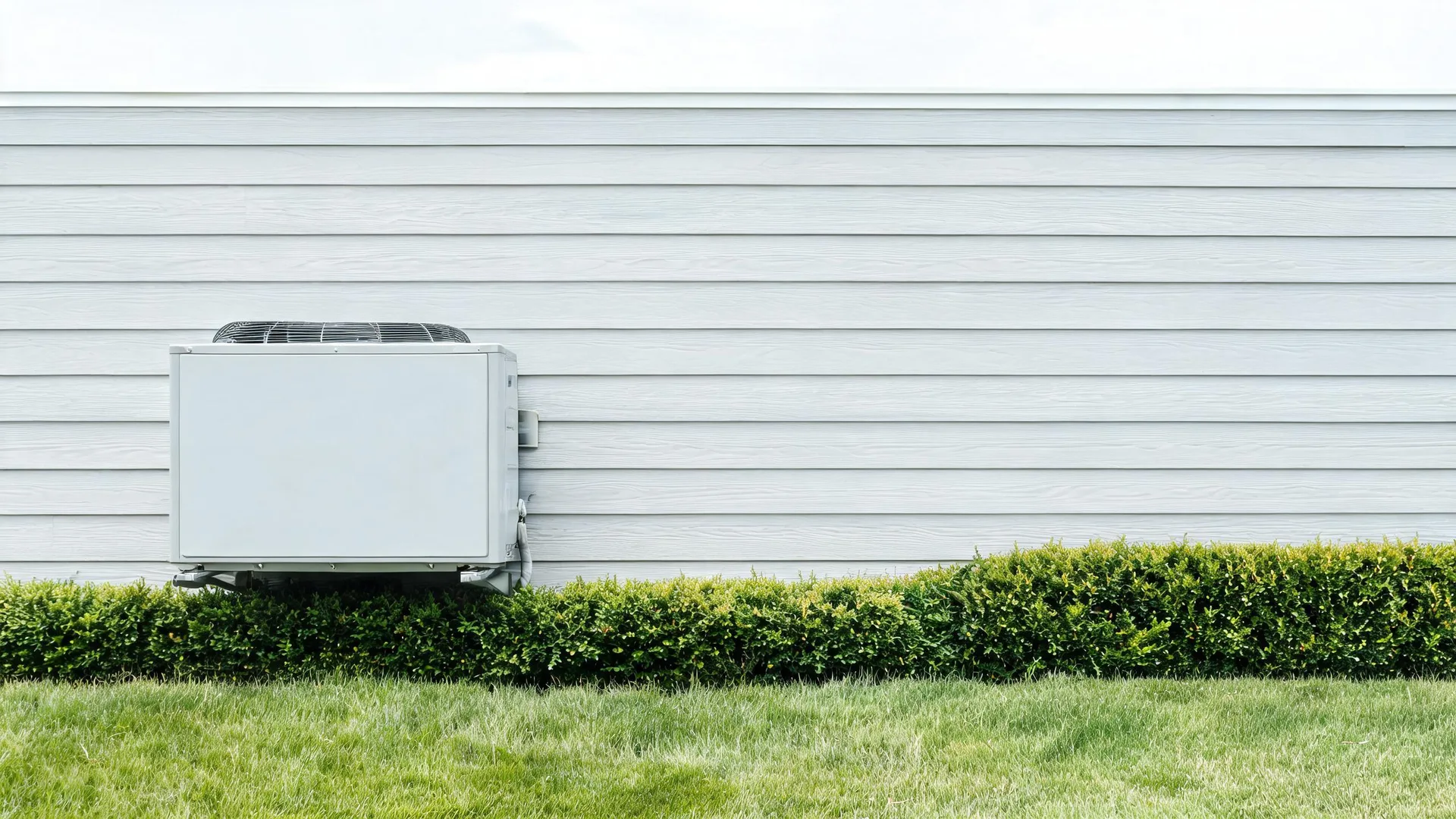
A gray heat pump outdoor unit mounted on a concrete pad next to the stone-accented exterior wall of a house.

What a failing heat pump actually sounds and feels like

Most heat pump failures give some warning before the system quits outright. Short cycling is one, the outdoor unit kicking on and shutting off again within a couple minutes instead of running a full cycle. Warm air that isn't actually warm is another, the system runs, the fan blows, but what comes out of the vents doesn't match the thermostat setting. A unit that runs constantly and never seems to catch up is worn in a different way, usually low refrigerant or a compressor that's lost some of its capacity. Buzzing or clicking at the outdoor unit when it tries to start and fails is a capacitor or contactor announcing itself, and that one tends to get worse on its own schedule, not yours. A burning smell or a breaker that trips more than once is different from the rest. That's not a part wearing down, that's a system telling you to shut it off and get someone out before it runs again.

Check the thermostat first

Set it to heat and raise the temperature above room level. The outdoor unit should start up within a short wait. If it stays silent, the problem is likely electrical, a breaker or a control board issue. If it starts but blows air that's cold or barely warm, that points toward the reversing valve already named above, not the thermostat.

Look at the outdoor unit

Walk outside and check that the fan is spinning and nothing is blocking the coil. A coil with some frost on it during a cold snap can be normal mid-cycle, but ice that never clears even after the system has run a while means the defrost cycle isn't working. That's a call for a technician, not something to chip away at with a hose or a scraper.

A reversing valve that's sticking doesn't announce itself all at once. Early on it might only slip for a few seconds mid cycle, and the system shakes it loose and keeps going. Run it like that for weeks and the valve body wears at the exact spot where it's dragging, so the stuck moments get longer and happen more often. The compressor is what absorbs this. It's built to push refrigerant one direction at a time, and when the valve is caught between positions, the compressor is working against pressure it was never meant to fight. That kind of strain wears down the one part in the system that's hardest to replace. Left alone, a problem that starts at the valve ends up taking the compressor with it.

A repair decision on a heat pump usually comes down to the compressor, not the part that failed today. A capacitor, a contactor, even a reversing valve are all worth replacing on their own, since none of them are especially expensive next to the whole system. The compressor is different. It's sealed, it's the one part that does the actual work of moving refrigerant, and when it starts failing, nothing short of swapping it or the whole outdoor unit fixes it. So the real question isn't what broke this time, it's whether the compressor is still sound. A system that's needed a few small parts over the years but still runs strong once fixed is worth keeping. One where the compressor itself is weak or short-cycling is a different conversation, no matter how minor the current complaint looks.