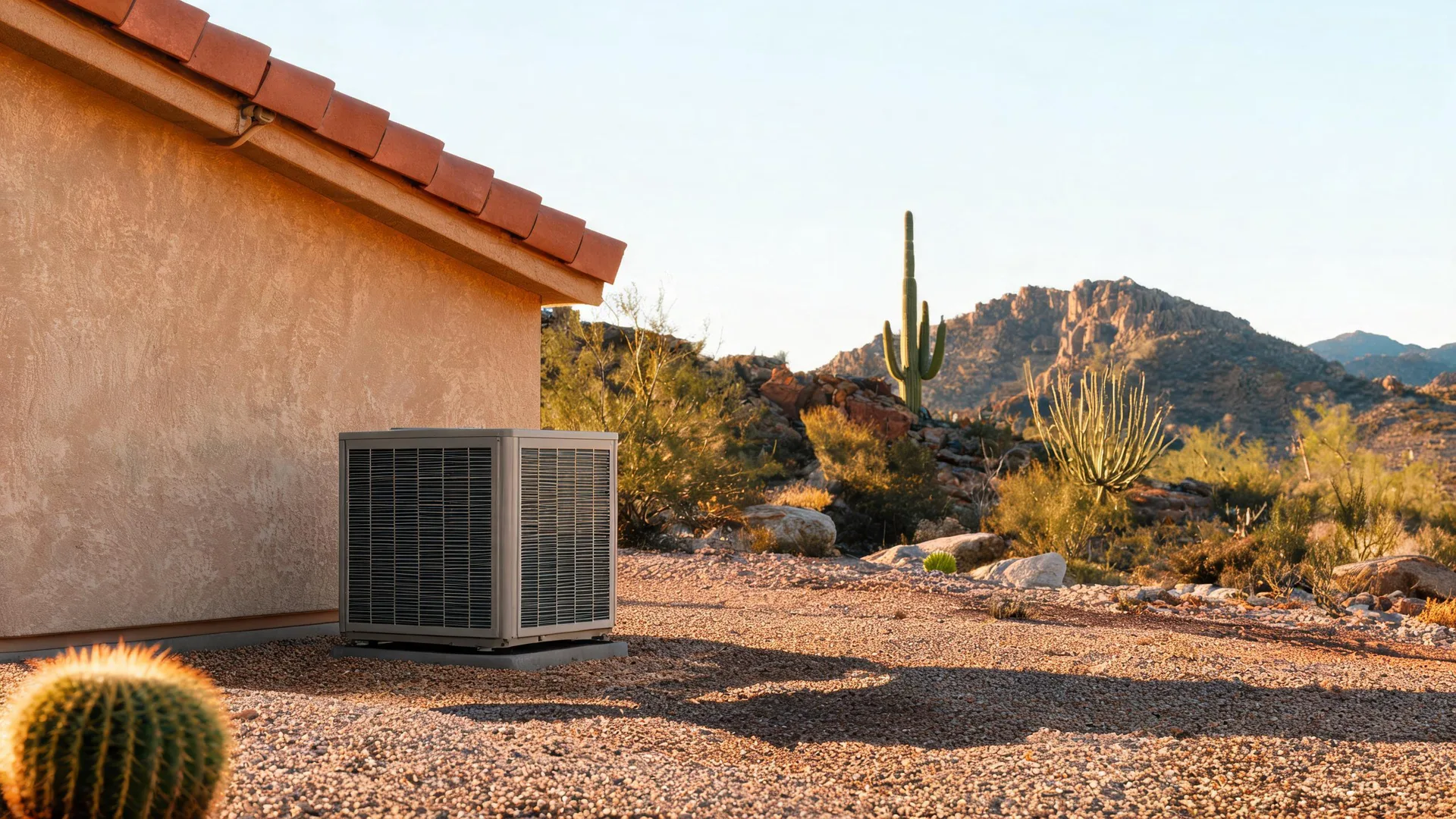
An outdoor air conditioning condenser unit mounted on a concrete pad next to a residential house at sunset.

Heat Pump Repair in Fallon, NV

Tell us about the job

Takes about a minute. No obligation.

RepairHeat PumpChurchill County, NV
Step 1 of 2

What ZIP code is the job in?

Winters here are cold, not harsh

Overnight lows average 22°F through December, January and February. That's real cold, enough for a heat pump to lean on its backup heat some nights. But Churchill County only saw 10 winter storm events over the last ten years. A heat pump here isn't fighting ice and blizzards most of the season.


Less strain means a repair holds up

A heat pump that hasn't spent years battling extreme swings usually has less wear on the parts that fail first, the reversing valve, the compressor, the defrost board. When one of those is acting up here, it's more often a straightforward fix than a sign the whole unit is done.

8 months
October through May, your system heats
3 months
June through August, it cools
22°F
the average winter night it heats against
89°F
the average summer afternoon it cools against
Isometric grayscale illustration of a cutaway house showing interior rooms, ceiling ductwork and an air handler, connected by lines to an outdoor condenser unit on a pad outside.
Your system heats October through May and cools June through August.

NOAA nClimDiv, 1991–2020 normals

Half the houses in Churchill County were built in 1990 or later.

A heat pump installed with a newer house still has years left in it, and that's worth knowing before you replace instead of repair.

At 15 cents a kilowatt-hour, a heat pump that's struggling costs you all summer

Power costs 15 cents a kWh statewide
Climate zone 5B
Cooling runs June through August
Eight months of heat, with an easy load to carryHeat runs October through May here, and September is when a weak part gets found before it has to work.

If your heat pump came with the house, check when that was built. Get a technician to look at the compressor or the reversing valve before you assume the unit is old. A repair on a newer system is money spent on something with years still ahead of it. That's different from a mobile home where the heat pump may have been swapped in on its own schedule, not tied to the build date at all. Either way, the age of the unit is worth knowing before you decide what it's worth fixing.

This heat pump has had it easier than most. Repair before you replace.

A reversing valve or compressor that's acting up here hasn't spent years fighting ice storms or deep cold snaps. That usually means it's a part worth repairing, not a unit worth replacing. Get a technician to look at it before you decide which.

Find a contractor
A gray heat pump condenser unit mounted on a concrete pad against the gray lap-siding exterior wall of a house.

What it's doing before it quits tells you what's wrong

A heat pump that's running fine one week and struggling the next is usually telling you something specific. Short cycling, where it kicks on and off every few minutes instead of running a full cycle, points to a thermostat problem, a refrigerant issue or a compressor on its way out. Ice building up on the outdoor coil and not clearing during defrost means the defrost board or the reversing valve isn't doing its job. Warm air blowing in heating mode, or the system running constantly without catching up to the thermostat setting, often means the reversing valve is stuck between modes. A low hum with no fan movement points to a capacitor or motor. None of these fix themselves, and running the system while they're happening tends to wear down whatever's left of the part that's struggling.

Check the thermostat first

Make sure it's set to heat, not cool, and that the set temperature is actually above room temperature. Change the batteries if it uses them. A thermostat that's lost its schedule or is calling for the wrong mode can look exactly like a broken heat pump.

Look at the outdoor unit

Clear away leaves, snow or anything piled against it so air can move through the coil. A light, even layer of frost in defrost cycles is normal. Thick ice that doesn't clear on its own, or a fan that isn't spinning, is something a technician needs to look at, not something to chip off yourself.

Most heat pump failures trace back to a handful of parts, and they fail for reasons that have nothing to do with how cold it gets outside. The reversing valve wears from switching back and forth between heating and cooling, and a worn valve either sticks or leaks, so the system can't fully change modes. The compressor usually fails because something upstream failed first, low refrigerant, a weak capacitor, airflow blocked by a dirty filter or coil, and it spent months running harder than it should have. Capacitors just wear out with age and use, the same way a battery does, and when one goes the fan or compressor won't start even though the system is trying to run. The defrost board fails less often, but when it does, ice builds up on the outdoor coil and never clears, which starves the whole system of airflow. A lot of what looks like a dying heat pump is actually one of these smaller parts giving out while the rest of the unit is fine.

Not every part is worth saving, and a tech can usually tell you why. A compressor that's failed outright, not just struggling but seized or shorted, is the one repair that often costs more than it's worth, since it's the most expensive part in the system and replacing it alone can run close to a new unit. A reversing valve or defrost board is a different story. Those are serviceable parts, and swapping one doesn't touch the compressor at all. The other thing worth asking is how the system got here. One bad capacitor is bad luck. A compressor that failed because it ran low on refrigerant for months, or because airflow was blocked the whole time, tells you the strain has been building, and whatever gets fixed now is working against the same conditions that caused the failure. Fixing the part without fixing what wore it down just buys time.