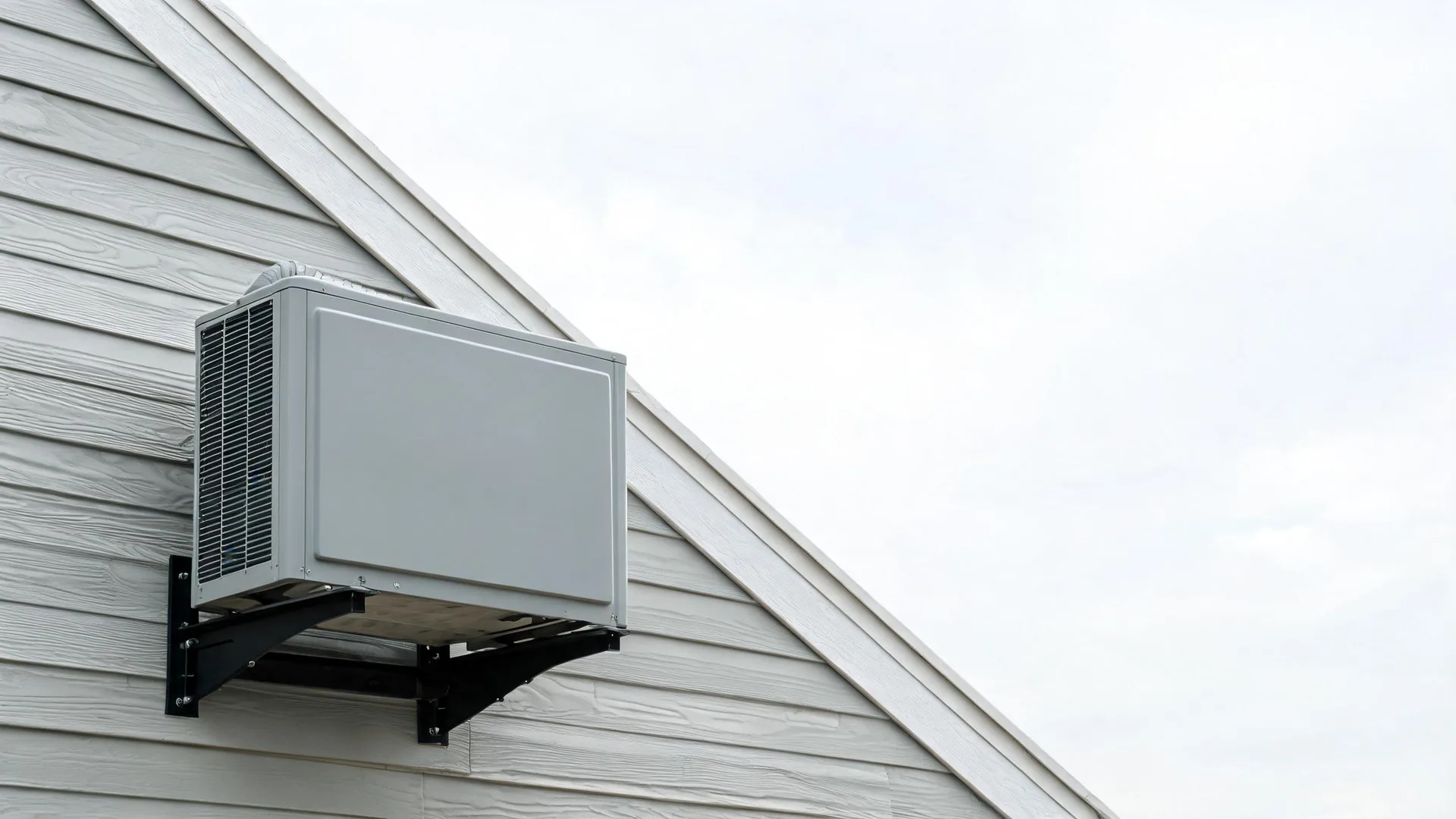
Wind takes a toll on the outdoor unit
Clark County saw damaging wind 306 times between 2015 and 2024. That kind of wind drives dust and debris into the outdoor coil and fan, and it can rack a cabinet that is not bolted down tight.
Takes about a minute. No obligation.
Clark County saw damaging wind 306 times between 2015 and 2024. That kind of wind drives dust and debris into the outdoor coil and fan, and it can rack a cabinet that is not bolted down tight.
A heat pump that trips off or blows warm air can have more than one thing going on at once, especially after years of hard use. A proper diagnosis finds the actual cause so the repair holds.

NOAA nClimDiv, 1991–2020 normals
Half the homes in Clark County were built in 1998 or later.
A heat pump that came with a newer house has likely got plenty of working life left in it.




Nothing about Las Vegas wiring or ductwork makes a heat pump harder to repair. The usual causes show up here the same as anywhere. A failing capacitor, a low refrigerant charge, a reversing valve stuck in one position. What is worth knowing locally is the electric rate. Nevada homes paid 15.00 cents per kilowatt-hour in 2024, so a heat pump short-cycling or running constantly on a bad part shows up on the power bill fast. That is a reason to get the repair done. It is not a sign the repair itself will be unusual.
A heat pump tripping off or blowing warm air after years of wind and dust is usually more than one problem at once. A proper diagnosis finds what's actually wrong so the repair holds.
Find a contractor
A heat pump does not get a season off. It switches between cooling and heating and keeps working through the months most other systems sit idle. Every start puts load on the compressor and on the capacitor that kicks it on. That wear adds up the same whether the unit is new or old. The parts most likely to fail are the ones working hardest. The capacitor. The contactor. The reversing valve. A unit that has been running hard for years and starts icing up, short-cycling, or blowing air that is not as warm as it should be is usually telling you a part has worn down, not that something sudden broke.
A reversing valve that will not fully shift makes the compressor work against itself, pushing refrigerant toward a path that is partly blocked. Run it long enough in that state and the compressor overheats. That is the one part in a heat pump most worth protecting, because a failed compressor often means a new system, not a repair.
A heat pump low on charge does not use less refrigerant to compensate. It keeps circulating what is left through a system built for more, so the compressor runs hotter and the oil that lubricates it circulates poorly. A small leak left alone stays small for a while, then the drop in charge starts taking the compressor down with it.
A capacitor is the part most likely to fail first, since it kicks the compressor and fan motors on every time they start and weakens a little with each cycle until it can't do the job. A contactor can pit and stick from years of that same cycling, leaving the outdoor unit running when it should stop or not starting when it should. The defrost board is worth suspecting too, since it reads a sensor and tells the system when to switch into defrost, and a bad sensor or a stuck relay there will leave frost building on the outdoor coil with nothing correcting it. None of these show themselves clearly from the thermostat. A unit that is icing up, short-cycling, or blowing air that is not as warm as it should be could have any one of them behind it, and the only way to know which is to get a meter on the parts.
A diagnostic visit starts outside at the unit, not at the thermostat. A technician hooks up gauges and reads suction pressure, head pressure, and the temperature split between the air going in and the air coming out. Those readings point toward which part is struggling before a panel ever comes off. From there it is a meter on the capacitor, a check of the contactor for pitting, a look at whether the reversing valve actually shifts when it is told to. Frost on the outdoor coil gets looked at closely, since that can mean the defrost board, a bad sensor, or just poor airflow. The goal is finding the part that is actually failing, not the symptom it happens to be causing, so the repair holds instead of showing up again next month.