






A grey heat pump outdoor unit mounted on a concrete pad against the exterior wall of a house with grey siding and stone veneer.

Heat Pump Repair in Lovelock, NV

Tell us about the job

Takes about a minute. No obligation.

RepairHeat PumpPershing County, NV
Step 1 of 2

What ZIP code is the job in?

A heat pump in Pershing County earns its keep for eight months, October through May, then switches over and runs the other three. That changeover is when trouble tends to show up, not in the middle of a long stretch of use. A part that was already wearing out gets asked to do more right when the mode flips, in September before heat starts or May before cooling does, and that is when it quits. If yours is struggling right at the start of a season rather than deep into it, that is not a coincidence. Worth having it looked at before the weather settles in and you are relying on it every day.

8 months
October through May, your system heats
3 months
June through August, it cools
23°F
the average winter night it heats against
88°F
the average summer afternoon it cools against
Isometric line illustration of a cutaway single-story building showing interior rooms, ceiling ductwork, an indoor air handler, and an outdoor condenser unit connected by refrigerant lines.
Your system heats October through May and cools June through August.

NOAA nClimDiv, 1991–2020 normals

Winter lows here average 23°F, not far below freezing, so your heat pump isn't fighting hard just to keep up.

A heat pump that isn't straining against extreme cold is usually still sound underneath, so a repair is worth making.

At 15 cents a kWh, a heat pump running wrong runs up your bill fast

Power costs 15 cents a kWh statewide
53 damaging wind events from 2015 to 2024
10 winter storms from 2015 to 2024
Nothing unusual here, just an older heat pumpHalf the homes in Pershing County were built in 1984 or earlier, and more than half are mobile homes.

Get a repair looked at rather than putting it off for a replacement quote. Wind is the bigger wear factor out here, 53 damaging events over the last ten years, and that shows up in loose panels, bent fins or a condenser fan knocked out of balance, not in a compressor worn thin from grinding against the cold. Those are straightforward fixes on a unit that is otherwise sound. Ten winter storms over the same stretch can mean ice buildup on the outdoor coil, which trips a system into a defrost cycle that does not fully recover on its own. A tech can tell the difference between that and a part that actually failed. Either way it is usually a repair, not a reason to start over.

A heat pump running wrong costs you every month it goes unfixed

A heat pump that's cycling wrong or icing up still draws power the whole time it struggles, and at 15 cents a kWh that adds up fast here. Get it diagnosed and fixed instead of letting it run that way through the season.

Find a contractor
A dark gray heat pump unit mounted on a concrete pad next to a house with gray siding and a stone veneer wall.

What actually wears out in a heat pump

The reversing valve is usually the first thing to go. It's what switches the unit between heating and cooling, and it sits still most of the time. A valve that doesn't move for long stretches can stick when it's finally asked to shift, and that leaves a system blowing the wrong temperature air or stuck in one mode. After that it's the defrost control board, which tells the unit when to melt the outdoor coil and when to stop. If that board reads wrong, the unit either ices over because it never defrosts or runs the defrost cycle too often and can't keep up with heating. Capacitors weaken over years of starting the compressor and fan motors, and a weak one shows up as a unit that hums but won't start, or a fan that spins slow. None of that is about how cold it gets outside. It's about how many times a part gets asked to switch, start or shift, and a heat pump does that more than a furnace or straight air conditioner ever has to.

Check the thermostat settings first

Make sure it's set to heat or cool as intended and not stuck in fan-only. A battery dying in the thermostat can reset it to a default mode without you noticing, and that alone can look like the whole system failed.
Look at the outdoor unit

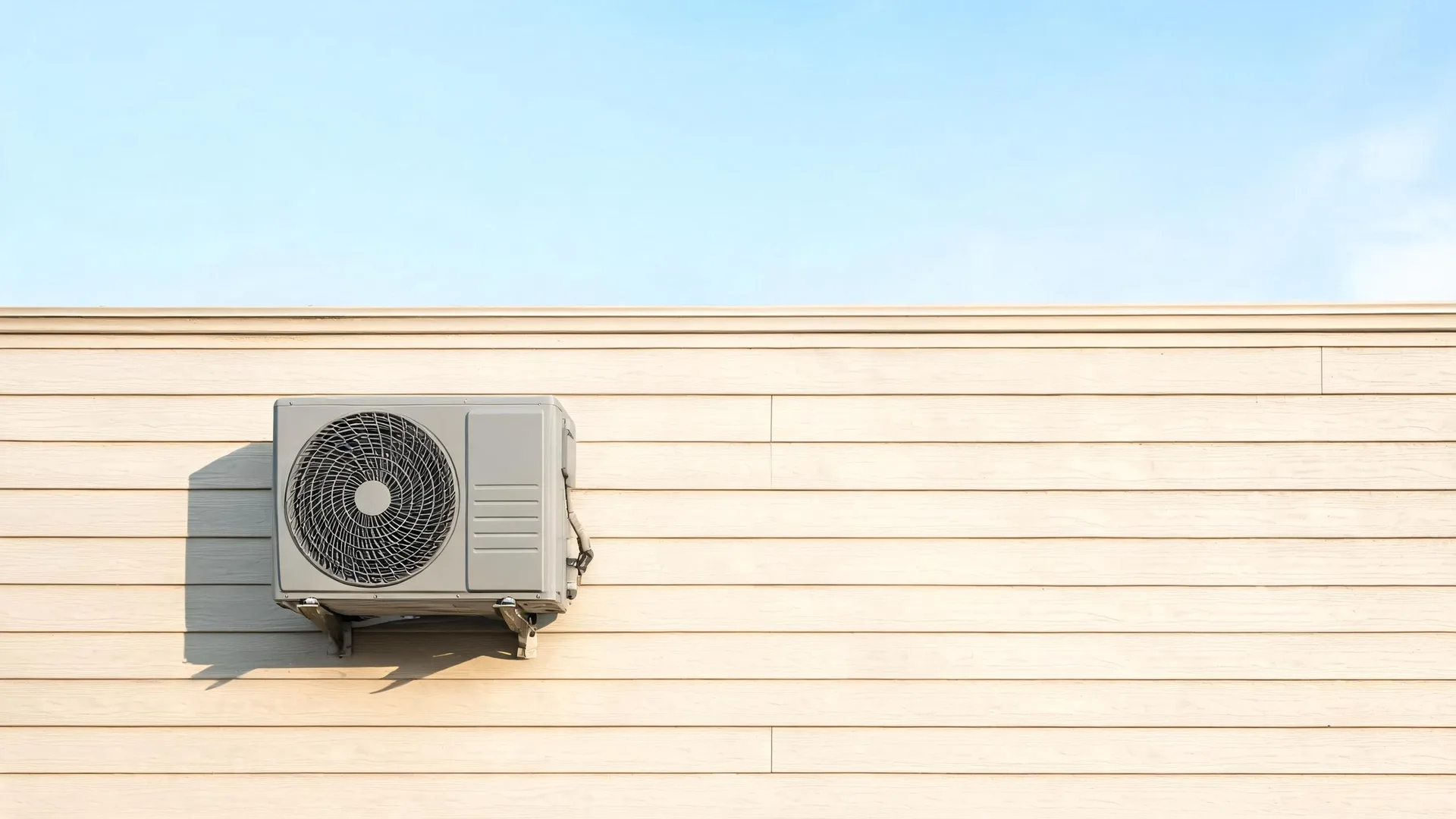
Walk out and check for ice covering the coil or debris blocking the fins. Snow drifted against the cabinet or a tarp someone left over it will stop airflow just as surely as a broken part, and that one's free to clear yourself.

A heat pump earns a repair when the problem is one part acting up while the rest of the system still runs the way it should. A reversing valve that sticks doesn't mean the compressor is going too, and a board reading wrong doesn't mean the coil is damaged. Age by itself isn't the test either. A unit that's been through many seasons but was looked after, with coils kept clear and refrigerant charge correct, is often still sound where it counts. What changes the math is when failures start compounding, one worn part putting strain on the next until the compressor itself is the one wearing thin. That's the point where a tech starts talking replacement instead of repair, not because of how old the unit is, but because the cost of chasing each new failure stops making sense against starting over with something that isn't already halfway through its life.

A diagnostic visit starts outside at the unit itself, before anyone touches a wrench. A tech checks refrigerant pressure on both the high and low side. A system low on charge behaves differently than one with a stuck valve, even though both can leave you with weak heat. Electrical readings come next. Voltage to the compressor, amp draw on the fan motor, because a part can look fine and still be pulling wrong. Then comes the sequence of operation. The system is made to call for heat, and the tech watches whether the reversing valve actually throws, whether defrost kicks in and ends when it should. The board might be telling the valve to switch and the valve isn't listening, or the board itself is reading the outdoor temperature wrong and never calls for defrost at all. Those look the same from inside the house, a system that won't heat right, but they're different repairs. Working through it this way finds the one part actually causing the trouble instead of guessing and swapping parts to see what helps.