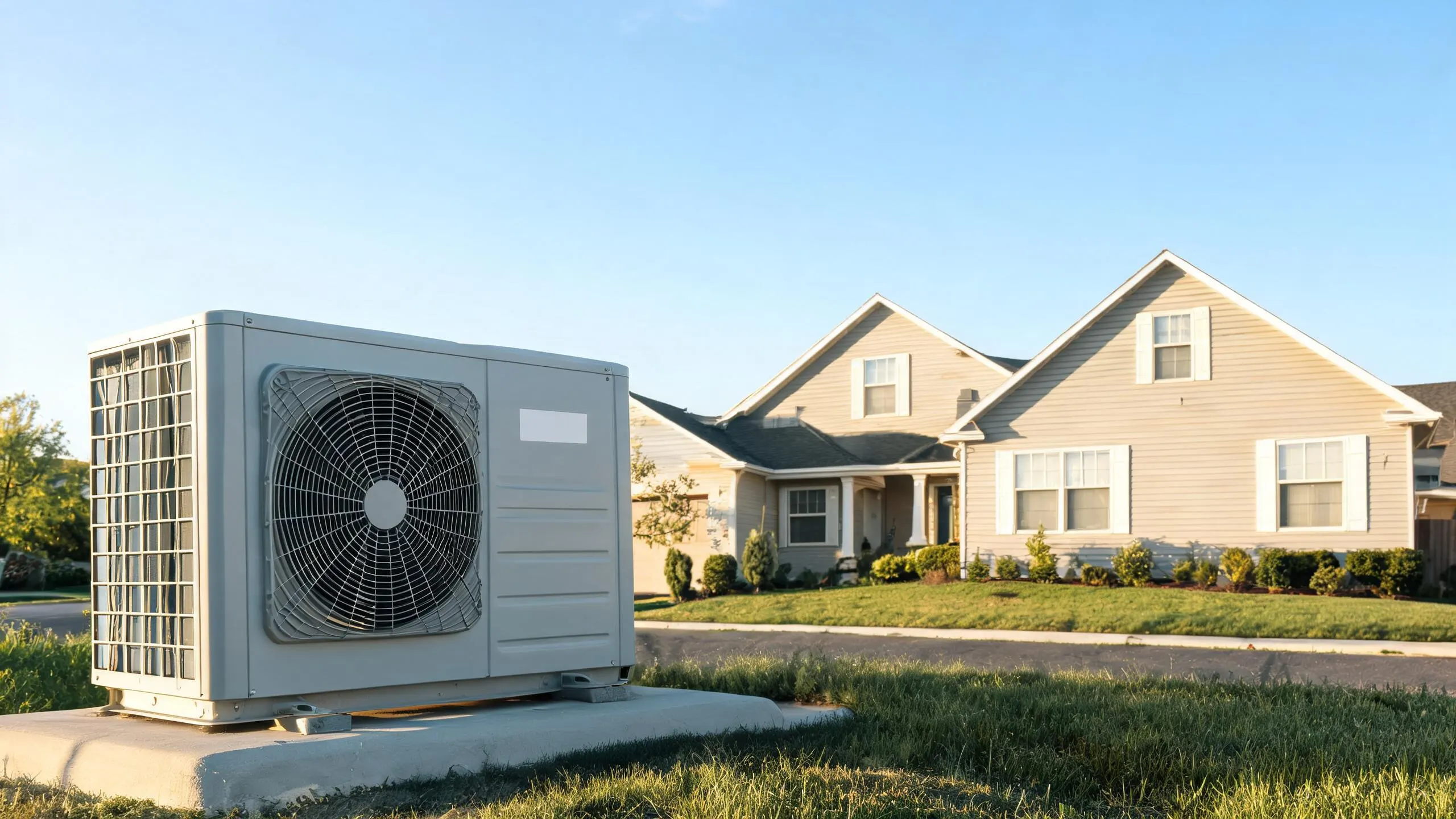





An outdoor heat pump unit mounted on a concrete pad in front of a two-story suburban house.

Heat Pump Repair in Reno, NV

Tell us about the job

Takes about a minute. No obligation.

RepairHeat PumpWashoe County, NV
Step 1 of 2

What ZIP code is the job in?

Half the homes in Washoe County were built in 1991 or later. If yours is one of them, your heat pump probably isn't that old either. A unit installed with a newer home still has real years ahead of it, and that changes the math on a repair. When the heat pump is nowhere near the end of its life, fixing what's wrong almost always makes more sense than replacing it.

8 months
October through May, your system heats
2 months
July through August, it cools
23°F
the average winter night it heats against
84°F
the average summer afternoon it cools against
Isometric line illustration of a cutaway single-story house showing interior rooms with beds and furniture, ceiling ductwork connected to an indoor air handler, and an outdoor condenser unit linked by refrigerant lines.
Your system heats October through May and cools July through August.

NOAA nClimDiv, 1991–2020 normals

Reno winters average 23°F at night, not deep subzero cold.

A heat pump here isn't fighting extreme temperature swings all winter, so less strain on the parts that fail first.

October is when a weak heat pump gets found out

Cooling runs July through August
Heat runs October through May
343 damaging wind events from 2015 to 2024

So if your heat pump is struggling, it's probably not because the Reno winter wore it down. Something specific failed. A contactor, a capacitor, a reversing valve that's sticking. Parts like that fail from age or a bad run, not from months of hard use they never really had here. That's worth knowing before you decide anything, because a unit that's been taking it easy is usually a unit worth fixing rather than replacing. Get the actual part named before you think about the bigger decision.

Electricity costs more here, so a broken heat pump costs more here too

Nevada electricity runs 15 cents a kilowatt-hour, on the higher side. A heat pump that's not working right, whatever the actual problem turns out to be, burns through that every day it sits unfixed. This is a unit worth fixing rather than replacing. No reason to pay extra on the bill while you wait to find out what's wrong.

Find a contractor
A gray air-source heat pump mounted on a concrete pad next to a house with gray vinyl siding, surrounded by gravel and flanked by green shrubs and white hydrangea flowers.

Check the install date before you call anyone

Get the age of your unit before you get an estimate. If it went in with the house, check when that was. A contractor can also read the data plate on the unit itself. Either way, knowing the actual age tells you whether you're looking at a worn part on a young system or something closer to the end. For most homes here, it's the first one.

What you'll actually notice first

The heat pump runs but the air coming out doesn't feel warm, or it blows warm for a while then switches to cool air mid-cycle. Sometimes it won't switch over from cooling to heating mode at all, or it gets stuck running the outdoor fan without the compressor kicking in. These are reversing valve and sensor problems, and they show up as the system doing the wrong thing, not as the system doing nothing.
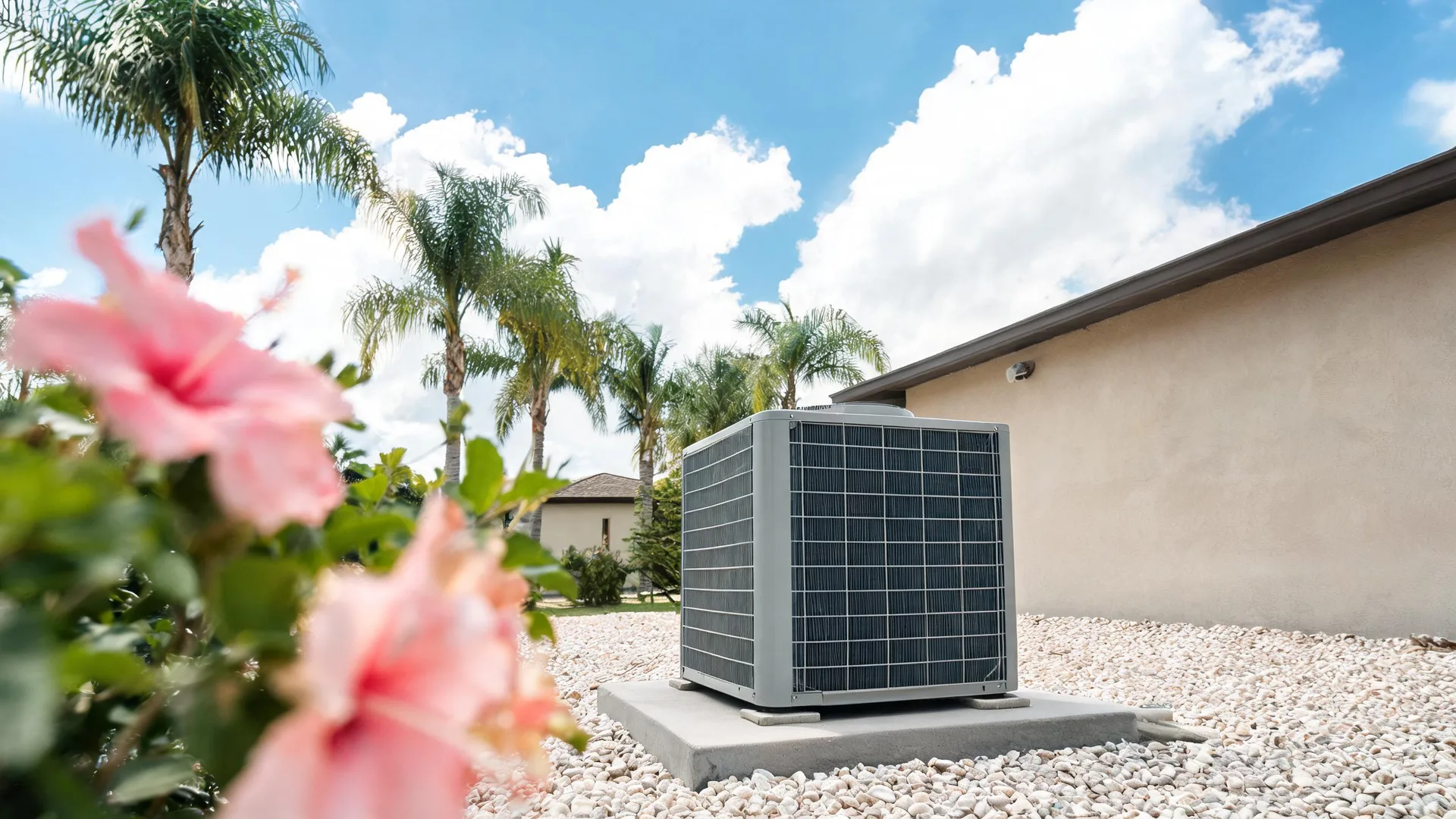
What that tells the tech

A heat pump that's noisy, especially a hard clunk when it switches between heating and cooling, usually means the reversing valve itself. Ice building up on the outdoor unit that doesn't clear during the defrost cycle points to a bad defrost sensor or control board. Naming which symptom you're seeing before the tech arrives gets you a faster diagnosis, because each of these problems lives in a different part.

Most heat pump failures trace back to a handful of parts that do the hardest work. The reversing valve is one. It's what switches the system between heating and cooling, and the coil and sliding piece inside it wear from being asked to move every single cycle. Capacitors and contactors fail too, usually from age, and when they go the compressor either won't start or won't stay running. The defrost control board is another weak point, since it's constantly reading temperature and timing the defrost cycle, and once its sensor drifts the whole system can ice up or run too long between cycles. None of these parts fail because a system worked too hard for too many months. They fail because something inside them wore out or a connection went bad, and that can happen to a unit in its second year as easily as one in its twelfth.

A part failing doesn't mean the system's done. Most of what goes wrong on a heat pump is a single component, not the whole machine, and a tech can replace a reversing valve or a defrost board without touching anything else. What actually decides repair versus replacement is whether the compressor itself is still good. The compressor is the one part that isn't practical to swap, so when it fails the unit is usually done, but a compressor failure is the exception, not the rule. Everything else on the list, the valve, the capacitor, the contactor, the control board, gets fixed on its own all the time. If a tech tells you the compressor's gone, that's worth asking about directly, because that's the one answer that actually changes the decision.