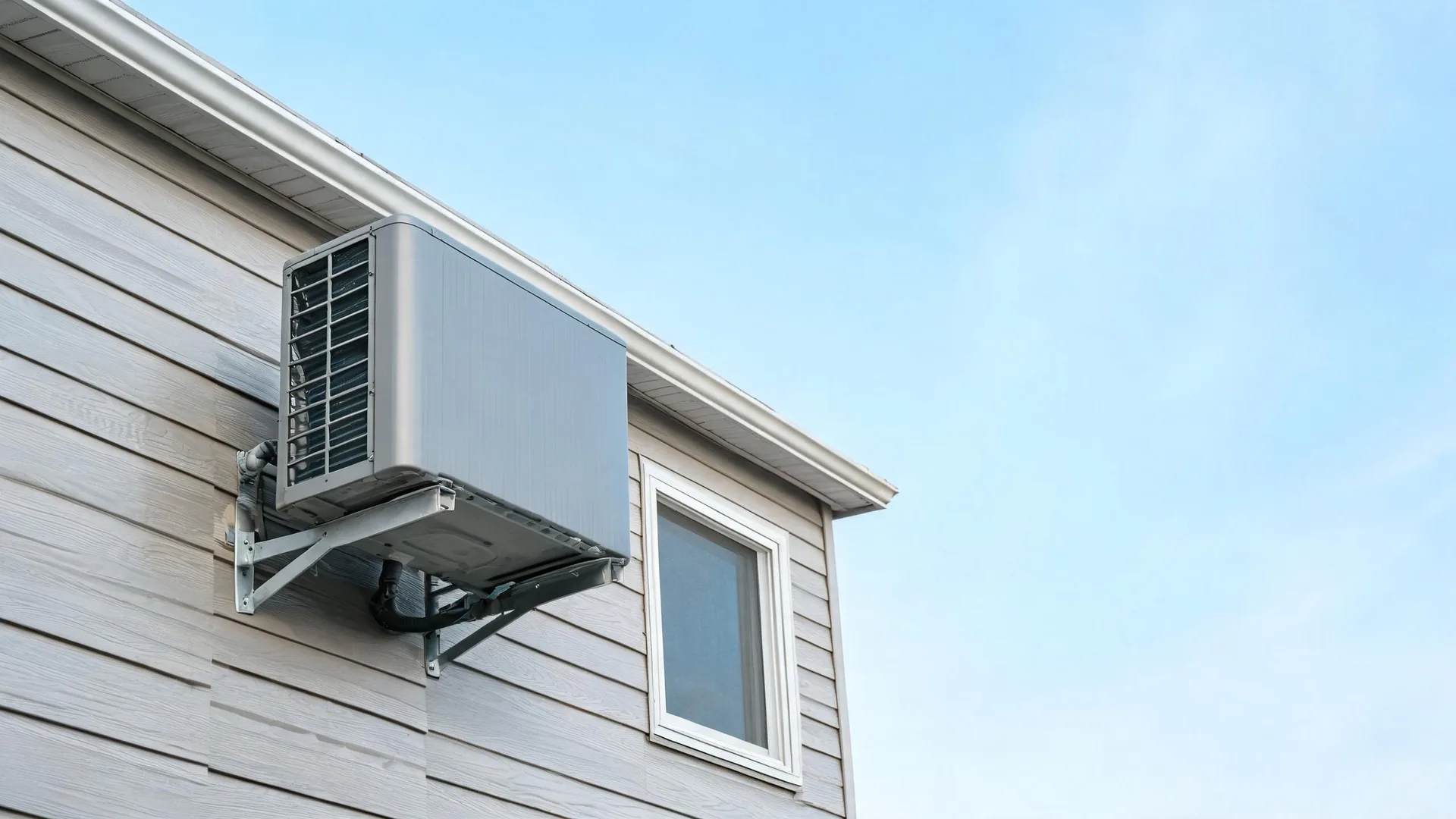
A grey air-source heat pump outdoor unit mounted on a concrete pad next to a modern white-rendered residential house.

Heat Pump Repair in Winnemucca, NV

Tell us about the job

Takes about a minute. No obligation.

RepairHeat PumpHumboldt County, NV
Step 1 of 2

What ZIP code is the job in?

The reversing valve sticks or fails

The reversing valve is what switches a heat pump between heating and cooling. When it sticks, the system can get stuck in one mode, blow cold air when it should be heating, or run without actually switching over. A trained eye is needed to tell a bad reversing valve from a low refrigerant charge, since both can show up as weak heat.


Refrigerant leaks show up as weak output

A heat pump moves heat using refrigerant, and any leak in that sealed loop means less heat moved into or out of the house. The system does not use up refrigerant over time the way a car uses gas, so a low charge means there is a leak somewhere that needs finding before it gets topped off again.

8 months
October through May, your system heats
2 months
July through August, it cools
23°F
the average winter night it heats against
85°F
the average summer afternoon it cools against
Isometric cutaway illustration of a single-story house with a dark gabled roof, showing interior rooms with ductwork leading to an indoor air handler and an outdoor condenser unit connected by lines on the ground outside.
Your system heats October through May and cools July through August.

NOAA nClimDiv, 1991–2020 normals

Heat here runs October through May, eight months straight.

September is when a weak heat pump should get looked at, before the first cold night finds the problem for you.

Half the homes here were built by 1991, but a heat pump fails for the same reasons anywhere

Half the homes here were built by 1991
Climate zone 5B
Power costs 15 cents a kWh statewide

Nevada homes paid 15 cents a kilowatthour in 2024, among the higher rates around. A heat pump with a stuck reversing valve or a slow refrigerant leak has to run longer to put out the same heat, and every extra hour it runs costs more here than it would somewhere cheaper. That cost shows up on the bill whether or not anyone's looked at the system yet. Waiting it out just means paying more each month for less heat.

The usual problem, with the usual fix

Humboldt County sees its share of wind and winter storms, same as a lot of places. None of that is what wears out a reversing valve or opens up a slow refrigerant leak. Those fail the same way everywhere. If your heat pump is blowing cold air or struggling to keep up, the fix is finding the actual cause, not guessing based on the weather outside.

Find a contractor
A gray air-source heat pump mounted on a concrete pad next to a house with gray vinyl siding, surrounded by gravel and flanked by green shrubs and white hydrangea flowers.

Storms don't wear out a reversing valve. Running hours do.

Winnemucca gets its share of wind and winter storms, but none of that reaches inside the cabinet where the reversing valve and the refrigerant lines sit. What ages a heat pump is runtime, and cold as it gets here, overnight lows only average 23°F through December, January and February. That is not extreme cold holding the system at full output for months on end. So a heat pump here is more likely worn by age or a leak that started small than by the load of actually heating the place. That is good news for a repair call. A system in decent shape mechanically is usually worth fixing rather than replacing.

Check the air filter first

A clogged filter chokes airflow across the indoor coil, and a heat pump reads that as a system struggling even when the reversing valve and refrigerant are fine. Pull it out and hold it up to a light. If you cannot see through it, that alone could explain weak heat.

Look at the outdoor unit

Frost or ice built up over the coil fins means the system cannot pull in or release heat the way it needs to. Some frost in cold weather is normal and clears on its own during defrost cycles. A solid sheet of ice that does not go away points to a problem worth having looked at.

Most heat pump trouble announces itself before anything quits for good. The system runs but the air coming out doesn't feel warm, or it runs in long stretches that never seem to end, or it cycles on and off more than it used to. Sometimes it blows cold air outright, like it forgot which season it is. Outside, the unit might ice over and stay iced instead of defrosting on its own. Inside, you might notice the thermostat calling for heat while the air coming through the vents feels barely there. None of that means the whole system is shot. It usually means one part is struggling to do its job, and the rest of the system is working harder to cover for it.

A heat pump that needs a repair now is not necessarily a heat pump that needs replacing. The compressor is the part that matters most here, since it is the one part that cannot be swapped out on its own without real cost. If the compressor is sound and the problem is a reversing valve, a leak, a capacitor or a fan motor, that is a repair. Those parts fail on their own and get replaced on their own, and a system otherwise in good shape keeps running fine afterward. What changes the math is a compressor on its way out, or a system that has needed this kind of call again and again. One repair on an otherwise sound system is just maintenance. A pattern of them is the system telling you something bigger is wrong.